
Jean-Luc Simbilyabo (RTER): “In the Face of the Ebola Outbreak in Ituri, Faith and Prevention Go Hand in Hand”
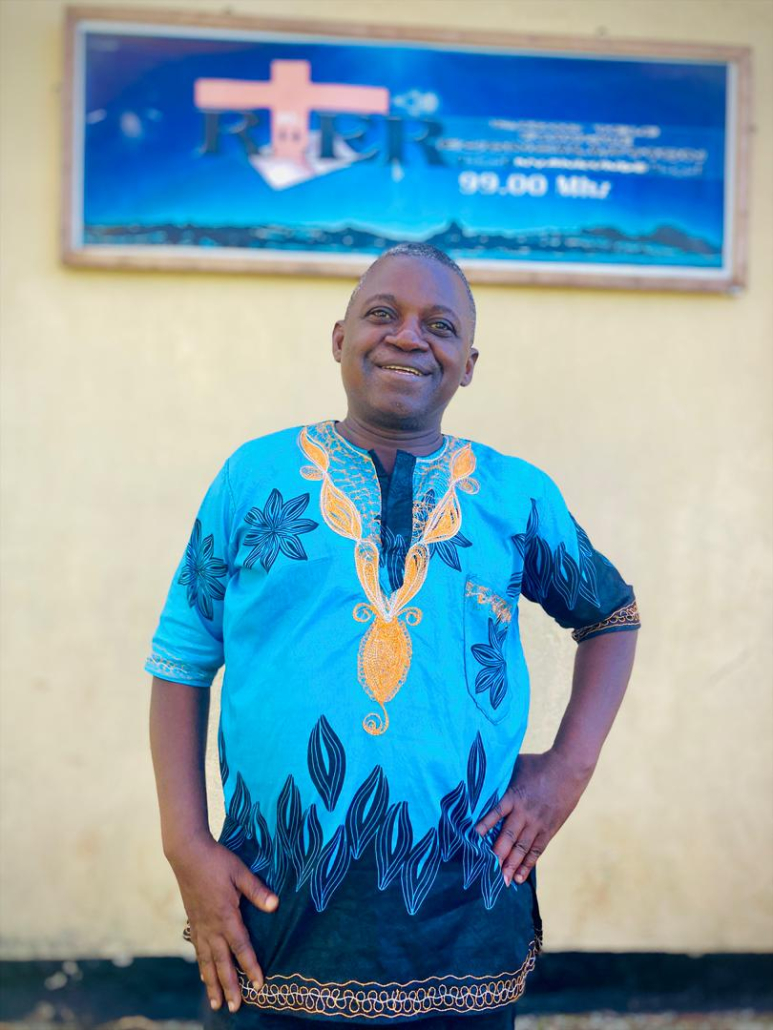
As the province of Ituri faces an Ebola resurgence, panic and uncertainty are taking hold in the Democratic Republic of the Congo. For Radio-Télévision Évangile Réconciliation (RTER) in Nyakunde, the race against time has begun. An exclusive interview with its director, Jean-Luc Simbilyabo, who counters the prevailing fatalism with public awareness and Christian faith.
The official figures released on May 18, 2026, by the Minister of Health and reported by Radio Okapi are alarming: Ituri Province has surpassed 350 suspected cases, including 91 probable deaths. The urgency of the situation is compounded by a major medical challenge: the outbreak is caused by the Bundibugyo strain, a variant for which there is currently no approved vaccine or treatment.
In Nyakunde, the local population— already devastated by the abuses committed by armed groups—must now face this new scourge. Speaking on the air, Jean-Luc Simbilyabo describes the dual challenges faced by a Christian community radio station.
Exclusive Interview
Emmanuel Ziehli: Jean-Luc, what’s the general mood like in Nyakunde since the official announcement of the outbreak on May 15? Is there a sense of panic building?
Jean-Luc Simbalibabo: Since the announcement, the public has been oscillating between heightened vigilance and deep concern. Residents are trying to follow medical guidelines, but we’re facing a massive wave of false rumors. At first, people thought it was a hoax or fake news, especially after incidents in the Mongwalu mining region where a coffin had been burned. But now, the reality is clear, and fear is setting in.
EZ: Can you tell us more about the current situation and the latest figures at Nyakunde Hospital? There are also reports of an American missionary being infected.
JLS: The situation at Nyakunde Hospital, which is right next to our station, is very concerning. As of this moment, there are 12 recorded cases, including 4 severe cases that have tested positive and are currently in isolation. Panic has escalated following the confirmation that Dr. Peter, an American missionary doctor, has been infected. He has been living here with his family for over three years and works primarily in the emergency room. He treated a patient from Bunia who, unfortunately, has since died. Dr. Peter did not know that this patient had Ebola. This morning, his condition deteriorated severely, and he has been placed under close observation.
EZ: There is no vaccine available for this Bundibugyo strain. How are people reacting to this lack of conventional medical treatments?
JLS: People are terrified. They’re doing their best to follow preventive measures: washing their hands, using ashes as a disinfectant, or soap and hand sanitizer when they can afford it. But it’s a cultural struggle. The Congolese people deeply love to greet one another, shake hands, and be together. For many, having to add this restriction while we’re already suffering under the yoke of the ADF rebels is seen as yet another punishment.
EZ: Speaking of which, how does your Christian radio station adapt its programming to link faith with preventive measures?
JLS: At RTER, we’ve expanded our programming. We consistently combine biblical messages of hope with very practical health guidelines (isolation, hygiene, caution regarding gatherings). The government hasn’t banned religious services yet, but we’re driving home a key truth on the air: faith and prevention go hand in hand.
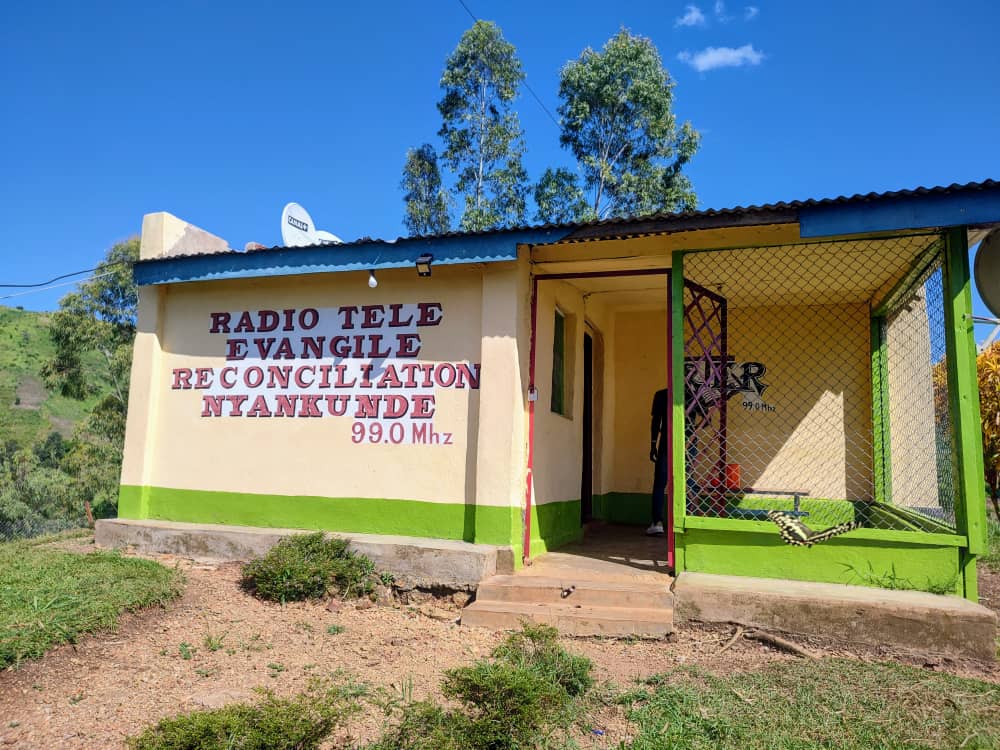
EZ: Changing traditional funeral customs is a sensitive issue for families. What arguments do you use on the air?
JLS: This is a major pastoral challenge. We explain that the physical body is merely a shell and that refusing to touch the remains of a loved one who has died of Ebola is an act of protection for the survivors. We work hand in hand with God’s servants. Through a WhatsApp support group dedicated to countering the rebels, we’ve mobilized about thirty local pastors. They go on the air to encourage churches to adapt their practices: praying for the sick from a distance, without the laying on of hands, and discontinuing physical greetings.
“Drawing on the Epistle to the Romans (14:13), we explain on the air that burying our dead with dignity while protecting the living from infection is the greatest act of love and faith one can perform.” – Jean-Luc Simbilyabo
EZ: The Minister of Health has just delivered 5 metric tons of supplies to Bunia in collaboration with the WHO, but the region has hundreds of thousands of residents. What is the reality of this supply situation in your area?
JLS: Five metric tons for a population of this size is a drop in the bucket. On the ground, international aid is being hampered, particularly by the suspension of USAID funding, which is having a catastrophic impact. In pharmacies, the prices of masks and chlorine have doubled or even tripled. The population is being suffocated. People no longer even have access to their fields because ADF jihadists are demanding a $10 monthly tax just to let them farm! The radio remains the only free and accessible source of information to guide them.
EZ: Despite the repeated crises in Ituri, you continue to hold strong, and you’re even preparing your son to take over. Where do you personally find the strength and resilience to guide your listeners through this new storm?
JLS: I say, along with the Apostle Paul, “I can do all things through Him who strengthens me”—and that is Jesus Christ. It’s not easy, you see… I spend a great deal of time in prayer, with the deep conviction that God can never abandon us when we are in His field, on His mission. He has called us for this, and we are here to press on. Having my son by my side gives me tremendous strength. It gives me hope that one day, if the Lord is delayed in coming, he will be able to help me and take over this heavy burden.
“Having my son by my side gives me strength and hope that one day he will be able to take over this difficult task.” – Jean-Luc Simbilyabo
EZ: What is your most urgent appeal today to the international solidarity network (Médias Ébène, FOMECAF, AbR) that supports you?
JLS: Please pray for us and support us logistically. Our six gel batteries for the transmitter are completely worn out after five years of service. They drain very quickly as soon as the sun goes down. We are then forced to turn on the generator, but the price of diesel has skyrocketed. We urgently need to replace these six batteries to stay on the air, because with the upcoming lockdown and the likely closure of churches, the radio will become the one and only place where people can find comfort, guidance, and the truth.
Sources for this article
Institutional source: Epidemiological alerts from the Ituri Regional Authorities.
Official source: DRC Ministry of Health & Radio Okapi News Report – May 18, 2026
Field source: RTER Nyakunde – Exclusive interview with Jean-Luc Simbilyabo.
Médias Ebène is launching a fundraising campaign to meet the urgent needs of Radio-Télévision Évangile Réconciliation (RTER) in Nyakunde; see the “Ituri Emergency” notice for details
Médias Ebène | CIC Morteau
IBAN FR76 3008 7331 4800 0205 9540 125

