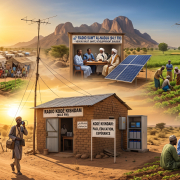
Francophone Africa refers to all African countries that share the French language. This includes more than 18 contiguous countries where French is used as an official and/or lingua franca. These countries cover a vast territory, representing nearly half of the African continent, approximately 5,000 kilometers from north to south and approximately 4,000 kilometers from east to west (from Tangier in northern Morocco to Lubumbashi in southern DRC). In 2018, there were an estimated 140 million African French speakers in 31 French-speaking African countries and territories. French arrived in Africa with colonization by France and Belgium, and these African French speakers now form the largest part of the Francophonie. Don't hesitate to ask if you need any further information! 😊
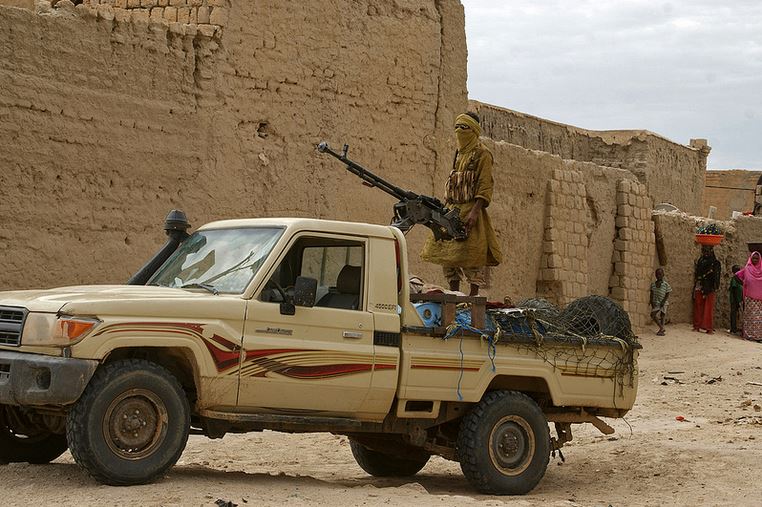
Ten years after ISIS’s attempt to establish a foothold in the Middle East, sub-Saharan Africa has become the new jihadist El Dorado. Groups affiliated with al-Qaeda (JNIM) and the Islamic State (EIGS) are stepping up their offensives in Niger, Mali, and Burkina Faso. This geographical barrier is giving way to a plan for a Sahelian caliphate. The terrorist strategy is evolving: from rural areas, the groups are moving to encircle urban centers and are threatening Benin, Togo, and Côte d’Ivoire, in a scenario reminiscent of the fall of Afghanistan.
This security crisis is compounded by a deep social divide. The local culture of tolerance has been shattered by ethnic and religious divisions that have been deliberately exacerbated. Christian communities are prime targets, facing the tragic choice between forced conversion or death. The tragedy in Silgadji (the murder of a pastor in Burkina Faso) in 2019 marked the beginning of systematic persecution: regions emptied of their minorities, churches closed, and discriminatory taxes imposed. Sub-Saharan Africa is now the region with the most severe religious persecution in the world.
Image caption: Jihadist in Timbuktu, credit Wikimedia Commons CC BY-SA 4.0
Despite this chaos—including 2 million displaced people in Burkina Faso—the crisis receives little attention in the West. Yet instability in the Sahel threatens global security by fueling migration routes and trafficking networks toward Europe. To stem this tide, a overhaul of foreign policies is urgently needed. A comprehensive approach must rely on local faith-based organizations and their community media. Thanks to their deep social roots, these actors are indispensable pillars for information, education, and community mediation. Sustainable reconstruction cannot happen without these voices on the ground.
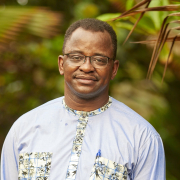
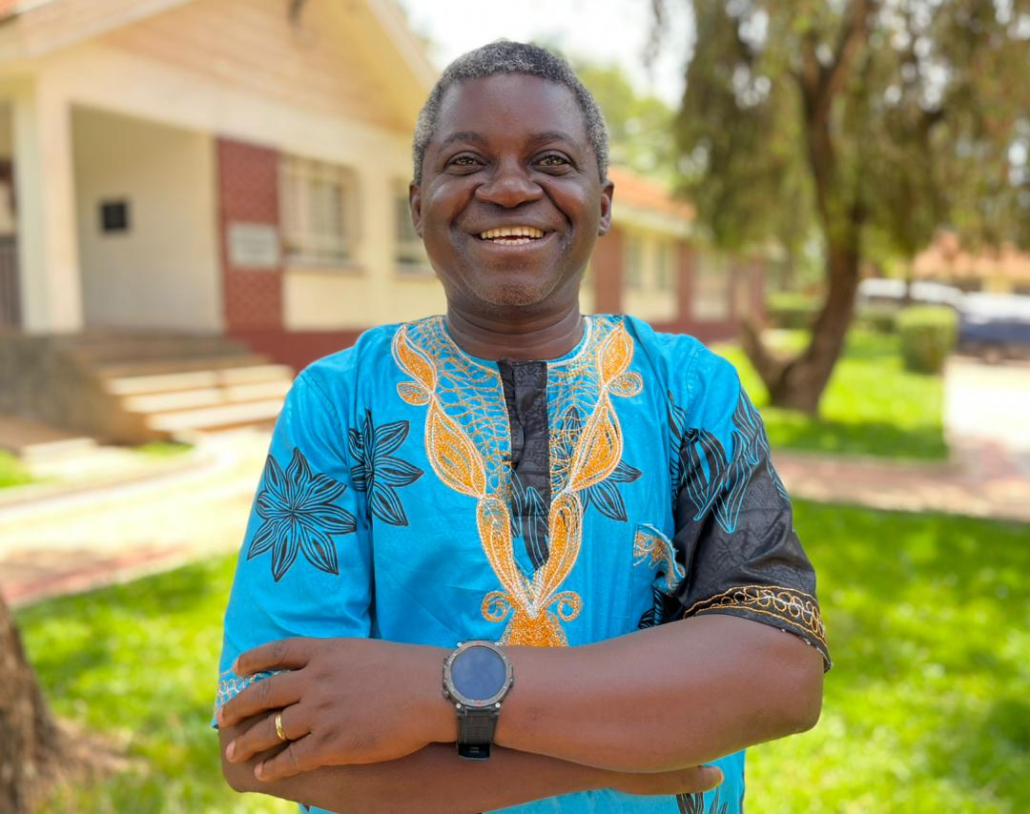
Illia Djadi, an expert on security and religious freedom (Open Doors International). Member of Médias Ébène and the leadership of FOMECAF, a network of pan-African radio stations.
https://mediasebene.org/wp-content/uploads/2026/04/Illia-Djadi.jpg8671463Emmanuel Ziehlihttps://mediasebene.org/wp-content/uploads/2024/11/logo-medias-ebene-web-202411-300x138.pngEmmanuel ZiehliApril 10, 2026, 8:48:31 AMApril 10, 2026, 8:48:38 AMFacing the Caliphate: The Ordeal of Religious Minorities in Africa
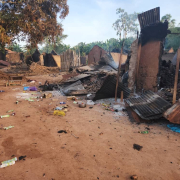
The province of Ituri, in the Democratic Republic of the Congo, is facing a security and humanitarian crisis of alarming proportions. Between March 28 and 31, 2026, rebels from the Allied Democratic Forces (ADF) carried out a series of bloody raids, blocking major roads and plunging the Mambasa region into terror.
Casualties and mass abductions
The weekend of March 28–29 marked a turning point in the violence along the Mambasa–Komanda route. According to Radio Okapi, the attacks began in Babungwe before spreading to Lomalisa, where the assailants fired into the air to force villagers to surrender. Human rights activist John Vuleverio, quoted by the media outlet, cites the terrifying figure of 388 civilians taken hostage.
The horror does not end with the capture. Local sources cited by ituri.cd and CODEPEF report that “some victims were reportedly executed, their bodies left unburied at the scene” in the Bakwanza Forest. This situation has led to the closure of more than ten health facilities, depriving thousands of people of vital care.
A crippled economy and transportation system
On Monday, March 30, another attack struck the Mambasa–Bunia road near Muchanga. Laurent Kyeya, coordinator of CODEPEF (Convention for the Development of Forest Peoples), paints a picture of extreme gravity: “Of the seven chiefdoms in the Mambasa territory, the majority are currently under threat from ADF rebels. This insecurity is affecting several major road routes, notably Mambasa–Nduye, Mambasa–Kisangani, and Mambasa–Beni.”
As RFI points out, this strategy of terror is directly targeting road users and farmers. In the towns of Makokolo and Mandima, residents no longer dare to go to their fields, which is seriously jeopardizing agricultural production. The consequences are immediate: massive population displacements toward the center of Mambasa and a complete standstill of socioeconomic activities.
A Testimony to Resilience
When asked about this situation, Jean-Luc Simbilyabo, director of RTER (Radio Télé Évangile Réconciliation) in Nyakunde, delivers a message of strength and faith:
“The repeated attacks along the Mambasa–Komanda route serve as a reminder of the silent suffering of thousands of families living between fear and hope. Yet, even amidst the ashes, faith remains alive: Christians continue to pray, serve, and bear witness. We can support this mission through prayer, by sharing these testimonies, and by providing concrete support to local radio stations that carry the voice of truth and peace. As it is written: ‘The light shines in the darkness, and the darkness has not overcome it’ (John 1:5).”
Calls for a major intervention
In response to the emergency, civil society and media outlets such as Yahoo News (AFP) are calling for large-scale military operations. “Protecting civilians is a fundamental obligation of the state,” insists John Vuleverio. While the territory’s assistant administrator, Colonel Maxime, calls for calm and assures that “military operations are continuing,” the population is waiting for tangible results to secure the roads and free the captives.
Solidarity: Médias Ébène offers its full support to the Christian radio stations that are members of FOMECAF and operate in the region, particularly RTER Radio in Nyakunde, which remains an indispensable beacon of hope amid the turmoil.
Latest Developments: Ransomware Extortion
According to an update from the RTCR on April 2, following the raid in Muchanga (on the Mambasa-Bunia road), the kidnappers have taken the horror to a new level. The rebels are now demanding a ransom of $10,000 to release some of the hostages captured on March 30. This financial blackmail deepens the despair of families already deprived of their livelihoods, as access to their fields has become impossible in Makokolo and Mandima.
CODEPEF (Convention for the Development of Forest Peoples): Report by Attorney Laurent Kyeya on insecurity in the Mambasa territory (March 30–31, 2026).
RTER (Radio Télé Évangile Réconciliation): An exclusive interview with Jean-Luc Simbilyabo, station director in Nyakunde (April 1, 2026).
Regulatory Authorities
Mambasa Territorial Administration: Statements by Colonel Maxime, Assistant Administrator, regarding ongoing military operations.
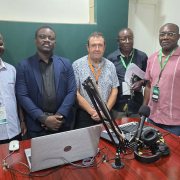
In a special nationwide broadcast that transcends all religious divides, Emmanuel Ziehli speaks with four leading figures in the Ivorian media landscape. Joined byÉtienne Saï (CEFCA), Kassim Traoré (TV and Radio Hosanna), Niomouti Samuel (Radio Fréquence Vie), and Justin (Radio Nationale Catholique – RNC), he delivers an exclusive interview that brings together all faiths. A unique media event to address the country’s current challenges in a spirit of dialogue and brotherhood.
The "last-mile" medium
Despite the ubiquity of social media, radio remains the dominant medium in Africa. Why? Because it is the only medium capable of overcoming the barriers of illiteracy and reaching even the most isolated settlements. As Emmanuel Ziehli points out, it is not merely a receiver of sounds; it is a “traveling companion” that speaks directly to the listener’s heart and mind, where other screens fall silent.
Professionalism and Ethics: The Challenge of Quality
One of the key messages from the Abidjan seminar is the call for greater professionalism. According to our guest contributor, commitment must not come at the expense of competence.
Ethics on the Air: In contexts that are sometimes fragile, radio has the power to build peace or fuel tensions. FOMECAF’s stance is clear: radio must be a vehicle for reconciliation and education.
“Every open microphone is a responsibility. We don’t just broadcast signals; we broadcast influence.” — Emmanuel Ziehli
The Digital Shift: The Convergence of FM and the Web
The seminar also addresses technological change. Far from being at odds with the Internet, African radio today relies on digital technology to expand its reach. Podcasts, streaming, and social media are becoming allies of FM radio, helping it reach a hyper-connected youth audience without neglecting its traditional listeners.
North-South Synergy for Tomorrow
FOMECAF 2026 is not just a place for learning; it is a space for sharing. The combination of technical expertise and the realities on the ground in Africa creates a unique dynamic. The ultimate goal? For every radio station to become a true driver of local development, addressing issues of health, agriculture, and citizenship with a strong and credible voice.
https://mediasebene.org/wp-content/uploads/2026/03/CEFCA_Studio_Abidjan-scaled.jpg14412560Emmanuel Ziehlihttps://mediasebene.org/wp-content/uploads/2024/11/logo-medias-ebene-web-202411-300x138.pngEmmanuel ZiehliMarch 20, 2026, 7:32:12 AMMarch 20, 2026, 7:33:32 AMNational Broadcast: New Challenges for African FM Radio in Abidjan
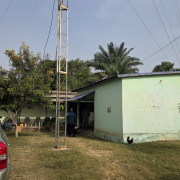
The last stop on our multi-day mission in Togo was the town of Notsé, located 100 km north of the capital, Lomé. It was here that we met with the teams from Radio Moisson Finale.
Working closely with teams and listeners This field visit provided an opportunity for rich and constructive discussions. We were able to talk with management and the technical and journalistic teams who keep the station running on a daily basis.
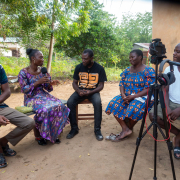
In order to better measure the impact of radio in the region, we also assembled a panel of listeners. Their valuable testimonials gave us a concrete understanding of the essential role that Moisson Finale plays in their everyday lives.
Concrete support for the future To acknowledge the work accomplished and encourage the teams to continue their development, we didn't leave empty-handed: we were delighted to present them with studio equipment. A little technical help to continue producing quality programs!
https://mediasebene.org/wp-content/uploads/2026/02/NOTSE-Radio_Moissons_Finale-scaled.jpg17072560Emmanuel Ziehlihttps://mediasebene.org/wp-content/uploads/2024/11/logo-medias-ebene-web-202411-300x138.pngEmmanuel ZiehliFebruary 25, 2026, 12:09:04February 25, 2026, 12:12:13Live from the field: Meeting with Radio Moisson Finale in Notsé (Togo)
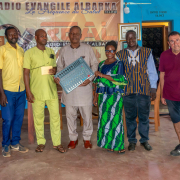
In the heart of central Togo, the city of Sokodé stands out for its strong identity: a major commercial hub, it is also one of the country's main centers of Islam. It was in this unique geographical and religious context that the FOMECAF and Médias Ébène delegation stopped off to support Radio Albarka.
Greeted with exceptional warmth by Elisabeth Koudjoukalo, the station's director, and her entire team (journalists, technicians), the emissaries were able to witness the resilience of this media outlet. Operating in a radio landscape dominated by Muslim religious stations, Albarka stands out for the quality of its programs and its message of peace.
However, running the radio station on a daily basis remains a struggle. Between an unreliable power supply and the burden of broadcasting taxes, there are many obstacles. Nevertheless, thanks to Elisabeth's rigorous and visionary management, the station is holding its own. To support this momentum, the delegation donated a new mixing desk, which is vital equipment for modernizing the studio and ensuring the continuity of broadcasts.
Radio Albarka proves that with determination and sound management, a Christian media outlet can not only survive, but thrive in French-speaking Africa.
https://mediasebene.org/wp-content/uploads/2026/02/SOKODE-Albarka-scaled.jpg17072560Emmanuel Ziehlihttps://mediasebene.org/wp-content/uploads/2024/11/logo-medias-ebene-web-202411-300x138.pngEmmanuel ZiehliFebruary 24, 2026, 8:09:28 a.m.February 25, 2026, 12:11:02 p.m.Live from the field: Radio Albarka, a Christian beacon in Islamic lands
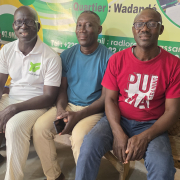
A delegation from FOMECAF and Médias Ébène paid a strategic visit to Radio Réveil in Bassar (Togo). While emotions remain high following the death of the station's founder, the focus was firmly on the future and the long-term viability of this essential communication tool.
The highlight of this mission was the material reinforcement of the station. A crucial donation, including a new mixing console, was given to the technical team. This modern equipment aims to ensure better broadcast quality and secure signal continuity for listeners in the region.
At the same time, an in-depth assessment of the radio station's "health" was conducted. Experts analyzed the programming schedule and the quality of content. The findings are encouraging: the radio station enjoys exceptional social vitality. The testimony of a Muslim teacher, now a regular contributor to the programs, perfectly illustrates the station's editorial success: it has become a civic-minded and inclusive media outlet.
This technical and human visit confirms that Radio Réveil, despite the challenges it faces, has the necessary assets to continue its mission of service and cohesion in Togo.
https://mediasebene.org/wp-content/uploads/2026/02/Radio_Reveil_Bassar_Equipe-scaled.jpg14412560Emmanuel Ziehlihttps://mediasebene.org/wp-content/uploads/2024/11/logo-medias-ebene-web-202411-300x138.pngEmmanuel ZiehliFebruary 13, 2026, 9:30:40 a.m.February 25, 2026, 12:10:15 p.m.Live from the field: Radio Réveil in Bassar (Togo)
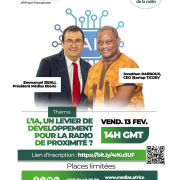
Pontarlier, February 9, 2026 – On the initiative of FOMECAF (Forum des Médias Chrétiens d’Afrique Francophone, or Forum of Christian Media in French-speaking Africa), and to mark World Radio Day, a special webinar will be held on Friday, February 13. This strategic meeting will bring together major players in radio broadcasting to explore a topical issue: "AI, a lever for the development of local radio."
AI: An assistant, not a replacement Far from fears that journalists will be replaced by robots, this conference aims to demonstrate how Artificial Intelligence (AI) can become a strategic ally for African stations. Faced with technical, financial, and infrastructure challenges, AI offers concrete solutions to free up editorial time and improve sound quality.
Two experts for a 360° view To guide this reflection, FOMECAF brings together two complementary perspectives:
Jonathan Darboux (Benin): Specialist in technological solutions in the African context. He will detail the tools available to optimize production, even with low bandwidth. Emmanuel Ziehli (Switzerland): International media expert. He will share his insights on preserving ethics and human warmth. In particular, he will discuss the experience of Swiss radio station Couleur 3, illustrating why editorial and legal responsibility must remain human.
"AI should not be seen as a Western import, but as an opportunity to better serve local listeners by transforming voice into text and noise into crystal-clear sound," emphasizes Mawuéna Abotchi, permanent secretary of FOMECAF, the event organizer.
The non-exhaustive program includes: Concrete solutions for the field The webinar will feature practical case studies tailored to the realities of African radio stations:
Transcription: To transform broadcasts into web articles or archive oral heritage without tedious manual typing.
Local news reporting: AI as an assistant for structuring local news briefs and prioritizing information gathered in the field.
Technical support for breakdowns: Use AI models to diagnose hardware problems (transmitters, consoles) when the engineer is not on site.
Translation: Switching from French to national/local languages to strengthen the station's community roots.
Practical information Date: Friday, February 13, 2026 Time: 2:00 p.m. GMT Location: Online (Webinar) Free registration: https://bit.ly/4rKu5UF
https://mediasebene.org/wp-content/uploads/2026/02/Webinar-IE-FOMECAF.jpeg1080924Emmanuel Ziehlihttps://mediasebene.org/wp-content/uploads/2024/11/logo-medias-ebene-web-202411-300x138.pngEmmanuel ZiehliFebruary 10, 2026, 8:26:10 a.m.February 10, 2026, 10:40:17World Radio Day: French-language radio stations in Africa in the age of artificial intelligence
Médias Ébène's influence is based on two strategic pillars:
Training: As demonstrated by our recent national seminar in Abidjan (Ivory Coast), we are strengthening the skills of communication professionals.
Technical and logistical support: We support religious radio stations in French-speaking Africa by sending them specialized equipment.
At the end of 2025, a container loaded with studio and FM equipment was received in Lomé. Immediately afterwards, our teams traveled across northern Togo to support four FOMECAF partner radio stations. See photos from our first stop at Radio Missionnaire in Kara.
https://mediasebene.org/wp-content/uploads/2026/02/Radio_Missionnaire_Kara_Togo-scaled.jpg14412560Emmanuel Ziehlihttps://mediasebene.org/wp-content/uploads/2024/11/logo-medias-ebene-web-202411-300x138.pngEmmanuel ZiehliFebruary 6, 2026, 6:57:37 p.m.February 13, 2026, 9:32:45 a.m.Live from the field: visit to Kara (Togo)
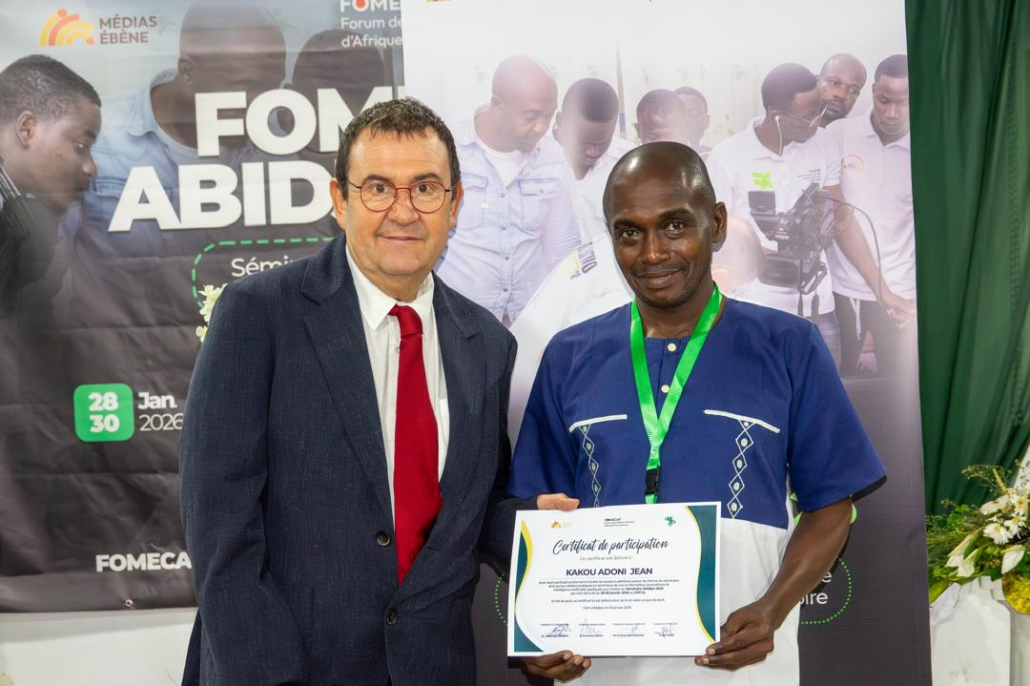
ABIDJAN, February 1, 2026 – The curtain has fallen on a pivotal event for the religious media landscape. After three days of intense discussions at the Center for Training and Audiovisual Communication (CEFCA), the Forum of Christian Media in Francophone Africa (FOMECAF) closed its national seminar. Under the theme "Resilience and Responsibility of Christian Media in the Face of Radicalism," this strategic meeting delivered on its promises in terms of mobilization and professional expertise.
A large-scale national mobilization
The seminar confirmed FOMECAF's regional roots with figures that demonstrate the urgency of the issues addressed:
57 participants (including 13 women and 44 men) from 24 Christian media outlets.
Seven cities in Côte d'Ivoire mobilized: Abidjan, Abengourou, Bouaké, Yamoussoukro, Aboisso, Korhogo, and Bonoua.
Seven trainers combining national and international expertise to supervise the work.
Strong voices for a mission of peace
FOMECAF's commitment to lasting peace was supported by high-level interventions. The official opening was marked by the presence of Ms. Odette N'Zi, Third Deputy Mayor of Cocody, representing Mayor Jean-Marc Yacé.
Industry leaders reaffirmed their shared vision during the sessions:
Ms. Olivia Beugré, Chair of the FOMECAF Bureau.
Mr. Emmanuel Ziehli, President of Médias Ébène and main partner of the event.
Prof. Abdoulaye Sangho, Chair of the Organizing Committee.
Mr. Germain Coulibaly, Chief Executive Officer of CEFCA.
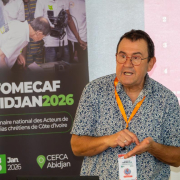
The keynote speaker, Illia Djadi, an analyst at the NGO Open Doors, captivated the audience with his analysis of the rise of extremism in the Sahel, emphasizing the crucial responsibility of Christian media in preventing radicalization.
Practical, action-oriented workshops
Four training centers have made it possible to transform theoretical knowledge into practical skills:
Media management: Strategies for seeking funding, with Denis Steffen.
Journalism & AI: Combating misinformation and integrating artificial intelligence, with Emmanuel Ziehli, Mawuéna Abotchi, and Joël Kokou Djagbavi.
Sound engineering: Sound recording and optimization, under the direction of Andrea Luzi.
FM broadcasting: Technical expertise and broadcasting quality, with Honoré Chabi Boni.
A new roadmap for communicators
The work resulted in strategic recommendations for the future of religious media in Côte d'Ivoire:
Unity of action: Creation of digital platforms to promote concerted action among professionals.
Technological shift: Responsible integration of AI and strategic development of podcasts to expand audience reach.
Ethics and vigilance: A strengthened commitment against hate speech and misinformation.
"Abidjan 2026 is not just a simple closing ceremony, it is the consolidation of a community of communicators determined to make every microphone and every pen an instrument of social cohesion and stability for the nation."
Thanks to you, 2025 marks a turning point where missionary vitality and logistics have come together to serve the Gospel. Your support has enabled us to act on two fronts: constant technical monitoring and a strategic presence in the field.
From our base, the connection has never been broken. With over 2,000 messages and 1,000 calls, we have supported more than 50 contacts. Troubleshooting and real-time advice have supported stations from Burkina Faso to the far reaches of the DRC. Your help transforms this technical support into a lifeline for these isolated radio stations, ensuring that the voice of the Gospel is not silenced due to lack of maintenance.
On the ground, the impact is tangible. Our missions have taken us from the Kigali conference (180 key players) to the realities of Congo and Niger, which have come to Rwanda. A highlight of December was our presence in Lomé. In addition to the editorial seminar and six visits to radio stations, the arrival of a container of audio equipment represents a major step forward. This technical treasure, donated by a major French commercial radio station, will equip around 20 radio stations.
Caption: From left to right: Christian Gaspoz of Médias Ébène, Sabine Mussard of Fréquence Oasis La Réunion, Emmanuel Ziehli and Denis Steffen of Médias Ébène at the Kigali seminar in November 2025.
The fruits of this collaboration are tangible: 50 technicians trained in maintenance and 200 producers equipped to better proclaim the Word. We have also supported the emergence of new projects, from Guinea to Chad, responding to the call from areas still in "radio silence." Beyond the numbers, life is springing forth: in Bukavu, the rehabilitated radio station is resuming its mission; in the Central African Republic, a construction site manager found faith while listening to Radio Sinai.
Every bolt tightened is a spiritual victory shared with you. Thank you for enabling millions of souls to hear the Good News.