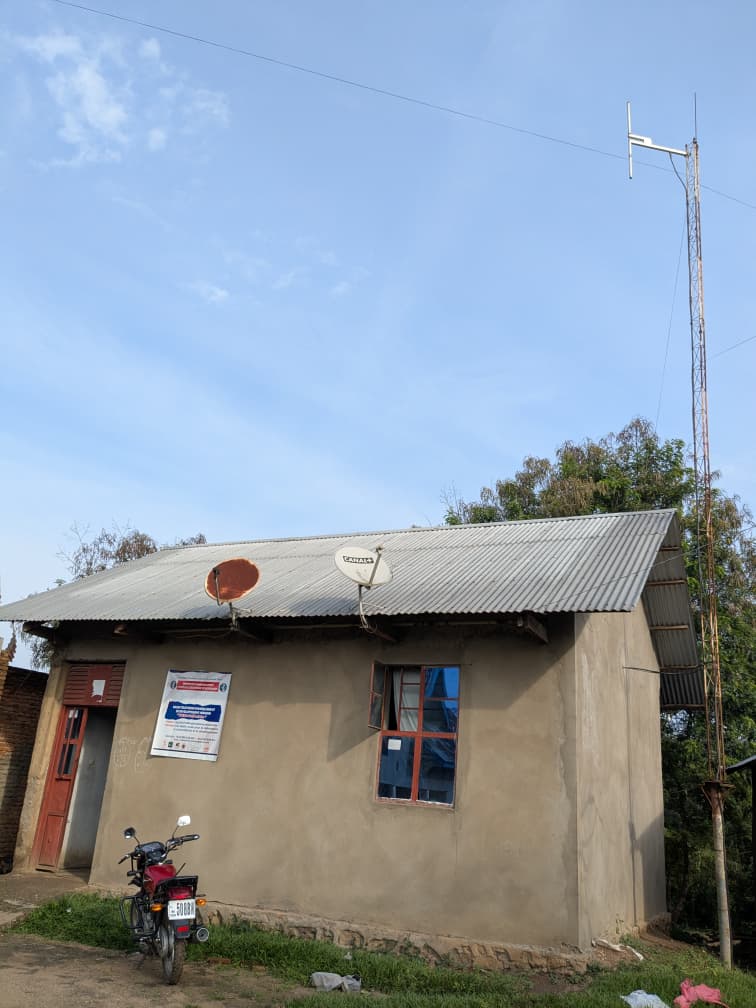
In the Rutshuru territory, the Evangelical Radio and Television Station for Harmonious Development (RTEDH) faces a unique challenge to its sovereignty. Since the arrival of M23 rebels in October 2022, the station has been operating in an area beyond the control of the Congolese government. Unlike the indiscriminate violence seen in Bukavu or Uvira, the M23’s entry into Rutshuru was more “peaceful,” though not without intense psychological and administrative pressure on the media.
The "Contract" of Coercion
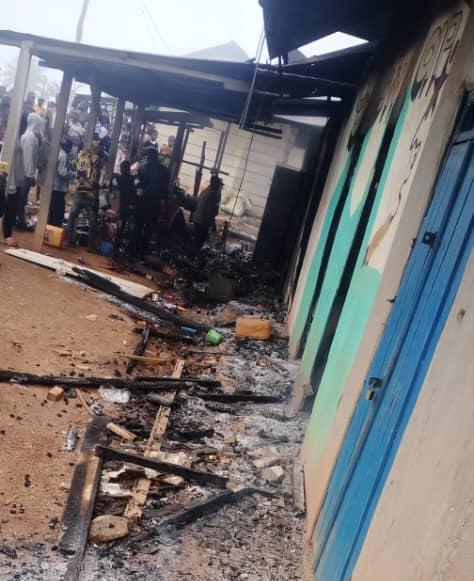
The most significant incident during this occupation was the forced signing of a broadcasting agreement. Two weeks after cutting off their signal for security reasons, radio station officials were summoned by the M23. Under the pretext of “ensuring security,” the rebels demanded that programming resume, even going so far as to offer refreshments to celebrate this new agreement. They even requested airtime to promote their political and development agenda, placing religious radio stations in the difficult position of being forced to collaborate.
Exile to Continue Serving
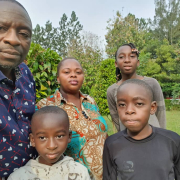
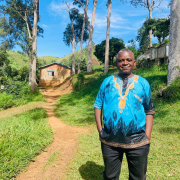
For Kipesse Johnson, the price of resistance was exile. Alerted by friends that he was being sought by the new de facto authorities because of his influence, he was forced to flee toUganda with his family. Today, he embodies a new form of resilience: remote leadership. Thanks to digital tools, he continues to run the radio station and organize meetings with his team back home.
Evangelical Radio and Television for Harmonious Development
A Glimmer of Hope Amid the Occupation
Despite this precarious situation, the radio station has managed to extend its broadcast hours and now airs from 4 a.m. to 10 p.m. While the current situation appears calm on the surface, the hope for the rebels’ withdrawal and the return of the displaced remains the top priority. Kipesse Johnson, though struggling to make ends meet in Uganda, refuses to give in to fear: “A prudent man sees danger from afar.” His daily struggle to keep the RTEDH signal on the air attests to the vital importance of the radio station as the last social and spiritual link for a population living under occupation.
https://mediasebene.org/wp-content/uploads/2026/07/Kipese-Johnson-family.jpeg684912Emmanuel Ziehlihttps://mediasebene.org/wp-content/uploads/2024/11/logo-medias-ebene-web-202411-300x138.pngEmmanuel ZiehliJuly 15, 2026, 9:10:46 AMJuly 15, 2026, 9:13:09 AM“Shock Waves” Series: North Kivu (DRC)—Rutshuru in the Shadow of the M23: Leading the Faith from Afar
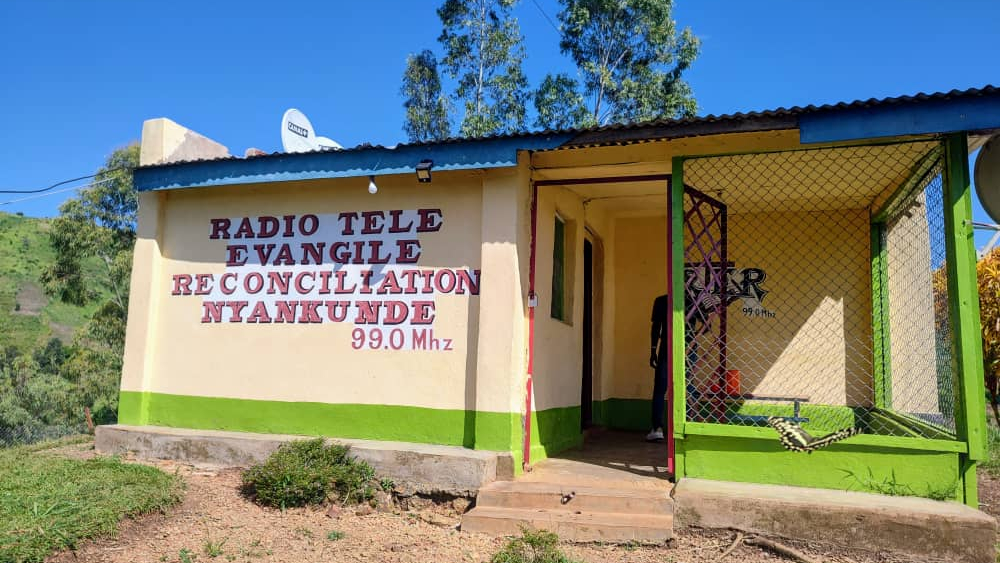
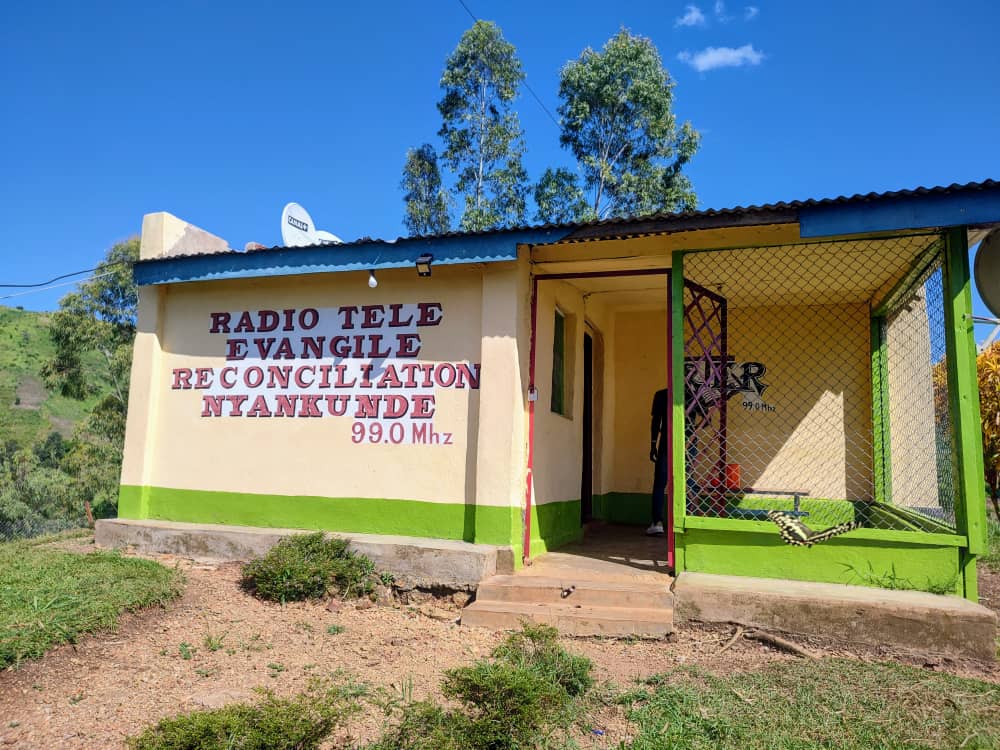
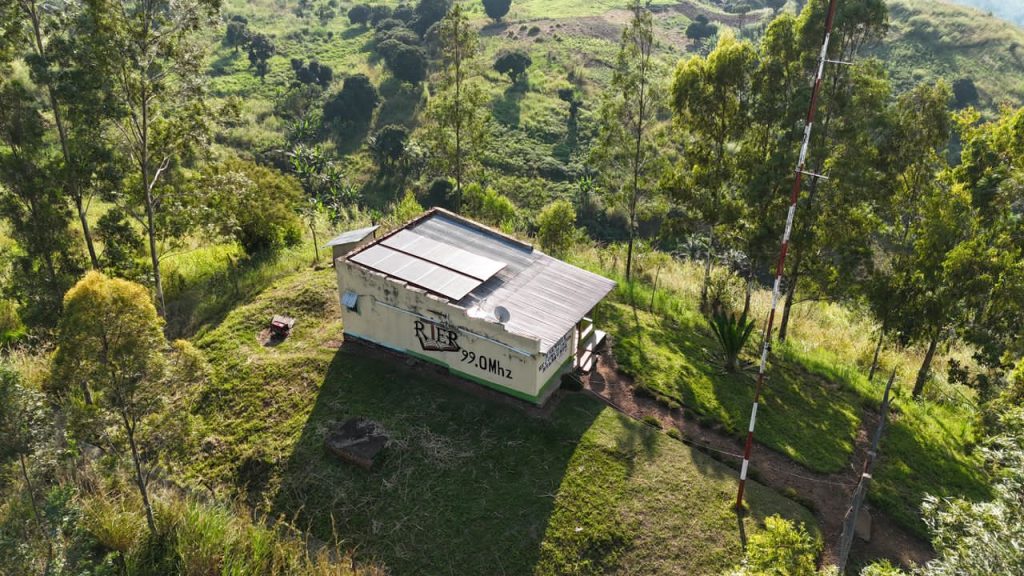
In Ituri Province, in the northeast of the Democratic Republic of the Congo, the small village of Nyankunde is home to a station whose name sounds like a challenge: Radio-Télévision Évangile Réconciliation. Perched on a mountain to better broadcast its signal, the radio station overlooks exceptionally rich soil, teeming with gold, coltan, and uranium. These resources attract the interest of multinational corporations and foreign powers such as China, the United States, and Russia—through the Wagner Group—transforming the region into a constant focus of international covetousness.
The ADF: The Tactics of Terror and Silence
The main adversary facing the local populations is the ADF (Allied Democratic Forces), a radical Islamist group seeking to impose Sharia law on Christian communities in the eastern part of the country. For these jihadists, targeting Christian institutions such as churches, schools, and media outlets is a deliberate tactical choice. News of the attack spreads more quickly by word of mouth, which amplifies their propaganda and forces people to flee, thus leaving the ground open for their training camps.
ADF Violence in Ituri, Almost Daily
Between Direct Threats and Psychological Pressure
ADF members do not merely observe the radio station from a distance; they listen to it closely to monitor the messages broadcast and the intentions of the Christian community. Jean-Luc Simbilyabo reports direct interventions and constant pressure, including intimidating calls from Ugandan phone numbers in which the kidnappers promise to forcibly convert Christians to Islam. At the same time, the imam of a nearby mosque has requested airtime, a move perceived by the radio station’s committee as a form of pressure coordinated with the intensity of the massacres in the region.
The Indescribable Price of Blood and Loyalty
Jean-Luc’s courage came at the cost of indescribable personal tragedies, as he survived three major attacks that struck his loved ones. During a massacre in Komanda, members of his in-laws’ family were burned to death in their vehicle following a jihadist raid on a Sunday. Later, during a direct raid on his home explicitly aimed at finding him, the attackers unleashed their violence on his eldest daughter, who was brutally raped in retaliation for her father’s activism while he was away.
A voice of comfort beneath a “veil of fear”
Today, Nyakunde lives under a cloud of constant fear, and blood pressure among the population is at an all-time high. Yet the radio station remains active and continues to mobilize local pastors to broadcast messages of comfort in various regional dialects. To ensure the continuity of this vision despite the threats, Jean-Luc’s son is currently completing a master’s degree in media studies in Uganda so that he can soon take up the torch. Jean-Luc remains steadfast in his mission, reminding everyone that even though they walk through the valley of the shadow of death, they will fear no evil.
“No matter how dark the path ahead may be or how difficult the trials we face, let us remain steadfast and unshaken in our mission. Remember these words from the Psalm: even though we walk through the valley of the shadow of death, we will fear no evil. Our determination is our greatest strength.” — Jean-Luc Simbilyabo
As the province of Ituri faces an Ebola resurgence, panic and uncertainty are taking hold in the Democratic Republic of the Congo. For Radio-Télévision Évangile Réconciliation (RTER) in Nyakunde, the race against time has begun. An exclusive interview with its director, Jean-Luc Simbilyabo, who counters the prevailing fatalism with public awareness and Christian faith.
The official figures released on May 18, 2026, by the Minister of Health and reported by Radio Okapi are alarming: Ituri Province has surpassed 350 suspected cases, including 91 probable deaths. The urgency of the situation is compounded by a major medical challenge: the outbreak is caused by the Bundibugyo strain, a variant for which there is currently no approved vaccine or treatment.
In Nyakunde, the local population— already devastated by the abuses committed by armed groups—must now face this new scourge. Speaking on the air, Jean-Luc Simbilyabo describes the dual challenges faced by a Christian community radio station.
Exclusive Interview
Emmanuel Ziehli: Jean-Luc, what’s the general mood like in Nyakunde since the official announcement of the outbreak on May 15? Is there a sense of panic building?
Jean-Luc Simbalibabo: Since the announcement, the public has been oscillating between heightened vigilance and deep concern. Residents are trying to follow medical guidelines, but we’re facing a massive wave of false rumors. At first, people thought it was a hoax or fake news, especially after incidents in the Mongwalu mining region where a coffin had been burned. But now, the reality is clear, and fear is setting in.
EZ: Can you tell us more about the current situation and the latest figures at Nyakunde Hospital? There are also reports of an American missionary being infected.
JLS: The situation at Nyakunde Hospital, which is right next to our station, is very concerning. As of this moment, there are 12 recorded cases, including 4 severe cases that have tested positive and are currently in isolation. Panic has escalated following the confirmation that Dr. Peter, an American missionary doctor, has been infected. He has been living here with his family for over three years and works primarily in the emergency room. He treated a patient from Bunia who, unfortunately, has since died. Dr. Peter did not know that this patient had Ebola. This morning, his condition deteriorated severely, and he has been placed under close observation.
EZ: There is no vaccine available for this Bundibugyo strain. How are people reacting to this lack of conventional medical treatments?
JLS: People are terrified. They’re doing their best to follow preventive measures: washing their hands, using ashes as a disinfectant, or soap and hand sanitizer when they can afford it. But it’s a cultural struggle. The Congolese people deeply love to greet one another, shake hands, and be together. For many, having to add this restriction while we’re already suffering under the yoke of the ADF rebels is seen as yet another punishment.
EZ: Speaking of which, how does your Christian radio station adapt its programming to link faith with preventive measures?
JLS: At RTER, we’ve expanded our programming. We consistently combine biblical messages of hope with very practical health guidelines (isolation, hygiene, caution regarding gatherings). The government hasn’t banned religious services yet, but we’re driving home a key truth on the air: faith and prevention go hand in hand.
Radio and Television for the Gospel and Reconciliation (RTER) in Nyakunde
EZ: Changing traditional funeral customs is a sensitive issue for families. What arguments do you use on the air?
JLS: This is a major pastoral challenge. We explain that the physical body is merely a shell and that refusing to touch the remains of a loved one who has died of Ebola is an act of protection for the survivors. We work hand in hand with God’s servants. Through a WhatsApp support group dedicated to countering the rebels, we’ve mobilized about thirty local pastors. They go on the air to encourage churches to adapt their practices: praying for the sick from a distance, without the laying on of hands, and discontinuing physical greetings.
“Drawing on the Epistle to the Romans (14:13), we explain on the air that burying our dead with dignity while protecting the living from infection is the greatest act of love and faith one can perform.” – Jean-Luc Simbilyabo
EZ: The Minister of Health has just delivered 5 metric tons of supplies to Bunia in collaboration with the WHO, but the region has hundreds of thousands of residents. What is the reality of this supply situation in your area?
JLS: Five metric tons for a population of this size is a drop in the bucket. On the ground, international aid is being hampered, particularly by the suspension of USAID funding, which is having a catastrophic impact. In pharmacies, the prices of masks and chlorine have doubled or even tripled. The population is being suffocated. People no longer even have access to their fields because ADF jihadists are demanding a $10 monthly tax just to let them farm! The radio remains the only free and accessible source of information to guide them.
EZ: Despite the repeated crises in Ituri, you continue to hold strong, and you’re even preparing your son to take over. Where do you personally find the strength and resilience to guide your listeners through this new storm?
JLS: I say, along with the Apostle Paul, “I can do all things through Him who strengthens me”—and that is Jesus Christ. It’s not easy, you see… I spend a great deal of time in prayer, with the deep conviction that God can never abandon us when we are in His field, on His mission. He has called us for this, and we are here to press on. Having my son by my side gives me tremendous strength. It gives me hope that one day, if the Lord is delayed in coming, he will be able to help me and take over this heavy burden.
“Having my son by my side gives me strength and hope that one day he will be able to take over this difficult task.” – Jean-Luc Simbilyabo
EZ: What is your most urgent appeal today to the international solidarity network (Médias Ébène, FOMECAF, AbR) that supports you?
JLS: Please pray for us and support us logistically. Our six gel batteries for the transmitter are completely worn out after five years of service. They drain very quickly as soon as the sun goes down. We are then forced to turn on the generator, but the price of diesel has skyrocketed. We urgently need to replace these six batteries to stay on the air, because with the upcoming lockdown and the likely closure of churches, the radio will become the one and only place where people can find comfort, guidance, and the truth.
Sources for this article
Institutional source: Epidemiological alerts from the Ituri Regional Authorities.
Field source: RTER Nyakunde – Exclusive interview with Jean-Luc Simbilyabo.
Médias Ebène is launching a fundraising campaign to meet the urgent needs of Radio-Télévision Évangile Réconciliation (RTER) in Nyakunde; see the “Ituri Emergency” notice for details
https://mediasebene.org/wp-content/uploads/2026/05/Jean-Luc_2.jpeg1080810Emmanuel Ziehlihttps://mediasebene.org/wp-content/uploads/2024/11/logo-medias-ebene-web-202411-300x138.pngEmmanuel ZiehliMay 18, 2026, 5:17:34 PMJune 9, 2026, 11:44:47 AMJean-Luc Simbilyabo (RTER): “In the Face of the Ebola Outbreak in Ituri, Faith and Prevention Go Hand in Hand”
The province of Ituri, in the Democratic Republic of the Congo, is facing a security and humanitarian crisis of alarming proportions. Between March 28 and 31, 2026, rebels from the Allied Democratic Forces (ADF) carried out a series of bloody raids, blocking major roads and plunging the Mambasa region into terror.
Casualties and Mass Abductions
The weekend of March 28–29 marked a turning point in the violence along the Mambasa–Komanda route. According to Radio Okapi, the raids began in Babungwe before moving on to Lomalisa, where the attackers fired into the air to force villagers to surrender. Human rights activist John Vuleverio, quoted by the media outlet, cited the terrifying figure of 388 civilians taken hostage.
The horror does not end with the capture. Local sources cited by ituri.cd and CODEPEF report that “some victims were reportedly executed, their bodies left unburied at the scene” in the Bakwanza Forest. This situation has led to the closure of more than ten health facilities, depriving thousands of people of vital care.
A Paralyzed Economy and Mobility
On Monday, March 30, another attack struck the Mambasa–Bunia road near Muchanga. Laurent Kyeya, coordinator of CODEPEF (Convention for the Development of Forest Peoples), paints an extremely grim picture: “Of the seven chiefdoms in the Mambasa territory, the majority are currently under threat from ADF rebels. This insecurity is affecting several major road routes, notably Mambasa–Nduye, Mambasa–Kisangani, and Mambasa–Beni.”
As RFI points out, this strategy of terror directly targets road users and farmers. In the towns of Makokolo and Mandima, residents no longer dare to go to their fields, which is seriously jeopardizing agricultural production. The consequences are immediate: massive population displacements toward the center of Mambasa and a total paralysis of socioeconomic activities.
A Testimony to Resilience
When asked about this situation, Jean-Luc Simbilyabo, director of RTER (Radio Télé Évangile Réconciliation) in Nyakunde, delivers a message of strength and faith:
“The repeated attacks along the Mambasa–Komanda route serve as a reminder of the silent suffering of thousands of families living between fear and hope. Yet, even amid the ashes, faith remains alive: Christians continue to pray, serve, and bear witness. We can support this mission through prayer, by sharing these testimonies, and by providing concrete support to local radio stations that carry the voice of truth and peace. As it is written: ‘The light shines in the darkness, and the darkness has not overcome it’ (John 1:5).”
Calls for a large-scale intervention
In light of the emergency, civil society and media outlets such as Yahoo News (AFP) are calling for large-scale military operations. “Protecting civilians is a fundamental obligation of the state,” insists John Vuleverio. While the territory’s assistant administrator, Colonel Maxime, is calling for calm and assuring the public that “military operations are continuing,” the population is waiting for tangible results to secure the roads and free the captives.
Solidarity: Médias Ébène offers its full support to the Christian radio stations that are members of FOMECAF and operate in the region, particularly RTER Radio in Nyakunde, which remains an indispensable beacon of hope amid the turmoil.
New Developments: Ransomware Extortion
According to an update from the RTCR on April 2, following the incursion into Muchanga (on the Mambasa-Bunia road), the kidnappers have taken the horror to a new level. The rebels are now demanding a ransom of $10,000 to release some of the hostages captured on March 30. This financial blackmail is deepening the despair of families already deprived of their livelihoods, as access to their fields has become impossible in Makokolo and Mandima.
CODEPEF (Convention for the Development of Forest Peoples): Report by Attorney Laurent Kyeya on insecurity in the Mambasa territory (March 30–31, 2026).
RTER (Radio Télé Évangile Réconciliation): Exclusive interview with Jean-Luc Simbilyabo, station director in Nyakunde (April 1, 2026).
Regulatory Authorities
Mambasa Territorial Administration: Statements by Colonel Maxime, Assistant Administrator, regarding ongoing military operations.
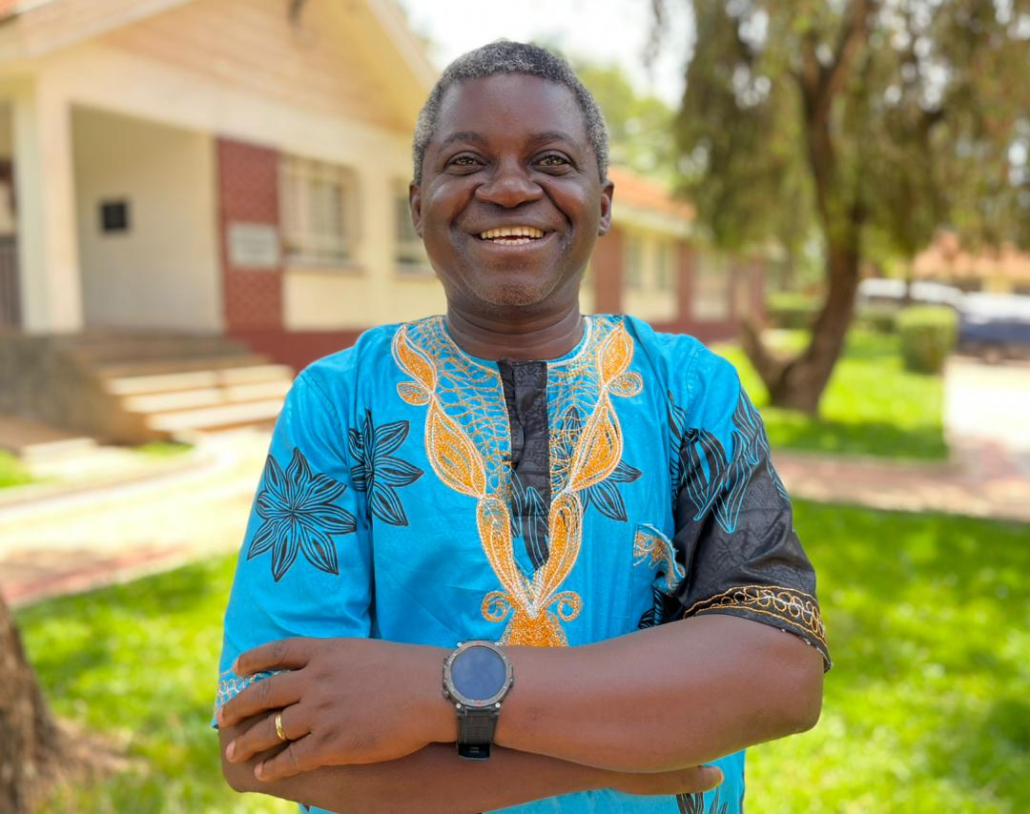
Radio Télé Evangile Réconciliation (RTER) is located in Nyankunde, in Ituri Province, in eastern Congo. In September 2002, the Nyankunde Medical Center was the site of one of the worst massacres of the Ituri conflict. For 10 days, Germain Katanga’s Ngiti fighters—later known as the FRPI—killed at least 12,000 people in and around Nyankunde. The concept of reconciliation, as embodied by the radio station led by Jean Luc Simbilyabo, is not overused. Very recently, he shared with us this masterful example of “integral radio,” which we are pleased to share with you here.
The Quest for Gold and Its Challenges
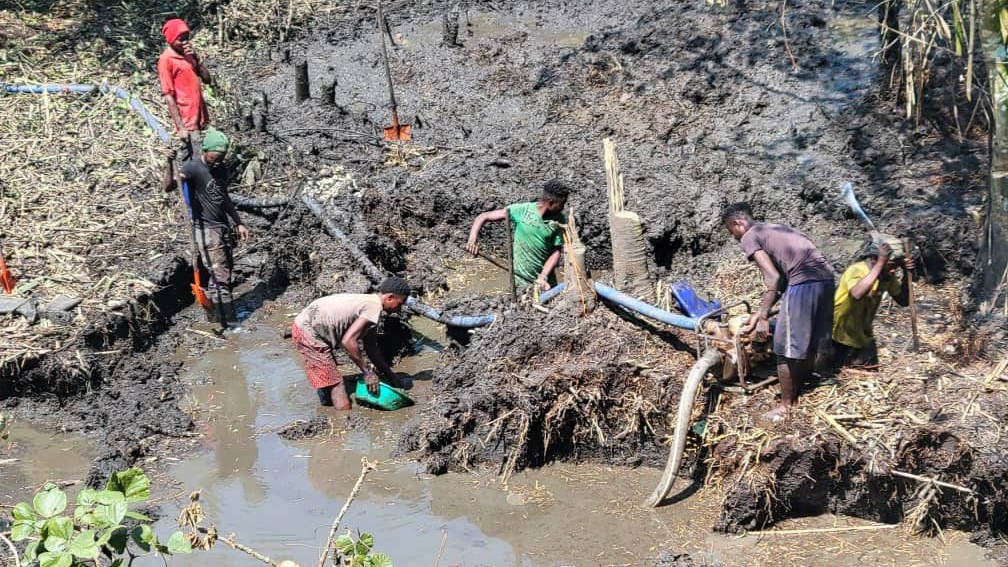
The history of the Radio Télé Evangile Réconciliation (RTER Nyankunde) is closely linked to that of the gold miners. These courageous gold miners, despite difficult conditions, work tirelessly to improve their lives and those of their communities, demonstrating exemplary solidarity and resilience.
Every day, men and women set out in search of gold in remote areas, armed with rudimentary tools and unwavering determination. Without modern equipment, their work is difficult and their productivity is limited. Nevertheless, they persevere—not only to provide for their families, but also to support local projects, including our radio station.
Radio as a pillar of the community
Their story is remarkable, particularly because of their financial support for our station, despite their modest incomes. They recognize the importance of local media in giving the community a voice, informing, educating, and bringing people together. This support allows us to maintain and expand our programming, thereby linking their work to the region’s development.
In return, our radio station offers specialized programs to support small-scale gold miners, educating them on resource management, best practices in health and safety, and their rights. The radio station provides them with a platform for expression and dialogue, strengthening solidarity and fostering collective solutions. The results are clear: small-scale gold miners now view their work as an opportunity for transformation.
A Future Full of Hope
However, gold miners face major challenges, including limited access to medical care and protective equipment. Children suffer from malnutrition, and premature deaths are common. Despite these hardships, they hope for a better future.
Local authorities’ support for small-scale gold mining offers an alternative to young people who are often tempted to join armed groups. In eastern DRC, this activity represents a tangible source of hope for thousands of families.
With better support, gold miners could increase their production and their positive impact on the community, thereby transforming their lives and strengthening local projects like our radio station. Their courage and determination, combined with the right support, pave the way for a future where everyone contributes to collective development, building a better world for future generations.
J
e
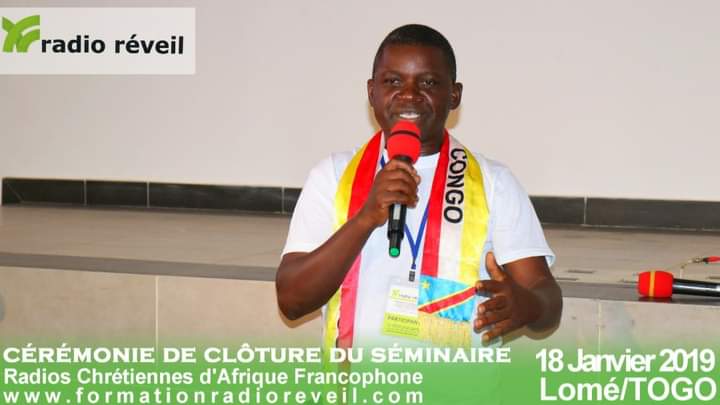
Jean Luc Simbilyabo, director of Radio Télé Évangile et Réconciliation in Nyankunde, at the first training seminar held in Lomé in 2019.