Tag archive for: Lomé 3

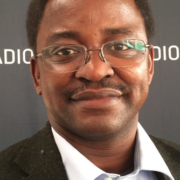
On the sidelines of the conference to be held on Thursday, March 27, 2025, at 6:30 p.m. at the University of Geneva, Uni Mail, room MS150, Illia Djadi, a member of our association, was invited to appear on Swiss National Radio RTS. He offered perspective on a region that, for the first time, accounts for "more than half of all terrorism-related deaths , " according to the Global Terror Index (GTI). Burkina Faso tops this index. The urgency of the actions carried out by Médias Ébène through the media, as vectors promoting peaceful coexistence, is more pressing than ever.

For several years now, this area stretching across Africa from east to west (mainly Mali, Niger, Burkina Faso, Chad, and Mauritania) has seen a worrying rise in jihadist groups such as the Islamic State in the Greater Sahara (ISGS), Jama'at Nusrat al-Islam wal-Muslimin (JNIM, affiliated with Al-Qaeda), and Boko Haram in the Lake Chad basin.

Several factors contribute to this situation:

  • The fragility of states and the lack of control over vast territories
  • Governance crises and political instability (recent coups)
  • Inter-community conflicts exploited by terrorists
  • Poverty and lack of economic opportunities
  • Climate change exacerbating tensions over resources

The withdrawal of Western forces (notably French forces with the end of Operation Barkhane) and tense relations with regional organizations have created a security vacuum. At the same time, the influence of groups such as Wagner (now Africa Corps) has grown in the region.

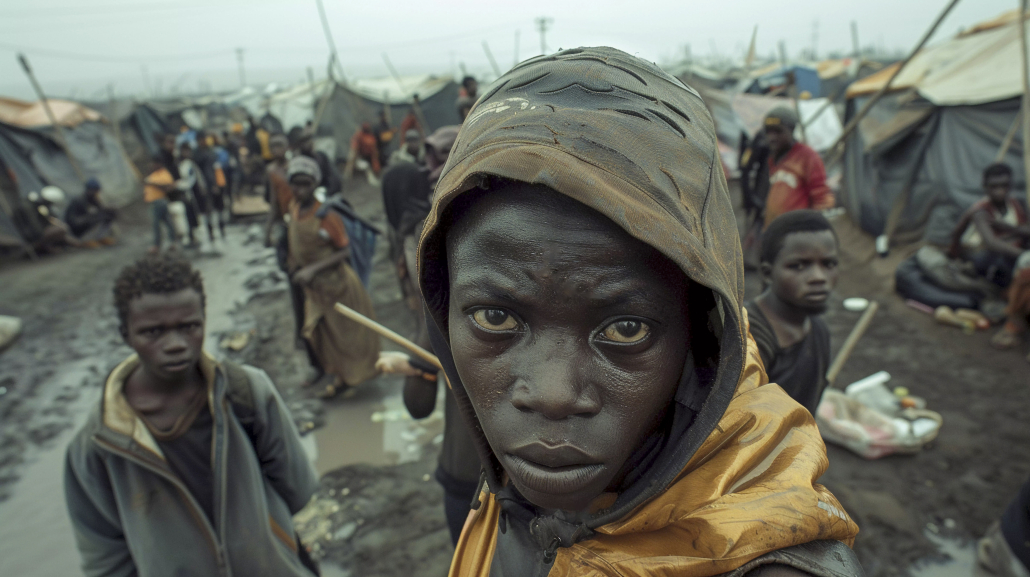
This concentration of terrorist activity, combined with geographical expansion into coastal countries such as Benin, Togo, and Côte d'Ivoire, justifies considering the Sahel as a new epicenter of global terrorism.

Lomé, May 21, 2021,

With the aim of strengthening ties between members and continuing the training courses initiated in Lomé, FOMECAF is organizing two online meetings on Tuesday and Wednesday, May 25 and 26, 2021.

On the agenda:

Tuesday, May 25, 2:00 p.m. GMT:

The principles of effective communication

Freely inspired by Valérie Geller's bestseller "Puissance radio" (Radio Power). Some of the points that will be covered:

  • Tell the truth (fact-checking)
  • Give the listener good reasons to listen to you.
  • Never be boring
  • Use vivid language so that the listener can visualize
  • Start with your best topic
  • Speak as if you were addressing a single listener
  • Make engaging transitions
  • Highlight your colleagues' successes
  • Be yourself on air
  • Take risks

Speaker: Denis Stephen, Director of Stephanas Conseils in Lyon

Denis entered the world of radio as co-founder of Radio Certitude in 1982 (now Phare FM Grenoble), so it's fair to say he's no novice.

After two years of audiovisual training at the University of Grenoble, he moved to Paris and was elected secretary and then president of the FRTC (Federation of Christian Radio and Television Stations). He was also a member of the board of directors of the CNRA (National Confederation of Community Radio Stations). Denis Stephen currently advises radio stations on their applications to the CSA (Conseil Supérieur de l'Audiovisuel, the French broadcasting authority) and is developing a training course entitled "Create and manage a Christian radio station," the first two lessons of which are available online.

The link to the training session will be shared in the FOMECAF WhatsApp group on Tuesday morning, May 25. If you are not a member of FOMECAF but would still like to participate in this training session, please leave your contact details here https://medias.africa/contact/ A valid email address + a phone number = a guaranteed response.


Wednesday, May 26, 2:00 p.m. GMT:

Full radio coverage: it's your turn to speak!

In January 2019, around 100 radio stations and media outlets in Lomé 1 realized their desire to work together http://bit.ly/lome-1 without competing with each other. On this occasion, they signed the Lomé Declaration  http://bit.ly/DeclarationLome  arguing in particular that "Christian radio programs in French-speaking Africa should be more concerned with the concrete needs of the population. The Gospel should be proclaimed in a holistic manner, in the image of Jesus Christ, who touched his contemporaries by responding to the needs of the body, soul, and spirit." That same year, these actors came together around the concept of "holistic radio" http://bit.ly/lome-deux . It is now May 2021, so what's new? During this online seminar, you will have the opportunity to share your experiences with "integral radio."

Host: Etienne Kiemdé, CEO of Radio Évangile et Développement in Ouagadougou

The debate was moderated by Pastor Etienne Kiemdé, CEO of Radio Évangile et Développement, which has eight stations based in Burkina Faso. http://red-burkina.org . He is a key figure in the Lomé seminars, a member of the FOMECAF working group, and probably, more than 20 years ago, the inventor of the concept of development adapted to radio broadcasting. At 58, this father is also a pastor, trained in Denmark, France, and England. Upon his return to the African continent, he embraced the radio ministry as a matter of urgency. Before FOMECAF, he was behind several attempts to network French-speaking Christian radio stations in Africa.

For more information: https://radio-reveil.org 

The link to the training session will be shared in the FOMECAF WhatsApp group on Tuesday morning, May 25. If you are not a member of FOMECAF but would still like to participate in this training session, please leave your contact details here https://medias.africa/contact/ A valid email address + a phone number = a guaranteed response.

The issue of religious extremism is a hot topic in Africa, which is under serious threat from jihadism. This raises questions about the role of Christians in such a context. For Augustin Ahoga, a pastor and teacher in Benin, the rise of religious extremism is linked to Christians abandoning African cultural values. Christians are developing a fear that prevents them from approaching jihadists with a different perspective. In order to reach these people, whose lives are generally stigmatized, Christians need training and to enter into authentic discipleship following Jesus of Nazareth.

Augustin Ahoga was one of the speakers at Lomé 3, a gathering of media professionals from French-speaking Africa organized by FOMECAF and Radio Réveil last November.

Read the rest of the interview on the website lafree.info

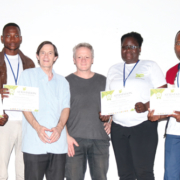
The training seminar for Christian media professionals in French-speaking Africa ended on Friday, November 27, with the awarding of the François Sergy Prize to a deserving media initiative. Jean-Luc Simbilyabo from eastern Democratic Republic of Congo won the prize for an original "integral radio" project.

On Friday, November 27, during the closing ceremony of the training week of the Forum of Christian Media in French-speaking Africa (FOMECAF), Congolese pastor Jean-Luc Simbilyabo received the François Sergy Award. "In the province of Ituri, a region deeply marked by intertribal unrest, this radio director took up the challenge of 'integral radio' and contributed through the airwaves to bringing a message of peace and reconciliation," noted Emmanuel Ziehli, director of Radio Réveil and the driving force behind the Lomé 3 organization.

Read the rest of the interview on the website lafree.info

On Monday, November 23, 2020, FOMECAF launched the third edition of the Francophone African Christian Media Forum (FOMECAF) training program. In his speech at the opening ceremony, the Minister of Communication encouraged religious radio media actors to strive for excellence in communication.

"Information is a valuable asset and a weapon," said Akodah Ayewouadan, Minister of Communication, in his speech at the opening ceremony of Lomé 3. The minister, who also serves as government spokesperson, said he was "impressed by the theme of media convergence addressed during the training week of the Forum of Christian Media in Francophone Africa (FOMECAF), because it promotes excellence in communication."

Read the rest of the interview on the website lafree.info

The Christian Council of Togo, in conjunction with the third edition of the training seminar for Christian media professionals in French-speaking Africa.

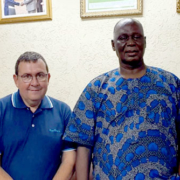
With the third week of training for media professionals from French-speaking Africa set to begin in a few days, the President of the Christian Council of Togo, Rev. Djakouti Mitré, received a delegation from the Lomé3 Organizing Committee led by Emmanuel Ziehli, Director of Radio Réveil Suisse. At the end of the meeting, the clergyman promised to attend the opening ceremony and to accompany it with a prayer of blessing.

Read the rest of the article on the FOMECAF website

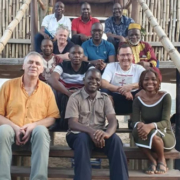
"Media convergence and career versatility" is the theme chosen for the third edition of the "Lomé" seminars. From November 23 to 27, around 50 Christian media professionals from French-speaking Africa are expected to gather in the Togolese capital. In light of the current health situation, the event will also be accessible online.

Lomé, August 25, 2020. FOMECAF (West African Christian Media Forum), Radio Réveil, and CICERI will organize the third edition of the "Lomé" media training meetings in Togo from November 23 to 27. During this week of training, the focus will be on media convergence and the necessary versatility of journalism-related professions.

In person and online
In light of the current health situation, the "Lomé 3" seminar will only welcome around 50 participants in person, who will be accepted on the basis of their application. All other interested parties will be able to follow the conference online. The organizers are thus adapting to the health situation and are committing extensive resources to ensure high-quality web broadcasting.
Workshops will enable participants to develop their skills in image capture, web radio, animation, journalism, and FM techniques.

Two pioneers of radio in French-speaking Africa as distinguished guests
Abdoulaye Sangho, director of Trans World Radio (TWR) Africa, and Illia Djadi, currently director for Africa at the NGO Open Doors and former French-speaking correspondent for the BBC in West Africa, will be among the speakers. Businessman Kurt Buehlmann, author of the course "40 Days to Revolutionize Your Finances" and the radio program "Your Money Matters," will also lead a workshop on the economic management of media. It will enable radio promoters and financiers to seek solutions to promote the self-financing of their media.

The horizon: multimedia
Today, more than ever, the media are converging toward multiple distribution channels. The internet is gradually revolutionizing usage in West Africa, particularly among young people, and impacting the media. The challenge is no longer the construction or ownership of a traditional broadcast channel (TV, radio, web, or print media), but rather the content. Any well-trained person, especially young people, can create texts, sounds, and images from well-chosen topics and professional information processing that can be picked up by any broadcast channel.

Busy week for FOMECAF
This week will also help strengthen ties between members of FOMECAF, the Forum of Christian Media in West Africa. As a reminder, in early 2019, more than 40 media outlets signed the "Lomé Declaration," a founding charter for a network of West African media outlets that emphasizes collaboration and exchange. Together, they signed a document summarizing this initiative, which now brings together around 100 media outlets in a dozen French-speaking African countries.

The website of the West African Christian Media Forum
Pre-registration
The Lomé Declaration
Radio Réveil France
CICERI Togo


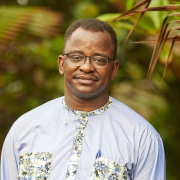
Actively involved in defending religious freedom in Africa, Illia Djadi was in French-speaking Switzerland this week to prepare for the third meeting of journalists and radio presenters, which will be held in Lomé from November 23 to 27 under the auspices of Radio Réveil in Bevaix (Switzerland). The journalist, formerly with the BBC, reveals some of the key points of his speech here: the importance of promoting peaceful coexistence between ethnic and religious communities. Interview.

An interview with Serge Carrel, published on theFREE website

Illia Djadi, you will be arguing in Lomé 3 the importance of developing programs on evangelical radio stations in French-speaking Africa that address living together. Why?

This is a topical issue that is particularly relevant today given the situation in all countries in the sub-region. Whether in Niger, Mali, Burkina Faso or elsewhere, peaceful coexistence is under threat. This is mainly due to the emergence of jihadist movements... Yes. Jihadist movements are active throughout this part of the southern Sahara. They threaten the very existence of countries such as Mali, Burkina Faso, and Niger. These armed groups are attempting to divide communities along ethnic or religious lines. For hundreds of years, these religious communities have learned to live together, despite localized conflicts.

How can churches play a role in combating the trend toward Islamization that we are seeing in French-speaking Africa?

In French-speaking Africa, churches and radio stations affiliated with them are major players on the social scene. Churches are involved in the education of children and young people; they are involved in social development and construction projects, as well as in health centers. Today, we realize that the existence of these churches is threatened because Christians themselves are threatened. Hence the responsibility of churches to take a stand as social actors so that something happens.

In concrete terms, what role can evangelical radio stations play? Given the importance of radio in Africa, producing programs that raise awareness about living together and social cohesion is fundamental. Do you have any examples where radio has played an important role in promoting a culture of tolerance between communities?

In Niger, my country of origin, following the events at Charlie Hebdo in Paris in January 2015, around a hundred churches and buildings belonging to Christians were ransacked and destroyed. Following this event, there was a reawakening of consciousness, to the point where the main leaders of the religious communities, notably Protestants, Catholics, and Muslims, could be seen together on the same radio or television program. By simply coming together, they sent a strong message to the entire population. They were able to say: "We are united. What happened was an unfortunate and isolated incident. It is not representative of Islam. The majority of Muslims do not identify with these acts of violence. With one voice, we reject and condemn what happened!"

Any other examples worth mentioning where radio helped to defuse a situation?

In Burkina Faso, thanks to radio stations that broadcast programs in all local languages, it is possible to send messages to different communities, whether they are Mossi or Fulani, to draw their attention to the danger threatening this country known for its culture of tolerance. In practical terms, a Christian radio station can invite an imam into its studio from time to time. This is already a powerful symbol of acceptance of others and acceptance of their differences. Theological teaching is also needed so that local Christians understand that persecution is an integral part of Christian life...

But isn't this already retreating in the face of the emergence of these violent movements?

No, it is first and foremost a matter of awareness, so that we can respond appropriately in such a context. Persecution can take many forms. Today, we realize that it arises from Islamic fundamentalism and attacks perpetrated by extremist groups. In such a context, burying our heads in the sand is not enough. We must offer a counter-narrative based on the love that Christ invites us to show to our neighbor, including our enemy. Such a counter-narrative is capable of counteracting the hate speech of Islamists, because people are sensitive to gestures of love, acts of love, and discourse that promotes tolerance. We must therefore produce programs that, as the Lomé 2 conference highlighted in 2019, develop a holistic message, one that takes into account the realities and challenges facing society and the churches today, and responds to them.