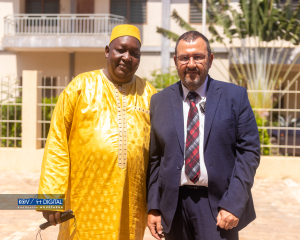
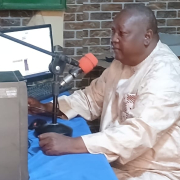
In the heart of Timbuktu, Radio Tahanint—whose name means “Mercy” or “Pity” in the Tamasheq language—stands as both a pioneer and a miracle. Launched in April 2007 by the Timbuktu Evangelical Baptist Church, it was the very first Christian station to broadcast throughout northern Mali, a region where the media landscape was then dominated exclusively by general-interest or Islamic radio stations.
The history of Tahanint is marked by persecution, particularly in 2012 during the occupation of Timbuktu by Tuareg rebels and their jihadist allies. During that period, the radio station was systematically ransacked, its facilities looted, and its electrical wires torn from the walls to ensure that the Christian voice would no longer be heard. Forced into exile in Bamako, Director Abdoulaye Cissé and his team did not return until 2013, following the recapture of the city. However, the most profound trauma occurred on December 17, 2015, when an assailant emerged from the shadows and opened fire on a group of young people in front of the studios, killing three of them, including one of the station’s hosts. This “darkest day” left an indelible mark on the station’s history, yet it did not diminish its resolve.

"Radio Intégrale" as a Bridge Between Communities
To overcome hostility and obstacles, the radio station adopted a “Radio Intégrale” strategy by presenting itself as a community-based, non-denominational station rather than a religious one. Rather than limiting itself to purely religious content, it broadcasts programs on health, agriculture, and human development to address all aspects of human life. This approach has yielded unexpected results, as evidenced by the case of a neighbor who is a muezzin and has become a loyal listener to the medical program “Docteur Luc,” which he tunes in to regularly for both his physical and spiritual well-being.
Technological Independence and Regional Influence
Today, Radio Tahanint has turned its weaknesses into strengths thanks to greater technological autonomy and expanded regional reach. In terms of energy, a partnership with FEBA has enabled it to acquire a large-scale solar power system with lithium batteries, allowing it to broadcast 24 hours a day without relying on a faulty public grid or being vulnerable to sabotage. Furthermore, its reach is no longer limited to Timbuktu; its programs are now broadcast by a network of more than 30 partner radio stations throughout the region, notably in Goundam, Diré, and Niafunké, spreading messages of peace where some seek to impose silence. Although threats persist from time to time, Abdoulaye Cissé affirms that the radio station still has a bright future ahead of it, as it has become a key player in Mali’s media landscape.