We’re Not in Paradise: A Nigerien Analyst Explains Christians’ Concerns Following the Coup
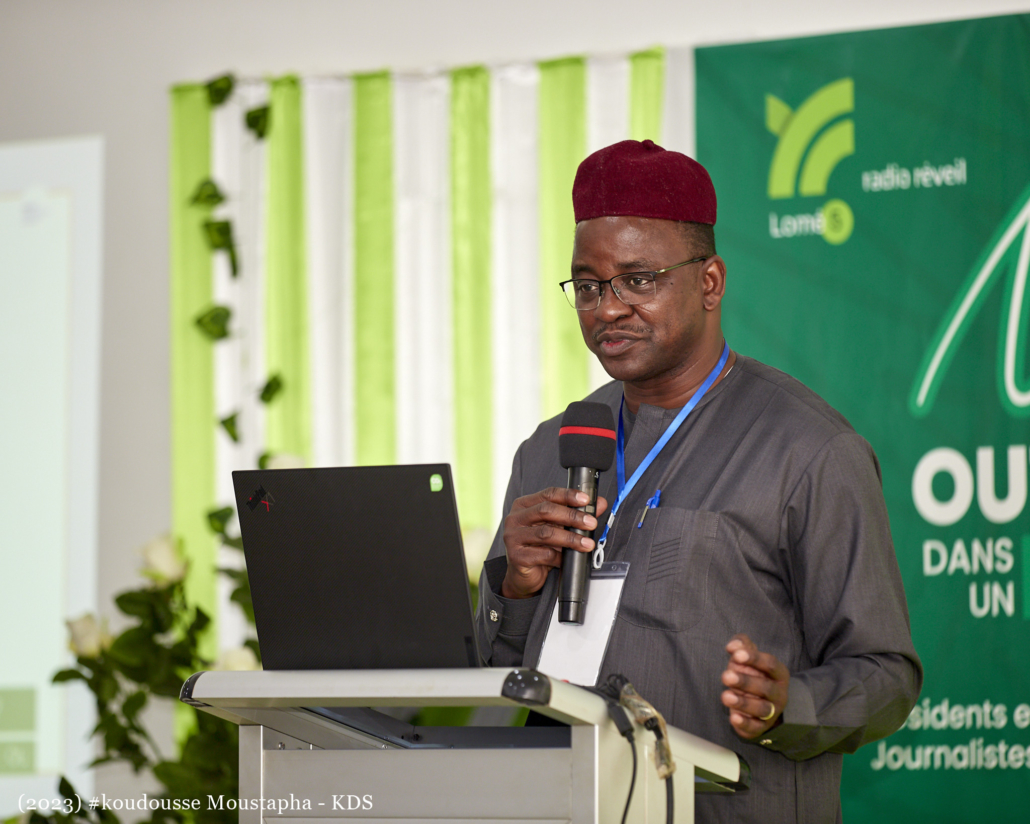
Facing the war in West Africa and Western sanctions, the Christian minority in the Sahel region, plagued by jihadists, is praying intensely for peace.
The military coup in Niger has now entered its third week. Four days after the July 26 putsch, the 15-member Economic Community of West African States (ECOWAS) threatened military intervention if democracy was not restored within seven days.
That deadline has passed, and leaders are still considering their options while imposing sanctions against the junta, the group of military officials who seized power. However, concerned about this seventh coup in the Sahel region since 2020, the remaining democratic nations of West Africa believe they must draw a line in the sand.
Neighboring countries Mali and Burkina Faso, both currently under military rule after their recent coups, have warned that any foreign intervention in Niger would be considered an act of war against them.
Niger experienced its last coup attempt in 2021, just before the elected president – now deposed – was sworn into office. The former French colony was the last stronghold of Western military cooperation against jihadist militants in the Sahel, at a time when Russia's regional influence was expanding through its Wagner mercenary group. Niger is also the world's seventh-largest producer of uranium.
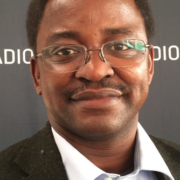
"Christianity Today" interviewed Illia Djadi, Senior Analyst for Open Doors on freedom of religion and belief in Sub-Saharan Africa. Although he lives in London, he is a citizen of Niger, a country ranked 28th on the World Watch List of the 50 nations where it is most challenging to be a Christian. Mr. Djadi outlined the regional context, described the difficult but improving situation for Christians, and made a strong plea against military intervention:
How serious is the current situation in Niger?
I am very saddened. As a Nigerien, I find the situation difficult to witness.
However, as an analyst, I can say with certainty that what happened two weeks ago has plunged Niger into a new era of uncertainty. The country is grappling with an Islamist terrorist insurgency originating from Nigeria, Mali, and Burkina Faso. Niger is also one of the world's poorest nations, and unemployment makes it easier for our youth to become radicalized. We are certainly not in paradise.
However, compared to our neighbors, our situation was much better. For the first time in our history, a president completed two terms before peacefully handing over power through democratic elections. President Mohamed Bazoum had done a great deal to stabilize the country and enhance security. I cannot recall the last terrorist attack we experienced. And despite its poverty, Niger hosts 300,000 refugees from other countries because it is considered safe. All of this indicates that the coup was not justified and represents a major political setback. Active militants will undoubtedly exploit the ensuing instability.
Why did the coup happen?
Personal ambition. The junta claims the coup was motivated by security concerns and a deteriorating economy. However, some assert that the president was preparing to appoint a new security chief. The security chief, who had been in his position for 12 years, was slated to be replaced, but he refused and instead overthrew the president to maintain his power.
Do you see a connection between this coup and others in the Sahel region?
Only in two ways: There's a general regional political fragility and a "copy-paste" mentality. Given the coups that have occurred in Mali and Burkina Faso, people now expect similar events here. West African youth harbor anti-French sentiment due to the colonial past, and some have even waved Russian flags during protests.
I don't know if Russia is behind this coup.
However, the region faces external influence from France, the United States, Middle Eastern countries, and, more recently, Russia. Niger is the primary Western ally in the region. As a French-speaking country, we share many connections. We are witnessing a new scramble for Africa, driven by the search for its natural resources.
In this context, France is often made a scapegoat. While this scapegoating can sometimes be justified, France is not responsible for everything. And it is certainly not fair to suggest: "Let's replace France with Russia." This is precisely what occurred in Mali and Burkina Faso, and those nations are heading in the wrong direction.
How so?
Political instability. Since the 2012 coup, Mali has never fully recovered, with one coup following another. Each new leader promises solutions, but the country is losing the fight against terrorism.
The 2014 social uprising in Burkina Faso also resulted in a military coup that attempted to resolve the ensuing problems but never succeeded. Once again, a series of coups followed, and today, the country has lost control of over half its territory to militant insurgencies.
Do you believe that military intervention by ECOWAS is necessary to stem the tide of military regimes and the instability they cause?
No, that would only worsen the situation. Military intervention would create chaos and provide a haven for terrorists. We do not want another Libya, which borders Niger and ultimately exported its crisis of instability throughout the entire Sahel region. Whether it's a Western or African intervention, war would be a similar mistake.
Have Christians expressed their opinion on the coup?
No, as a religious community, they are not required to do so. However, they were included by the junta when national stakeholders were called upon. The purpose was simply to provide explanations, and the junta asked the Church to pray for the nation. Both evangelical and Catholic churches have issued a call for prayer for a peaceful resolution to the crisis.
Nigerian Christians do not hold political opinions, but they oppose the imposition of economic sanctions against their country. These sanctions would affect everyone, much like a war would. However, for the most part, Christians are worried, fearing they will be among the first to pay the price if the chaos continues.
Why?
In 2015, during the protests against Charlie Hebdo in France, when the magazine published satirical cartoons of Mohammed, demonstrations also occurred in Niger. Muslims burned French flags and a French cultural center, but then they attacked Christian churches, homes, and schools. Many people associate Christians with Westerners, and once again, we are seeing French flags being burned. This is therefore a cause for concern.
How do Christians integrate into the social fabric of Niger?
They represent a tiny minority: 1% of the population, compared to 99%. And although Niger is a secular country where freedom of religion is protected by the constitution, Christians often face difficulties. For example, we have records of Nigeriens who were denied university scholarships because of their Christian names.
Catholic Christianity emerged in the 19th century with French colonialism, but the Protestant church was largely established by American missionaries. The largest denomination – the current Evangelical Church of Niger – originated from the work of SIM, which came from Nigeria.
Baptists are also present, mainly in the western region. In the 1980s, Pentecostal groups from various parts of the world – France, the United States, Nigeria, Burkina Faso, and Ivory Coast – came to Niger and established, among others, the Assemblies of God denomination.
But overall, Christians share the same poverty as everyone else.
What is your faith story?
I was raised in the evangelical church. My parents attended a Christian school and eventually converted. My extended family includes Muslims and followers of traditional religions, and we live together peacefully.
In middle school, however, I became aware of my difference. Classmates asked me: 'You are Nigerian, Hausa, how can you be Christian?' I began to wonder if my faith was a mistake.
But in high school, I had developed strong convictions, not only to defend my faith but also to challenge others. My friends called me 'the Pope,' in reference to John Paul II, because I wasn't afraid to face the crowd. You have to be strong to be a Christian in Niger, and when I reflect on my current position as a lawyer, that's probably how it all began.
What's next for Nigerian Christians?
We don't know – the situation is very fragile. But as I said, our country is doing better than its neighbors, and the situation for Christians has also improved. After 2015, the government responded to the riots by strengthening religious relations, and the Church joined the successful national campaign to promote social cohesion. Today, Christians are present in the public sphere, employed in civil service. We have the freedom to preach, and even to organize large public gatherings.
The last time I lived in Niger, I was the national leader of our youth association, and we organized summer camps in churches and our Protestant schools. Today, these camps take place in public venues, with high-ranking officials present, and are broadcast by public television and radio services.
The military coup is a setback. But so far, there is no indication of rhetoric against Christians. We fear instability and pray for peace. God willing, this period of uncertainty will come to an end.
Credit:
JAYSON CASPER | August 11, 2023
Translation: FOMECAF