Tag archive for: French-speaking Africa

Pontarlier, February 28, 2024

It is with deep sadness that Youth With A Mission (YWAM) announces the death of eleven of its members in a road accident on Saturday, February 24, near Arusha, Tanzania.

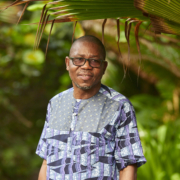
A truck without brakes crashed into several vehicles, including a bus carrying participants to a leadership seminar. The toll was heavy: 25 people lost their lives, including eleven members of YWAM. Among the victims were Blaise Gaitou, a member of the FOMECAF leadership, and three people who had participated in activities initiated by the Radio Réveil association in French-speaking Africa.

Blaise Gaitou played a crucial role in the development and success of our organization's activities in French-speaking Africa. From 2016 to 2018, he was a driving force behind our presence in Niamey, Niger. His commitment and expertise enabled us to forge lasting links with local stakeholders and launch promising initiatives. In 2019, he then made a significant contribution to the establishment of our organization in Lomé, Togo. His involvement in the creation of FOMECAF was decisive, as were his interventions and training sessions with numerous African media professionals.

Blaise Gaitou, craftsman of community life

In Niger, Blaise, who was Muslim, was a true champion of peaceful coexistence. He played a key role as a mediator between different communities and was passionately committed to promoting interfaith dialogue. Alongside his other activities, Blaise hosted a program on the secular radio station Nagarta in Maradi, in eastern Niger. This program, which was supported for a time by our association, enabled him to reach a wide audience and share his thoughts on important social and cultural issues.

Blaise's passing is an immense loss for our organization and for the entire community of media professionals in French-speaking Africa. We honor his memory and pledge to continue his work with the same passion and dedication.

Need for prayers

The Médias Ebène association extends its deepest condolences to the families and friends of the victims, especially to Jeannette, Blaise's wife, and their two children. Our thoughts and prayers are with them during this time of profound grief.

Joële Zeller, leader of YWAM's children's movement, "Les Fabricants de Joie" (The Joy Makers), was also seriously injured in the accident. She is currently being repatriated to Switzerland by air ambulance. We ask for your prayers for her recovery and for the support of her family.

Guy Zeller, her husband, who was in a bus behind the one involved in the accident, was not physically injured but witnessed the tragedy. We offer him our full support.

Emmanuel Ziehli, President

Listen again to Blaise Gaitou interviewed by Serge Carrel
https://radioreveil.ch/episode/blaise-gaitou-il-y-avait-jesus-dans-mon-reve/

FOMECAF press release:
https://medias.africa/2024/02/25/communique-du-fomecaf/

Tribute to Blaise Gaitou:
https://medias.africa/2024/02/26/blaise-gaitou-lhomme-qui-vivait-la-foi-chretienne/

More about the accident: https://www.letemps.ch/monde/au-moins-25-personnes-tuees-dans-un-accident-routier-en-tanzanie-une-suissesse-blessee

On the morning of the accident, Blaise posted this encouraging message on his Facebook account. We'll leave it to you:

"AFTER YOU HAVE FOUGHT THE GOOD FIGHT, YOU WILL STAND." Ephesians 6:13, PDV

Three formidable weapons to defeat the enemy:

  1. The shield of faith: Imagine the settlers' wagons surrounded by the Indians' flaming arrows. It's impossible to fight fire and the enemy at the same time! The arrows are a diabolical diversion. Satan uses the same strategy. But faith in God's Word extinguishes his flaming arrows.
  2. The helmet of salvation: Protect your mind! When faced with doubts instilled by Satan, respond with confidence in your identity in Christ: a redeemed, forgiven child of God, righteous and a citizen of heaven.
  3. The sword of the Spirit, the word of God: This is not the written logos, but the rhema, the spoken word. Proclaim the Word of God to defeat Satan! Remember, he tempted Jesus three times in the desert, and three times Jesus repelled him with "It is written" (Matthew 4:4-10). The Word of God is his lethal weapon!

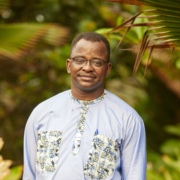
Illia Djadi is a human rights expert and strategic analyst with the NGO Open Doors in London. He was in Lomé, the capital of Togo, from February 20 to 24 as the keynote speaker at the fifth seminar organized jointly by the Forum of Christian Media in French-speaking Africa (FOMECAF) and the Swiss association Radio Réveil. This year, 70 participants from 15 African countries gathered for five days to discuss a highly topical issue: "Media, tools for peace in a world in conflict." He paints a rather bleak picture of the situation in sub-Saharan Africa. Interview.

Emmanuel Ziehli (EZ) – The NGO you work for, Open Doors, has just published its index of Christian persecution around the world. What is your assessment of the situation here in sub-Saharan Africa?

Illia Djadi (ID) – When we look at this year's index, and in particular the situation on the ground, we see a growing rise in insecurity and persecution linked to Islamic insurgency. Across Africa, more specifically south of the Sahara, there are a multitude of actors, Islamist groups active in this sub-region, who are affecting peaceful coexistence, which is one of the main sources of persecution. This persecution is violent and affects religious minority communities, particularly Christians.

EZ – In particular, you highlight a correlation between climate change and insecurity. How is this possible?

ID – The Sahel countries, specifically the central Sahel, Burkina Faso, Niger, and Mali, are the most affected countries, to name just three. They have in common that they are among the poorest and that, even in normal times, they are severely affected by climate change in terms of drought and flooding and the resulting famine. These regions face harsh climatic realities that particularly affect the nomadic and pastoral communities that inhabit them. Livestock farming and herding are directly impacted by the scarcity of natural resources. Access to water and pastureland is becoming a source of conflict. The Fulani and Tuareg communities, the most vulnerable groups, are the most affected by the consequences of climate change. Another corollary is that it is members of these same communities who are swelling the ranks of terrorist groups. The most vulnerable are also the most exposed to manipulation, indoctrination, and ultimately recruitment into these groups.

EZ – During this seminar, you stated that these groups do not seem as homogeneous as we in Europe tend to perceive them to be.

ID - When we look at the map of violence, we see that there are a multitude of actors involved. Many armed groups are active. In the Sahel, two groups in particular stand out: the Islamic State in the Greater Sahara on the one hand, and the Support Group for Islam and Muslims, linked to Al-Qaeda, on the other. We can therefore see that these two major terrorist families are represented. Beyond the radical Islamist ideology that these two groups have of Islam, they are two opposing actors, two entities that are at war with each other and fighting a fratricidal war with the aim of securing control of these areas in order to establish a "caliphate." Controlling the roads in these regions allows all kinds of trafficking to flourish. A criminal economy has developed in regions that have become "lawless," where drug trafficking, human trafficking, tobacco trafficking, and arms trafficking are rampant. This criminal economy is very lucrative and finances the activities of these groups. They therefore clash to secure control of these resources.

EZ – Beyond the destruction of the social fabric and this "living together," you go so far as to warn of an existential threat to certain countries. Aren't you exaggerating a little?

ID - We must not fear words, but rather accurately assess the situation on the ground and what is really happening there.  Today, the communities that populate these regions, whether Christian or Muslim, have a centuries-old tradition of living in peace with one another. There is a long tradition of social cohesion and peaceful coexistence, which is unfortunately under threat today. Jihadist groups are stirring up latent local conflicts and social divisions, amplifying and exploiting them by fueling division. We are now seeing these groups gaining ground in Mali, Burkina Faso, and Niger, and their territorial occupation is a cause for grave concern. More than 40% of Burkina Faso's territory is now under the control of terrorist groups.

EZ – Within these "occupied" territories, what are the primary targets of these terrorist groups?

These groups share a common Islamic ideology, which they profess, that of "wanting to establish an Islamic state." They therefore primarily attack Christians, i.e., non-Muslims. But they also attack so-called "moderate" Muslims who do not share this radical interpretation of Islam. They also attack schools, which they see as synonymous with Western Christian education. The name of one of these groups, the sadly well-known "Boko Haram," which literally translates from Arabic as "Western education is forbidden" or "school is forbidden," reflects their intentions. When we consider the central Sahel, which I mention quite often, namely the area hardest hit by terrorist activities, we realize that in Burkina Faso, for example, 6,000 schools are now closed. One million children are out of school. This situation raises fears of a domino effect, whereby within a year or two these vulnerable children will swell the ranks of terrorist groups. They are easy prey for indoctrination. It is urgent to respond to this situation.

EZ – You are also a member of FOMECAF's leadership and a former BBC journalist for Africa. Do you really think that the media can contribute to peace in this region?

ID – Africa's recent history, and more specifically the evolution of the media, shows that they are powerful tools. This is particularly true of radio, which is Africa's medium of choice. Despite the advent of social media and other types of media, it remains the dominant means of communication. I would cite the destructive role played during the genocide in Rwanda by Radio and Television Mille Collines, which stirred up hatred and led to acts that many later regretted. In 2023 , we would like to say , "Never again!" Radio can play a constructive and peaceful role, promoting peace and harmonious coexistence. This is the reason for the choice of theme for the FOMECAF seminar in 2023. What can their contribution be? I firmly believe that the media and media professionals have a role to play! That is why they have been called upon here in Lomé for a week. The media must be able to play their part and use these powerful communication tools, which have an influence on communities, to send a message of peace. We must not leave the field empty and allow others to occupy it. Jihadist groups make concrete use of communication to influence, recruit, indoctrinate, and spread a message of hatred and violence. We believe that we can reverse this trend by making good use of the media, particularly with a view to promoting peaceful coexistence.

EZ – At the end of this seminar, are you confident that the journalists and other specialists you have met here in Lomé will be able to meet the challenges of the coming years?

ID – The main objective was first to raise awareness and draw attention to what is really happening. Are you aware of this? I can say without fear of contradiction that the message has got through! Awareness of a problem must now lead to a vision and the implementation of an action plan. We need to work on developing coordinated strategies that involve capacity building and promoting a message of peace. We need to train true media professionals who are capable of providing balanced coverage, particularly when it comes to separating fact from fiction. God alone knows how much misinformation is a major concern today. The professionalism of the media, but above all of trained individuals working with appropriate equipment, will enable them to face the challenges they face. This is therefore a process of which thefifth edition of these meetings is only the beginning.

EZ – The Forum of Christian Media in French-speaking Africa (FOMECAF) has revised its priorities for 2023 and plans to organize a seminar in Ouagadougou. What is the motivation behind this decision?

ID – It is a logical choice and the result of discussions held on the sidelines of this meeting. The situation has been assessed and the map has been drawn up. FOMECAF officials have realized that Burkina Faso has been hit so hard that its very existence is threatened.  The country has lost more than 40% of its territory to jihadist groups. We want an adequate response to the urgency of this situation. Our presence will undoubtedly not solve all the problems of the Burkinabe people. We want to be there to tell them that we are aware of their pain and that we sympathize with their trauma. Being in Ouagadougou sends a signal, a message of compassion, but also creates an opportunity for as many media professionals as possible to participate in the meeting, be equipped, and then play a decisive role in their own context. We want to offer them the opportunity to be agents of peace through their media.

EZ – Following the publication last December of the persecution index by your NGO Open Doors, you had a very special meeting in an evangelical church in London with King Charles III of England. What memories do you have of that?

ID – First of all, it was an honor to meet such a prominent figure. Seeing someone like him take an interest in and listen to persecuted Christians, sensitive to the harsh realities faced by these communities affected by fundamentalism and Islamist insurgency, filled me with joy. My message to King Charles III of England was to draw his attention to the urgency of the situation.
There is an urgent crisis in the Sahel today. The very existence of the Sahel countries, more specifically the central Sahel, is under threat. This region has become the new epicenter of global jihadism. We are witnessing a humanitarian crisis of enormous proportions. In Burkina Faso, there are already more than 2 million internally displaced persons! Compared to other major crises such as Afghanistan or the Middle East, where international coalitions have been formed to fight the Taliban or Daesh, there is no such mobilization for the Sahel. The level of attention is not the same, and there is a real fear that this crisis will be forgotten despite its urgency. That was my message to this great leader who has the power to influence.
We must act now. We must take an interest in the situation in the Sahel. It is a question of regional security, of course, but above all of international security. The stakes are global. The impact of this crisis could spread to the entire continent. We are already seeing conflicts spreading to countries such as Nigeria. This country is the "United States of Africa," the continent's leading economic power and most populous country, with over 200 million inhabitants. Imagine if Nigeria collapsed as a state! We would see a major crisis that would affect the whole of Africa and also reach Europe. Think about it in terms of immigration, security, but also in terms of drug trafficking, which is plaguing Africa. Due to governance issues and the vacuum left by failed states, drug routes from Latin America and other countries pass through Africa. These drugs then end up on the European market and are consumed in Switzerland and elsewhere in Europe. We must stop this trafficking and take action to solve the problem at its source.

EZ – This meeting with King Charles III of England took place in an Ethiopian church. Why was this location chosen?

ID – It is a powerful symbol and a choice that is not insignificant. When we consider the situation in Ethiopia, and more particularly in Eritrea, a country in the throes of a humanitarian crisis and unprecedented violence affecting thousands of people, it sends a strong message to persecuted Christians in East Africa. Eritrea remains one of the countries most affected in terms of persecution. It is often referred to as "the North Korea of Africa," where religious minorities, particularly Christians, suffer state persecution. Organizing this service in this community was a message to persecuted Christians that we sympathize with them and that we stand with them. Seeing the joy that the choice of this diaspora church in London brought was heartwarming. It boosted their morale. But beyond that, this message was sent to the entire church in East Africa and sub-Saharan Africa. In the face of terrorism that affects community life, in the face of persecution that affects you so harshly, know that you are not alone!

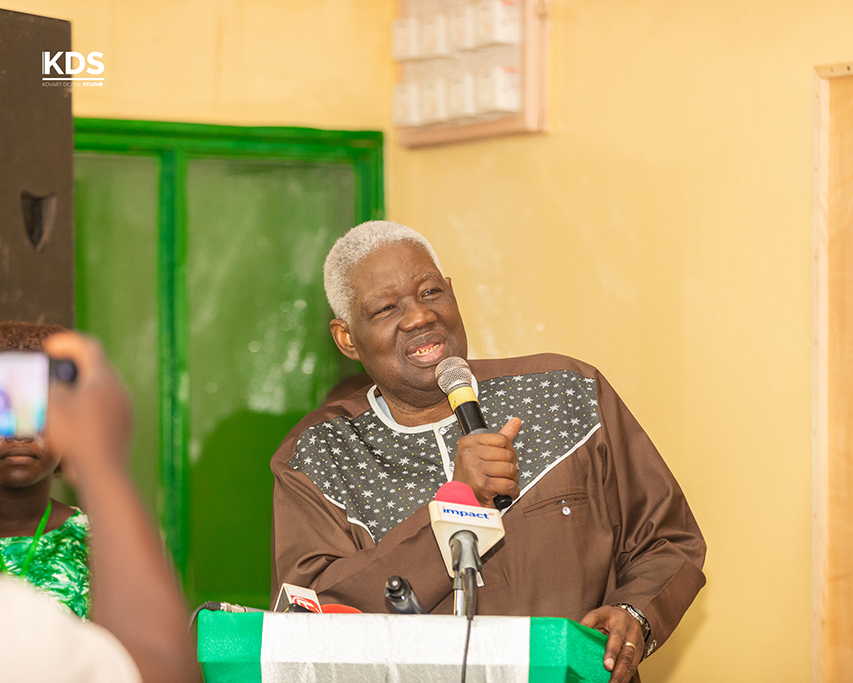
Photo credit: Koudousse Moustapha – KDS – 2023

From October 30 to November 1, 2023, Ouagadougou will host the sixth seminar organized by the Forum of Christian Media in Francophone Africa (FOMECAF). The theme of the conference is "Christian media, tools for peace in a world full of conflict."

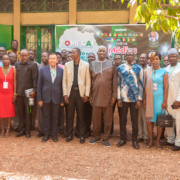
After five editions in Lomé, Togo, the seminar organized by the Forum des Médias Chrétiens en Afrique Francophone (FOMECAF) is decentralizing and taking place for the first time in Burkina Faso. Seventy candidates from six countries, including Burkina Faso, Benin, Côte d'Ivoire, Togo, Mali, and Niger, participated.

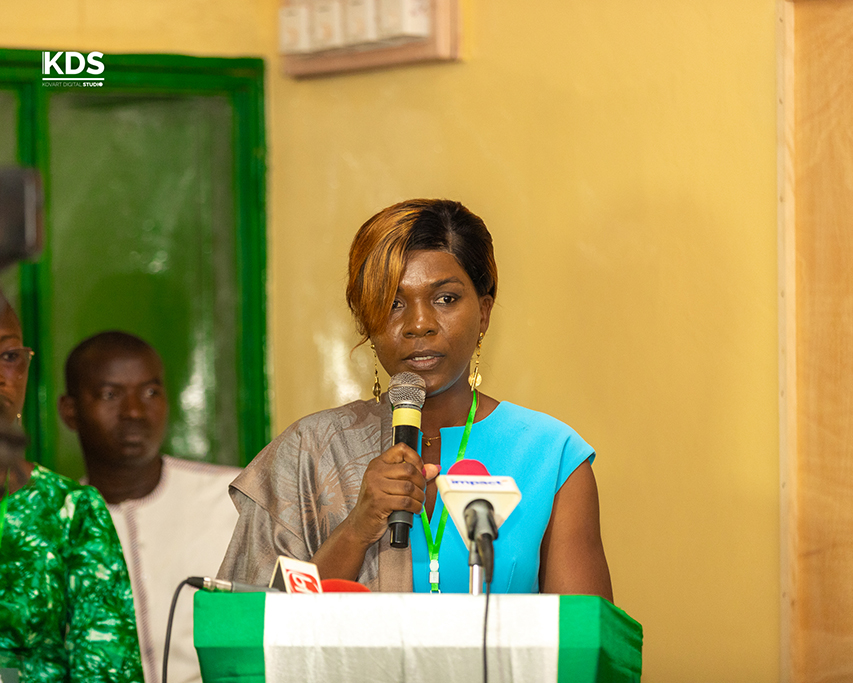
FOMECAF President Olivia Beugré said that current events in some French-speaking African countries are fraught with crises and tensions, such as socio-political crises, migration and climate crises, terrorism, among others.

Olivia Beugré, President of FOMECAF

Media for Peace

This year's symposium, on the theme "Christian media, tools for peace in a world of conflict," is therefore an opportunity to reflect on what Christian media are doing in these fragile times. "Whether traditional media or social networks, they have a responsibility to report events in an objective and balanced manner, to promote dialogue and reconciliation, and to contribute to the building of a peaceful and harmonious society. However, the media can also be used in destructive ways. Disinformation, discord, hatred, and the manipulation of public opinion can exacerbate conflicts," said Ms. Beugré.

A theme that echoes that of the Burkinabe government

The minister was represented at this meeting by Boukary Nitiema, head of the delegation from the Ministry of Communication. The latter emphasized that "in contexts characterized by terrorism, such as those in the Sahelian countries (Burkina Faso, Mali, Niger), the media, both secular and religious, have an immense role to play in 'deconstructing the elements of terror,' strengthening the resilience of populations, and supporting the actions undertaken by States to ultimately defeat obscurantism." He therefore welcomed the relevance of this theme, which, in his view, is in line with the communication priorities of the Government of Burkina Faso.

The media as tools serving the public

The patron of the event, CSC President Abdoulazize Bamogo, also welcomed the theme of the seminar, recalling that Christian media outlets are involved through various instruments to help them play their part in this fight within the framework of this seminar. Fighting terrorism. "In Burkina Faso, we are encouraging Christian media to adopt tools that will help them make a difference in the face of the security challenges and community tensions we are experiencing. The purpose of these tools is to examine the commitment of these media outlets that convey the message of religion, the word of God. How can investors help a country in a fragile situation?" he suggested. He also praised the faith-based media, which he said are professional because they are rarely questioned for ethical and professional violations, and invited them to stay the course.

Mamadou Karambiri – patron of the event

Close to the realities of Burkina Faso

Olivia Beugré, President of the FOMECAF Bureau, stated that Burkina Faso chose to host this edition of the FOMECAF seminars in response to the need to support the country during the difficult times it is currently experiencing. Consequently, FOMECAF hopes to remain close to the reality of life in Burkina Faso, express its compassion and sympathy to the Church and the wounded Burkinabe people, and ultimately offer participation sessions to as many media professionals in Burkina Faso as possible, as well as opportunities to help, benefit from the training provided, and contribute to the debate through their testimonies.

About FOMECAF

For the record, FOMECAF was launched in Lomé, Togo, in 2019, following a meeting to commemorate the 70th anniversary of Radio Réveil, originally from Switzerland, and is dedicated to spreading the message of Christ, peace, reconciliation, and peaceful coexistence in the French-speaking world. Each edition of the Lomé conferences, six in total, brought together around 150 radio professionals working in French-speaking African religious radio stations.

Participants in this network expressed their hope that in the future, religious radio programming would not focus solely on religion on the airwaves, but would also take into account the specific needs of the population. Emmanuel Ziehli, president of Radio Réveil, explains: "No more radio sermons without the actions that precede them."

Photo credit: Koudousse Moustapha – KDS – 2023

Faced with war in West Africa and Western sanctions, the Christian minority in the Sahel region, plagued by jihadists, is praying fervently for peace.

The military coup in Niger has entered its third week. Four days after the July 26 coup, the 15-member Economic Community of West African States (ECOWAS) threatened to intervene militarily if democracy was not restored within seven days.

That deadline has passed, and leaders are still weighing their options while imposing sanctions against the junta, the group of military officials who seized power. But concerned about this seventh coup in the Sahel region since 2020, West Africa's last remaining democracies believe they must draw a line in the sand.

Neighboring countries Mali and Burkina Faso, both ruled by the military following recent coups, have warned that any foreign intervention in Niger would be considered an act of war against them.

Niger suffered its latest coup attempt in 2021, just before the elected president—now deposed—was sworn in. The former French colony was the last bastion of Western military cooperation against jihadist militants in the Sahel, amid Russia's expanding regional influence through its Wagner mercenary unit. Niger, meanwhile, is the world's seventh-largest producer of uranium.

Christianity Today interviewed Illia Djadi, Open Doors' senior analyst for religious freedom and belief in sub-Saharan Africa. Although he lives in London, he is a citizen of Niger, ranked 28th on World Watch's list of the 50 nations where it is most difficult to be a Christian. Mr. Djadi presented the regional context, described the difficult but improving situation for Christians, and made a strong appeal against military intervention:

How serious is the current situation in Niger?

I am very sad. As a Nigerian, I find the situation difficult to watch.

But as an analyst, I can say with certainty that what happened two weeks ago has plunged Niger into a new era of uncertainty. The country is facing an Islamist terrorist insurgency originating in Nigeria, Mali, and Burkina Faso. Niger is also one of the poorest nations in the world, and unemployment facilitates the radicalization of our youth. We are not in paradise.

But compared to our neighbors, our situation was much better. For the first time in our history, a president served two terms before handing over power in democratic elections. And President Mohamed Bazoum has done a lot to stabilize the country and improve security. I cannot remember the last terrorist attack we suffered. And despite its poverty, Niger is home to 300,000 refugees from other countries because it is safe. All this shows that the coup was unjustified and that it is a major political setback. Active militants will take advantage of the resulting instability.

Why did the coup take place?

Personal ambition. The junta claims that the coup was motivated by security concerns and the deteriorating economy. But some say that the president was ready to appoint a new security chief. The security chief, who had been in his post for 12 years, was due to leave, but he refused and deposed the president in order to retain his power.

Do you see a connection between this coup and others in the Sahel region?

Only in two respects: There is general regional political fragility and a copy-and-paste mentality. With coups having taken place in Mali and Burkina Faso, people expect this to happen here too. West African youth harbor anti-French sentiment toward the colonial past, and some have waved Russian flags at protests.

I don't know if Russia is behind the coup.

But the region faces external influence from France, the United States, Middle Eastern countries, and, more recently, Russia. Niger is the main Western ally in the region. As a French-speaking country, we have many ties. We are witnessing a new rush to Africa in search of its natural resources.

In this context, France is often singled out as a scapegoat. This scapegoating is sometimes valid, but France is not responsible for everything. And it is certainly not fair to say, "Let's replace France with Russia." This is what happened in Mali and Burkina Faso, and these nations are heading in the wrong direction.

How does that happen?

Political instability. Since the coup d'état in 2012, Mali has never recovered, with one coup following another. Each new leader promises solutions, but the country is losing the battle against terrorism.

The 2014 social uprising in Burkina Faso also led to a military coup that attempted to resolve the resulting problems but never succeeded. Once again, coups followed one after another, and today the country has lost control of more than half of its territory to militant insurgencies.

Do you think that military intervention by ECOWAS is necessary to stem the tide of military regimes and the resulting instability?

No, that would make the situation worse. Military intervention would create chaos and provide a safe haven for terrorists. We don't want another Libya, bordering Niger, which ended up exporting instability throughout the Sahel region. Whether Western or African, war would be a similar mistake.

Did Christians express their opinion on the coup?

No, as a religious community, they are not required to do so. However, they were included by the junta when national stakeholders were convened. It was simply a matter of providing explanations, and the junta asked the Church to pray for the nation. Evangelical and Catholic churches issued a call to prayer for a peaceful resolution to the crisis.

Nigerien Christians have no political opinion, but they oppose the imposition of economic sanctions against their country. These will affect everyone, just as a war would. But for the most part, Christians are worried, fearing they will be among the first to pay the price if the chaos continues.

Why?

In 2015, during the protests against Charlie Hebdo in France, when the magazine published satirical cartoons of Muhammad, protests also took place in Niger. Muslims burned French flags and a French cultural center, but then they attacked churches, homes, and Christian schools. Many people associate Christians with Westerners, and once again we see French flags being burned. This is therefore a warning sign.

How do Christians fit into the social fabric of Niger?

They represent a tiny minority: 1% of the population, compared to 99%. And although Niger is a secular country where freedom of religion is protected by the constitution, Christians often face difficulties. We have cases of Nigeriens who have been denied university scholarships because of their Christian names, for example.

Catholic Christianity appeared in the 19th century with French colonialism, but the Protestant church was largely established by American missionaries. The largest denomination—now known as the Evangelical Church of Niger—is the result of the work of the SIM, which came from Nigeria.

Baptists are also present, mainly in the western region. In the 1980s, Pentecostal groups from various parts of the world—France, the United States, Nigeria, Burkina Faso, and Ivory Coast—came to Niger and created, among others, the Assemblies of God denomination.

But overall, Christians share the same poverty as everyone else.

What is your faith story?

I was raised in the evangelical church. My parents attended a Christian school and eventually converted. My extended family includes Muslims and members of traditional religions, and we live together in peace.

In middle school, however, I became aware of how different I was. Classmates asked me, "You're Nigerian, Hausa, how can you be Christian?" I began to wonder if my faith was a mistake.

But in high school, I had developed strong convictions, not only to defend my faith, but also to challenge others. My friends called me "the pope," in reference to John Paul II, because I wasn't afraid to face the crowd. You have to be strong to be a Christian in Niger, and when I think about my current position as a lawyer, that's probably how it all started.

What is the next step for Nigerian Christians?

We don't know—the context is very fragile. But as I said, our country is doing better than its neighbors, and the situation for Christians has also improved. After 2015, the government responded to the riots by strengthening religious relations, and the Church joined the successful national campaign to promote social cohesion. Today, Christians are present in the public sphere and employed in the civil service. We have the freedom to preach and even to organize large public gatherings.

The last time I lived in Niger, I was the national director of our youth association, and we organized summer camps in churches and our Protestant schools. Today, the camps are held in public places, attended by senior officials, and broadcast by public television and radio stations.

The military coup is a setback. But so far, there has been no indication of anti-Christian rhetoric. We fear instability and pray for peace. God willing, this period of uncertainty will come to an end.

Credit:

JAYSON CASPER | August 11, 2023

Christianity Today

Translation: FOMECAF

"We have high expectations of religious media in the education of young people," said Franck Missité, chief of staff to Togo's Minister of Communication and Media. He was speaking on Monday, November 22, at the opening of the fourth edition of the Lomé meetings, organized by FOMECAF (Forum of Christian Media in French-speaking Africa).

Religious media reaching out to all citizens

"Religious media should reach out more to all citizens with topics that are not 100 percent religious," added the trained journalist. "It's important to vary the content. 75 percent prayer and preaching is enough. 25 percent culture and ethical and moral education would be good!"

This edition of the Lomé meetings will address the theme "Media & Generational Divide" with Abdoulaye Sangho, Director of Transworld Radio West and Central Africa (TWR), as the keynote speaker. Around fifty representatives of Christian media outlets from French-speaking Africa, Cameroon, Benin, Burkina Faso, Burundi, Ivory Coast, DRC, Rwanda, and elsewhere have traveled to attend the week-long training session. In addition, around a hundred people have registered to follow the event online.

"Media, make room for young people!"

"64 percent of the population of West Africa is under the age of 24," said Emmanuel Ziehli, president of Radio Réveil France, "and our media do not speak the language of young people. What's more, we don't cover topics that interest them. Let's be models of generational transition," he insisted. As a result, he asked radio executives to make room for younger people in their programming and among their journalists and presenters.

Emmanuel Ziehli also cited CICERI, the International Christian Center for Study, Research, and Information in Lomé, as an example of dynamism. Thanks to a team of young people between the ages of 18 and 30, CICERI organizes the Lomé seminars each year with complete transparency.

In addition to Abdoulaye Sangho, keynote speaker, Juliette Kpessou, host at Radio Hosanna in Benin, Olivia Adiko, editor-in-chief of Radio La voix de l'espérance in Abidjan, Etienne Kiemdé, director of Radio Evangile et développement in Burkina Faso, Illia Djadi, head of African relations at the NGO Portes Ouvertes, and Alphonse Teyabé, media consultant in Cameroon, will also speak.

Meetings launched by Radio Réveil

The "Lomé" meetings began in January 2019. They offer Christian media professionals from French-speaking Africa the opportunity to receive a week of training and to network in order to develop a dynamic of exchange between professionals from different countries.

In January 2019, Radio Réveil en Suisse, an association that produces radio programs for the entire French-speaking world, decided to mark its 70th anniversary by inviting its radio partners in Africa to a training session in Lomé. Around 100 people took part in the event and signed the Lomé Declaration of Lomé. The signatories pledged to renounce competition between evangelical and Protestant radio stations and to pool resources to improve the quality of their programs. (c)

The FOMECAF website with the Lomé 4 program.

https://medias.africa/lome4

The FOMECAF leadership is pleased to inform Christian media actors in French-speaking Africa of a decentralized seminar called OUAGA 2023, to be held from October 30 to November 3, 2023, in Ouagadougou, Burkina Faso.

With the aim of bringing its actions closer to sympathetic countries and supporting work at the national level more effectively, this year the Forum is organizing, in collaboration with Radio Réveil, a decentralized meeting in the capital of Burkina Faso, one of the current theaters of conflict in the subregion.

Under the theme: Media, tools for peace in a world in conflict – OUAGA 2023, this seminar follows on from FOMECAF's fervent desire to equip and empower Christian media actors to play a role in preventing and appeasing conflicts on the continent through their action plan.

Participants at OUAGA 2023 will mainly come from countries neighboring Burkina Faso, the host country. These include Benin, Côte d'Ivoire, Mali, Niger, and Togo.

The leaders of the Forum des Médias Chrétiens d’Afrique Francophone (Forum of Christian Media in French-speaking Africa) therefore urge media professionals to continue to make use of the tools already made available to them and still available on the organization's official channels:

Medias Africa:https://medias.africa/tv/
YouTube:https://www.youtube.com/@fomecaf6161
Facebook:https://www.facebook.com/fomecaf
All voices at FOMECAF agree in inviting everyone to continue praying and uniting in intention for the success of this meeting.

As for stakeholders in Central and East African countries, they are reminded that seminars are being prepared and that very soon they too will have the opportunity to host the Forum.

Confident that your interest in the various initiatives led by FOMECAF remains strong and renewed, we wish each and every one of you all the best for the future.

See you soon for another uplifting and inspiring reunion!


The Forum of Christian Media in French-speaking Africa (FOMECAF) and the Radio Réveil Association are jointly awarding the 2023 François SERGY Prize to photographer Koudousse Moustapha from Benin and radio promoter Rabiou Hamadou from Niger.

On February 24, FOMECAF officials, in collaboration with the Franco-Swiss Association Radio Réveil, awarded an incentive prize to media specialists for the fourth time on the last day of the Lomé 5 seminar. This year, Koudousse Moustapha from Benin and Rabiou Hamadou from Niger won over the jury. The social impact of the former and the promotion of peace and "living together" by the latter are in line with the theme of the seminar that has just ended in Lomé, as well as the lessons taught by FOMECAF since 2019.

The François Sergy Prize honors participants in the Lomé seminars who have distinguished themselves by putting into practice the lessons learned during the five seminars organized since 2019 in the Togolese capital.

Beninese photographer receives award

Koudousse Moustapaha, a young photojournalist from Benin, runs Kovart Digital School, a photography school founded just one year ago in Porto-Novo, the capital of Benin. After graduating from high school, he enrolled in a photography course in 2017, a media activity that was already his passion. He obtained his certificate of professional qualification (CQM) in 2020. His talent was quickly spotted. Among his assignments, it is worth noting one for the Presidency of Benin, which has placed its trust in him. Koudousse Moustapaha participated in the Lomé 4 seminar and has since distinguished himself through the quality of his work. Armed with the knowledge he gained, he started "Kovart Digital School" a few weeks later, a project involved in social action. This school is located in a disadvantaged neighborhood.

A radio personality from Maradi

Rabiou Hamadou is the second recipient of the François Sergy Award. A Nigerian national, he is the promoter of Radio Nagarta in Maradi, Niger. His editorial line gives a voice to the entire social, cultural, and religious mosaic that populates this region in the east of his country, which is plagued by instability due to armed jihadist groups not far away. "I dedicate this award to all the victims of the Russian-Ukrainian war and their families," he said as he received his award. It did not escape this media sleuth that the award was presented to him exactly one year after the outbreak of war in Europe. (c)


About the François Sergy Prize

The François Sergy Prize was established in 2019. In conjunction with FOMECAF, it pays tribute to a particularly deserving media activity, in memory of journalist François Sergy, a contributor to Radio Réveil who has since passed away and who was himself of African origin. In 2019, Dodji Juliette Kpessou received the award for her series of columns "O2Vie." Jean-Luc Simbilyabo from the DRC was honored in 2020 for his contributions in Ituri (eastern Congo). In 2021, Abdoualye Cissé was honored for his work and perseverance in Timbuktu (Mali).

More information about the other recipients of the François Sergy Award:


About FOMECAF

Since 2019, the Forum of Christian Media in French-speaking Africa (FOMECAF) has brought together the signatories of the " the Lomé Declaration ," which brings together actors from the religious media in French-speaking Africa once a year.

More information about FOMECAF.

Encouraging journalists, presenters, and technicians working for Christian radio stations in French-speaking Africa is the aim of the Lomé meetings. From February 20 to 24, Emmanuel Ziehli, director of Radio R, traveled to Lomé to take part in the fifth edition of this seminar. The theme was: "Media: tools for peace in a world in conflict." A review of this event can be found in "Un R d'Actu" on RADIO R.

On Tuesday, March 7, Emmanuel Ziehli, director of Radio R, and Illia Djadi, analyst for the NGO Open Doors, reviewed the fifth edition of the Lomé meetings organized by FOMECAF (Forum of Christian Media in French-speaking Africa).

This year, these networking and continuing education meetings, aimed in particular at journalists, presenters, and directors of religious radio stations in French-speaking Africa, addressed the theme: "Media: tools for peace in a world in conflict."

Illia Djadi was the keynote speaker. He encouraged the 70 or so participants to use radio as a tool to promote coexistence and give everyone a voice on Christian radio stations, including representatives of the Muslim community. (c)

Listen to the program "Un R d'Actu" with Illia Djadi (Open Doors), Emmanuel Ziehli (Radio Réveil), Abdoulaye Cissé (Mali), and Alphonse Teyabé (Cameroon).

More than 70 Christian media professionals from French-speaking Africa will gather at the OCDI in Lomé from February 20 to 24, 2023, with the aim of strengthening their capacities and exchanging ideas within the framework of the Forum des Medias Chrétiens d'Afrique Francophone (FOMECAF). Illia Djadi, journalist and human rights defender, will be the keynote speaker at this fifth edition, which will focus on the theme "Media: Tools for Peace in a World in Conflict." Under the patronage of the Ministry of Communication and Media, its minister, Professor Akodah Ayewouadan, will be the guest of honor at the opening ceremony.

FOMECAF is meeting for the fifth time in the Togolese capital. More than 70 participants from nearly 15 countries are expected to attend this important gathering of Christian media from French-speaking Africa. In addition, after two editions organized despite the Covid pandemic
, this edition marks the return of four practical workshops led by distinguished international guests: Joël Pelet, Director of Canal Alpha television in Switzerland; Christian Gaspoz, Director of Radios Ébène Développement in Paris; Denis Steffen, radio consultant and member of the board of directors of Radio Réveil, and Pierre-Yves Mutrux, project manager for the international organization Galcom in Canada. The Swiss association Radio Réveil is co-organizing the event for the last time and is represented by its president, Emmanuel Ziehli. This edition marks the end of a transition process, with the future now belonging exclusively to African leaders.

Illia DJADI, keynote speaker for this edition

In a world shaken by repeated conflicts that disrupt the economy and life in nations, Illia DJADI, drawing on his experience as an analyst, will provide his peers with insights into the issue of conflict on the continent and the tools needed to intervene in the context of peacekeeping.
He will find the best words to help the journalists participating in this meeting understand how to be "tools of peace" when peace is threatened in their coverage area. Throughout his presentation, he will return to the issues of conflict in Africa and around the world; radio and social media as possible weapons of mass destruction; and what could be the
contribution of the media in conflict prevention...

Appointed keynote speaker, Illia DJADI is responsible for issues of religious freedom and belief in Sub-Saharan Africa on behalf of the international NGO Open Doors. Illia is an expert in this field and speaks in the media and at international forums to raise awareness about the rise of religious extremism in Africa and the dangers threatening "living together" on the continent. Originally from Niger, he lives in London, where he has been actively involved in the development of FOMECAF for several years.

Lomé 5 in plenary sessions and workshops

Lomé is once again in plenary-workshop format. The plenary sessions, which will be held every morning, will be moments of great edification with experienced speakers who are well-equipped on the subject. Accustomed to seminars and fully involved in establishing media convergence in Africa, the various leaders will, one after the other over five days, develop topics that will help equip participants to become true actors in easing tensions on the continent.
The return of practical workshops in the afternoons will also bring added value to participants. Four workshops are offered to participants, including "Sound in the Studio" by Pierre-Yves Mutrux, "Filmed Radio" by Joël Pelet, and "FM Transmitter" by Christian Gaspot.

Internet broadcasting and leadership

The plenary sessions and workshops of Lomé 5 will be broadcast live and then recorded on FOMECAF's various channels, particularly Facebook and YouTube.

The leaders of FOMECAF will work on issues concerning the new direction to be taken by the organization. These five meetings are one of the major activities of Lomé 5 (c).

About FOMECAF

FOMECAF was founded in Lomé in 2019 on the sidelines of media training seminars.
It brings together around 50 religious media actors in French-speaking Africa.

Its leadership consists of:

1. Dr. Abdoualye Sangho, Trans World Radio (TWR), Ivory Coast
2. Dr. Etienne Kiemdé, Radio Évangile et Développement, Burkina Faso
3. Illia Djadi, Open Doors London
4. Olivia Beugre, Radio la Voix de l’Espérance, Ivory Coast
5. Juliette Kpessou, Radio Hosanna, Benin
6. Rev. Timothée Amegan, Mediaafrique media training, Togo
7. Dr. Alphonse Teyabé, media consultant, Cameroon
8. Benjamin Holl, Radio Vie Nouvelle, Cameroon
9. Dr. Augustin Ahoga, theologian and sociologist, Benin
10. Blaise Gaïtou, National Director of JEM, Niger
11. Koffi Ahonon, National Director of Compassion, Togo
12. Mawuena Abotschi, Permanent Secretary in Lomé, Togo

The names in bold make up the executive committee. Two international players are joining us for the last time this year:

13. Emmanuel Ziehli, President of Radio Réveil, France
14. Henriette Saindon, Secretary of Africa by Radio, South Africa

Download the press release 

Press release

Despite the coronavirus pandemic, FOMECAF officials have decided to organize a fourth edition of the Lomé meetings from November 22 to 26, 2021. They will focus on the theme "Youth and Media" and will welcome Dr. Abdoulaye Sangho, Director of TWR Africa, as their main guest. The event will be broadcast publicly on the web, but the number of participants attending in person will be limited to around 50.

The fourth annual meeting of Christian media professionals from French-speaking Africa will take place from November 22 to 26, 2021, in Lomé. The theme will be "Youth and Media." "We are seeing a generational divide in the French-speaking Christian world of Africa," explains Pastor Etienne Kiemdé, director of Radio Évangile Développement in Burkina Faso. An older generation no longer speaks the language, music, and means of communication of young people, 63% of whom are under 24 in West Africa!(1)" For many Christian leaders, the risk of failing to pass on the faith is now very high. "It is time to reach out to young Africans, and it is up to radio to set an example," adds Pastor Etienne Kiemdé.

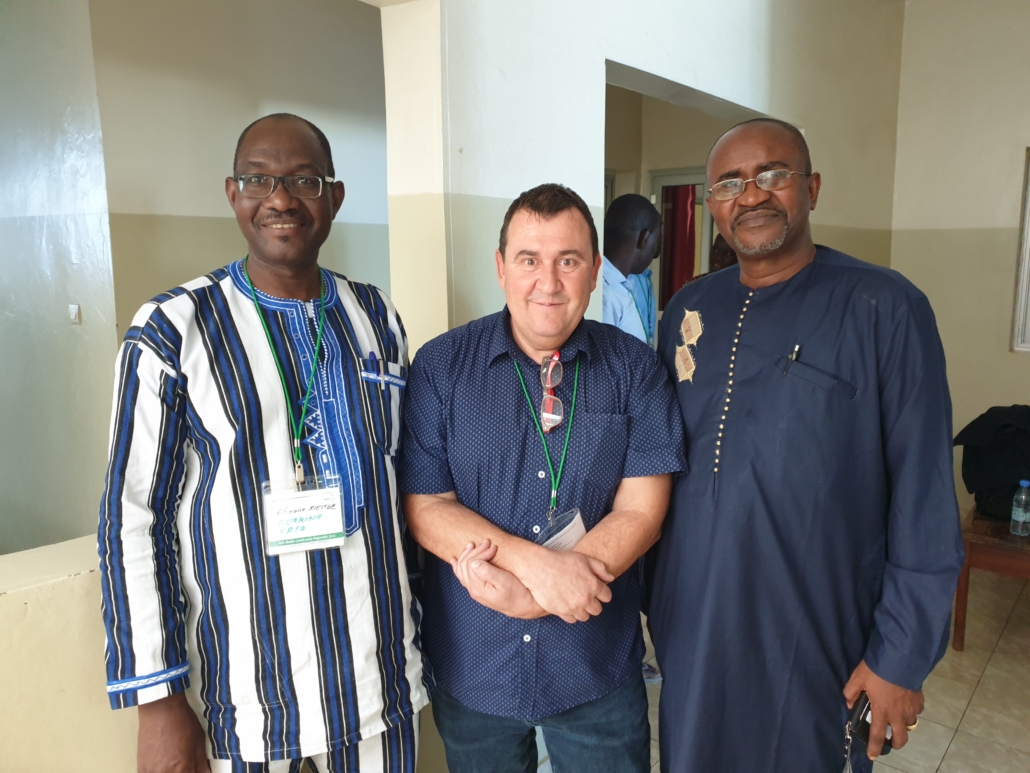
Etienne Kiemdé on the left (FOMECAF) and Abdoulaye Sangho (TWR speaker in Lomé 4) flank Emmanuel Ziehli (Radio Réveil France).

Dr. Abdoulaye Sangho as keynote speaker

The keynote speaker was unanimously chosen to be Dr. Abdoulaye Sangho, director of TWR Africa, a recognized and influential specialist in the African Christian radio landscape. Dr. Abdoulaye Sangho, originally from Mali, lives and works in Côte d'Ivoire. He is the author of several books. He is also a Commander of the National Order for his contribution to the development of faith in Côte d'Ivoire.

Number of speakers recorded on video

Lomé 4 will be similar to Lomé 3. Fifty (50) carefully selected individuals will be invited to attend plenary meetings and workshops in person. These meetings will be broadcast live and recorded on the various social media channels of FOMECAF (Forum des médias chrétiens d’Afrique francophone), particularly Facebook and YouTube. For the record, around 100 people took these training courses online in 2020.

The afternoons will provide an opportunity for FOMECAF leaders to continue laying the foundations for the forum's activities and to devise a program for 2022.

Most of the speakers will be recorded on video. They will thus continue to enrich the radio/press training video library launched in 2020 by the previous edition of the Lomé meetings (2).

Despite the difficult health situation

The decision to organize Lomé 4 was made by FOMECAF leaders who met via videoconference on Friday, July 30. They assessed the health situation in West and Central Africa as well as in Europe. For the time being, travel remains very complicated and particularly expensive due to the pandemic. Despite this, the FOMECAF leadership confirmed that Lomé 4 would go ahead and reasonably postponed the organization of the national event "FOMECAF Benin" until spring 2022. The leaders of FOMECAF have given CICERI Lomé and Radio Réveil France, specifically Mr. Koffi Ahonon and Mr. Emmanuel Ziehli, the mandate to organize the event. (c)

The FOMECAF website (Forum of Christian Media in French-speaking Africa): https://medias.africa/

More information:

Africa: Pastor Étienne Kiemdé, Director of Radio Évangile Développement in Burkina Faso. Tel. + 226 70 38 81 83. Email: ekiem1[at]gmail.com. Website: https://medias.africa/

Europe: ÉEmmanuel Ziehli, Director of Radio Réveil France. Tel. +33 06 52 02 89 42. Email: emmanuel.ziehli[at]radioreveil.ch. Website: https://radio-reveil.org/

Notes:

1 See: https://www.populationpyramid.net/sources
2 See: https://www.youtube.com/channel/UCkEVvei_tLkEfTaJn31DTsQ/playlists

Box
The Lomé meetings in brief

The "Lomé" meetings began in January 2019. They offer Christian media professionals from French-speaking Africa the opportunity to receive a week of training and to network in order to develop a dynamic of exchange between professionals from different countries.

In January 2019, Radio Réveil en Suisse, an association that produces radio programs for the entire French-speaking world, decided to mark its 70th anniversary by inviting its radio partners in Africa to a training session in Lomé. Around 100 people took part in the event and signed the Declaration. of Lomé. The signatories pledged to renounce competition between evangelical and Protestant radio stations and to pool resources to improve the quality of their programs.

During the second edition of the Lomé meetings, the 170 or so participants engaged in a discussion on the theme "Let's invent integral radio!" ." They also decided to create the Forum of Christian Media in French-speaking Africa (FOMECAF) with the following founding committee members: Olivia Adiko, journalist and editor-in-chief of La Voix de l'espérance (Ivory Coast), Dr. Alphonse Teyabe, communications consultant (Cameroon), Timothée Amegan, pastor and CEO of Médiafrique (Togo), and Emmanuel Ziehli, director of Radio Réveil (Switzerland).

In 2020, in the midst of the COVID-19 pandemic, Lomé 3 offered around 50 participants in person and around 100 online the opportunity to reflect on "Media convergence and job versatility."

The Lomé 1 report: https//bit.ly/lome-1 
The Lomé 2 report: https://bit.ly/lome-deux 
The Lomé 3 report: https://bit.ly/Lome3 

Box
Members of the FOMECAF committee

The following individuals are members of the FOMECAF core network or steering committee: Olivia Adiko Beugre(Radio la Voix de l’Espérance, Abidjan), Timothée Amegan(Médiafrique, Lomé), Etienne Kiemdé(Radio Évangile et développement, Ouagadougou), Koffi Ahonon(CICERI and Compassion Togo, Lomé), Dr.Abdoulaye Sangho(TWR, Abidjan), Dr. Alphonse Teyabe(media consultant, Yaoundé), and Emmanuel Ziehli(Radio Réveil France).