Terrorism in Africa: “The very existence of certain countries, such as Burkina Faso, is now under threat.”
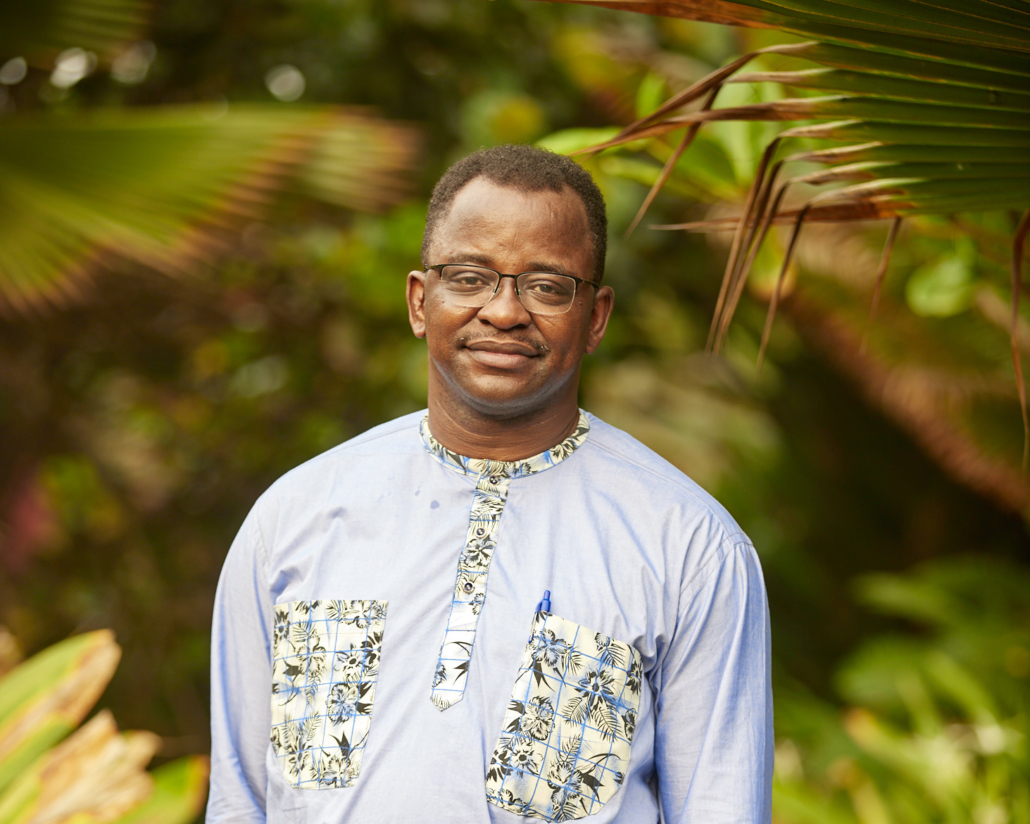
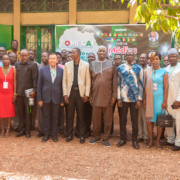
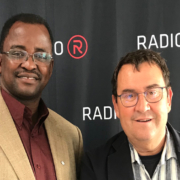
Illia Djadi is a human rights expert and strategic analyst with the NGO Open Doors in London. He was in Lomé, the capital of Togo, from February 20 to 24, serving as the keynote speaker for the fifth seminar jointly organized by the Forum of Christian Media in Francophone Africa (FOMECAF) and the Swiss Association Radio Réveil. This year, 70 participants from 15 African countries gathered for five days to discuss a highly relevant topic: “Media, Tools for Peace in a World of Conflict.” He painted a rather bleak picture of the situation in Sub-Saharan Africa. Interview.
Emmanuel Ziehli (EZ) – The NGO you work for, 'Open Doors,' has just published its index on Christian persecution worldwide. What is your assessment of the situation here in Sub-Saharan Africa?
Illia Djadi (ID) – Looking at this year's index and especially the situation on the ground, we observe a growing rise in insecurity and persecution linked to the Islamic insurgency. Across Africa, specifically south of the Sahara, there are many actors, Islamist groups active in this sub-region, affecting peaceful coexistence and forming one of the main sources of persecution. This violent persecution affects minority religious communities, particularly Christians.
EZ – In particular, you highlight a correlation between climate change and insecurity; how is this possible?.
ID – The Sahel countries, specifically the Central Sahel, including Burkina Faso, Niger, and Mali, are among the most affected. They share the commonality of being among the poorest and are severely impacted by climate change, even in normal times, experiencing droughts, floods, and the resulting famine. These regions face harsh climatic realities that particularly affect the nomadic and pastoral communities living there. Their livestock farming methods and herds are directly impacted by the scarcity of natural resources. Access to water and pastures becomes a source of conflict. The Fulani and Tuareg communities, being the most vulnerable, are the most affected by the consequences of climate change. Another consequence is that members of these same communities are swelling the ranks of terrorist groups. The most vulnerable are also the most exposed to manipulation, indoctrination, and ultimately recruitment into these groups.
EZ – During this seminar, you stated that these groups do not appear as homogeneous as we might tend to perceive them from Europe?
ID -When we look at the map of violence, we realize that there are many different actors. Numerous armed groups are active. In the Sahel, two groups can be mentioned: the 'Islamic State in the Greater Sahara' on one hand, and the 'Group for the Support of Islam and Muslims' linked to Al-Qaeda on the other. We therefore observe that these two major terrorist families are represented. Beyond the radical Islamist ideology these two groups hold, they are opposing actors, two entities waging war and fighting a fratricidal conflict to secure control of these areas and establish a 'caliphate.' Controlling the routes in these regions allows for the proliferation of all kinds of illicit trafficking. A criminal economy has developed in areas that have become 'lawless,' where drug trafficking, human trafficking, tobacco trafficking, and arms trafficking are rampant. This criminal economy is highly lucrative and funds the activities of these groups. They therefore clash to secure control over these resources.
EZ – Beyond the destruction of the social fabric and this 'living together,' you go as far as to warn of an existential threat to certain countries. Are you not overstating the case?
ID -We should not shy away from words but rather accurately assess the situation on the ground and what is truly happening. Today, the communities inhabiting these regions, whether Christian or Muslim, have a centuries-old tradition of living peacefully with one another. There is a long tradition of social cohesion and peaceful coexistence that is unfortunately now threatened. Jihadist groups fuel latent local conflicts and social divisions, amplifying and exploiting them by stirring up disunity. Consequently, we observe that in Mali, Burkina Faso, and Niger, these groups are gaining ground, and their territorial occupation is a cause for extreme concern. To date, over 40% of Burkina Faso's territory has fallen under the control of terrorist groups.
EZ – Within these 'occupied' territories, what are the preferred targets of these terrorist groups?
These groups share a common Islamic ideology that they profess: 'to establish an Islamic state.' They therefore primarily target Christians, meaning non-Muslims. However, they also attack so-called 'moderate' Muslims who do not share their radical interpretation of Islam. They also target schools, which for them symbolize Western Christian education. The name of one of these unfortunately well-known groups, 'Boko Haram,' which literally translates from Arabic to 'Western education is forbidden' or 'school is forbidden,' testifies to their intentions. When we consider the Central Sahel, which I often mention as the area most severely affected by terrorist activities, we realize that in Burkina Faso, for example, 6,000 schools are currently closed. One million children are out of school. This situation raises fears of a domino effect, meaning that within one or two years, these vulnerable children will swell the ranks of terrorist groups. They are easy targets for indoctrination. It is urgent to react to this situation.
EZ – You are also a member of FOMECAF's leadership and a former BBC journalist for Africa; do you truly believe that media can contribute to peace in this region?
ID – Africa's recent history, and particularly the evolution of media, demonstrates that they are powerful tools. Especially radio, which is Africa's primary medium. Despite the advent of social media and other types of media, it remains the dominant communication platform. I will cite the destructive role played during the Rwandan genocide by 'Radio Télévision Libre des Mille Collines,' which fueled fire and hatred and led to acts that many later regretted. In 2023, we would like to say never again! Radio can play a constructive and peaceful role, promoting peace and coexistence. This is why the theme for FOMECAF's 2023 seminar was chosen. What can their contribution be? I firmly believe that media and media professionals have a role to play! This is why they were called upon here in Lomé for a week. Media must be able to play their part and use these powerful communication tools, which influence communities, to send a message of peace. We must not leave the field empty and allow others to occupy it. Jihadist groups make concrete use of communication to influence, recruit, indoctrinate, and transmit messages of hatred and violence. We believe we can reverse this trend by making good use of media, particularly with the aim of promoting coexistence.
EZ – Following this seminar, are you confident that the journalists and other specialists met here in Lomé will be able to meet the challenges of the coming years?
ID – The main objective was first to raise awareness and draw their attention to what is truly happening. Are you aware of it? I can confidently say that the message has been received! Awareness of a problem must now lead to a vision and the implementation of an action plan. We must work to develop coordinated strategies that involve capacity building and promoting peace. It is necessary to train true media professionals capable of providing balanced information, particularly in discerning truth from falsehood. God knows how much disinformation is a major concern today. The professionalism of the media, and especially trained individuals working with appropriate equipment, will be able to face their challenges. This is therefore a process of which the 5th edition of these meetings is just the beginning.
EZ – The Forum of Christian Media in Francophone Africa (FOMECAF) has reviewed its priorities for 2023 and plans to organize a seminar in Ouagadougou. What is the motivation behind such a choice?
ID – It is a logical choice and the result of discussions held on the sidelines of this meeting. The assessment was made, and the mapping understood. FOMECAF leaders realized that Burkina Faso is severely affected, to the point where its very existence is threatened. This country has lost over 40% of its territory to jihadist groups. We want an adequate response to the urgency of this situation. Our presence will undoubtedly not solve all the problems of the Burkinabe people. We want to be present to tell them that we are aware of their pain and that we empathize with their trauma. Being in Ouagadougou is about sending a signal, a message of compassion, but also about creating an opportunity for as many media professionals as possible to participate in the meeting, be equipped, and then play a decisive role in their specific context. We want to encourage them to be peace actors through their media.
EZ – On the sidelines of the publication last December of the persecution index by your NGO 'Open Doors,' you had a very special meeting in an evangelical church in London with King Charles III of England. What memories do you have of it?
ID – First, it was an honor to meet such a personality. Seeing someone like him take an interest and listen to persecuted Christians, sensitive to the harsh realities faced by communities affected by fundamentalism and Islamist insurgency, filled me with joy. My message to King Charles III of England was to draw his attention to the urgency of the situation.
There is an urgent situation in the Sahel today. The existence of Sahelian countries, particularly those in the Central Sahel, is threatened. This region has become the new epicenter of global jihadism. We are witnessing a large-scale humanitarian crisis. In Burkina Faso, over 2 million internally displaced persons have already been recorded! Compared to other major crises like those in Afghanistan or the Middle East, where international coalitions formed to combat the Taliban or Daesh, no such mobilization exists for the Sahel. The attention is not the same, and the fear that this crisis will be forgotten despite its urgency is real. This was my message to this great leader who holds power to influence.
Action is needed now. We must take an interest in the Sahel situation; it is a matter of regional security, of course, but above all, international security. The stakes are global. The impact of this crisis could spread across the entire continent. We are already seeing conflicts extending to countries like Nigeria. This country is 'the United States of Africa,' the continent's leading economic power, and the most populous country with over 200 million inhabitants. Imagine if Nigeria were to collapse as a state! We would witness a major crisis that would affect all of Africa and also reach Europe. Think about it in terms of immigration, security, and also in terms of drug trafficking that is plaguing Africa. Due to governance problems and the void left by failing states, drug routes from Latin America and other countries pass through Africa. This drug then ends up on the European market and is consumed in Switzerland or elsewhere in Europe. We must stop this trafficking and act to solve this problem at its source.
EZ – This meeting with King Charles III of England took place in an Ethiopian church; why this choice?
ID – It is a strong symbol and a significant choice. Considering the situation in Ethiopia, and particularly in Eritrea, a country grappling with a humanitarian crisis and unprecedented violence affecting thousands of people, this sends a strong message to persecuted Christians in East Africa. Eritrea remains one of the most affected countries in terms of persecution. It is often referred to as 'the North Korea of Africa,' where religious minorities, particularly Christians, suffer state persecution. Organizing this service within that community was a message sent to persecuted Christians, telling them that we empathize and stand with them. Witnessing the joy brought by choosing this diaspora church in London was heartwarming. It boosted their morale. But beyond that, this message was sent to the entire church in East Africa and Sub-Saharan Africa. In the face of this terrorism that affects coexistence, in the face of the persecution that impacts you so severely, know that you are not alone!
Photo credit: Koudousse Moustapha – KDS – 2023