French-speaking Africa

Francophone Africa refers to all African countries that share the French language. This includes more than 18 contiguous countries where French is used as an official and/or lingua franca. These countries cover a vast territory, representing nearly half of the African continent, approximately 5,000 kilometers from north to south and approximately 4,000 kilometers from east to west (from Tangier in northern Morocco to Lubumbashi in southern DRC). In 2018, there were an estimated 140 million African French speakers in 31 French-speaking African countries and territories. French arrived in Africa with colonization by France and Belgium, and these African French speakers now form the largest part of the Francophonie. Don't hesitate to ask if you need any further information! 😊

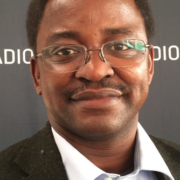
Actively involved in defending religious freedom in Africa, Illia Djadi was in French-speaking Switzerland this week to prepare for the third meeting of journalists and radio presenters, which will be held in Lomé from November 23 to 27 under the auspices of Radio Réveil in Bevaix (Switzerland). The journalist, formerly with the BBC, reveals some of the key points of his speech here: the importance of promoting peaceful coexistence between ethnic and religious communities. Interview.

An interview with Serge Carrel, published on theFREE website

Illia Djadi, you will be arguing in Lomé 3 the importance of developing programs on evangelical radio stations in French-speaking Africa that address living together. Why?

This is a topical issue that is particularly relevant today given the situation in all countries in the sub-region. Whether in Niger, Mali, Burkina Faso or elsewhere, peaceful coexistence is under threat. This is mainly due to the emergence of jihadist movements... Yes. Jihadist movements are active throughout this part of the southern Sahara. They threaten the very existence of countries such as Mali, Burkina Faso, and Niger. These armed groups are attempting to divide communities along ethnic or religious lines. For hundreds of years, these religious communities have learned to live together, despite localized conflicts.

How can churches play a role in combating the trend toward Islamization that we are seeing in French-speaking Africa?

In French-speaking Africa, churches and radio stations affiliated with them are major players on the social scene. Churches are involved in the education of children and young people; they are involved in social development and construction projects, as well as in health centers. Today, we realize that the existence of these churches is threatened because Christians themselves are threatened. Hence the responsibility of churches to take a stand as social actors so that something happens.

In concrete terms, what role can evangelical radio stations play? Given the importance of radio in Africa, producing programs that raise awareness about living together and social cohesion is fundamental. Do you have any examples where radio has played an important role in promoting a culture of tolerance between communities?

In Niger, my country of origin, following the events at Charlie Hebdo in Paris in January 2015, around a hundred churches and buildings belonging to Christians were ransacked and destroyed. Following this event, there was a reawakening of consciousness, to the point where the main leaders of the religious communities, notably Protestants, Catholics, and Muslims, could be seen together on the same radio or television program. By simply coming together, they sent a strong message to the entire population. They were able to say: "We are united. What happened was an unfortunate and isolated incident. It is not representative of Islam. The majority of Muslims do not identify with these acts of violence. With one voice, we reject and condemn what happened!"

Any other examples worth mentioning where radio helped to defuse a situation?

In Burkina Faso, thanks to radio stations that broadcast programs in all local languages, it is possible to send messages to different communities, whether they are Mossi or Fulani, to draw their attention to the danger threatening this country known for its culture of tolerance. In practical terms, a Christian radio station can invite an imam into its studio from time to time. This is already a powerful symbol of acceptance of others and acceptance of their differences. Theological teaching is also needed so that local Christians understand that persecution is an integral part of Christian life...

But isn't this already retreating in the face of the emergence of these violent movements?

No, it is first and foremost a matter of awareness, so that we can respond appropriately in such a context. Persecution can take many forms. Today, we realize that it arises from Islamic fundamentalism and attacks perpetrated by extremist groups. In such a context, burying our heads in the sand is not enough. We must offer a counter-narrative based on the love that Christ invites us to show to our neighbor, including our enemy. Such a counter-narrative is capable of counteracting the hate speech of Islamists, because people are sensitive to gestures of love, acts of love, and discourse that promotes tolerance. We must therefore produce programs that, as the Lomé 2 conference highlighted in 2019, develop a holistic message, one that takes into account the realities and challenges facing society and the churches today, and responds to them.

To give their relationship a representative form, Christian radio stations in French-speaking Africa have formed a network. Some forty radio stations are already involved in this project, which aims to encourage collaboration and the sharing of professional resources. This decision was taken during Lomé 2, the second training seminar for Christian radio stations in French-speaking Africa, held from November 25 to 29 in the Togolese capital.

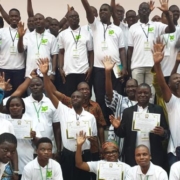
On Friday, November 29, some 170 representatives of religious radio stations gathered in Lomé for a second training seminar on journalism and radio techniques decided to launch a radio network. The objectives of the network are to foster close relations between radio stations in the same region or city, exchange programs, provide mutual technical assistance, and develop a press agency capable of relaying news about the Christian and evangelical movement in French-speaking Africa. All of this is in the spirit of the Lomé Declaration, signed on January 18, 2019.

Read the rest of the press release

In French-speaking Africa, radio is the medium par excellence. For one week, some 170 representatives of religious radio stations are gathering in Lomé, Togo, for a new week of training. Organized jointly by the Radio Réveil association in Bevaix and Radio Ebène et Développement in France, this week aims to develop the quality of Christian radio stations in Africa.

On Monday, November 25, more than 170 representatives from 72 religious radio stations in French-speaking Africa gathered in Lomé, Togo, for a week of training on the theme "Inventing Integral Radio." In the opening session, Communications Minister Folly-Bazi Katari welcomed the fact that the seminar aimed to "promote excellence in Christian media." He also considered that "this seminar was timely in addressing the major challenges of integrating new information and communication technologies and promoting ethics and professional conduct." The minister also called on religious media actors to "safeguard peace in our countries" so that Muslims and Christians can peacefully attend their places of worship on Fridays and Sundays.

Read the rest of the press release
In Lomé, Christian radio stations in French-speaking Africa asked to reinvent themselves – Togo Breaking News
Christian radio stations in Africa ready to go all-in – Togo Breaking News

Interview with Emmanuel Ziehli, director of Radio Réveil

The director of O2vie, Dodji Juliette Kpessou, is a journalist, writer, presenter, blogger, and YouTuber. She lives with her husband in Porto Novo, the capital of the Republic of Benin. Interview.

Juliette, what is your mission on the airwaves?
Since August 2013, I have been bringing the Gospel to everyone through Hosanna Radio, a media outlet of the Protestant Methodist Church of Benin. As head of the entertainment section, I also present the news bulletins.

How did you discover Radio Réveil?
It was in January 2019 at this fabulous training course for Christian radio broadcasters from French-speaking Africa in Lomé, Togo; a melting pot of experiences where I had the pleasure of meeting Emmanuel Ziehli, director of Radio Réveil.

How and why did you create the O2vie column?
O2vie is a motivational capsule based on the word of God. It started out as a written column that I posted on social media and my blog. Now, the audio adventure has begun with Radio Réveil and my YouTube channel. The water of life, a drop every day from God's inexhaustible source. It's a way for me to bring the Good News with the colors of Africa.

You wanted an introduction to this column in a very particular tone.
Radio is the voice; and Africa is the power of the voice, of speech. The tone is chosen deliberately because it recalls the old sage in the moonlight reciting a tale. It is a sign of the mystery of Africa, a voice that invites you on the journey of life. In cinema, this is called the Voice of God.

A word for listeners
We are One in a bond of love. God loves you, and I love you too. Here are my three daily goals: be yourself, be true, and believe in God.

The O2vie show airs on RADIO R every Saturday at 6 a.m., 9 a.m., 1 p.m., and 5 p.m., and on Sunday at 1 p.m. and 5 p.m. Find all the podcasts here.

The next edition of the Training Seminar for Christian Radio Stations in French-speaking Africa will take place from November 25 to 29, 2019, in Lomé.

Over five days, Serge Carrel ( journalist ) , Blaise Gaïtou (director of YWAM in Niger), Emmanuel Ziehli (director of Radio Réveil), Jean Elchinger (IT specialist), Alphonse Teyabe (researcher and teacher in Cameroon), Franck Jeanneret (pastor), Christian Gaspoz (FM specialist), Andrea Luzi ( sound technician ) , Paolo Jean Bedogni (doctor), and Paul Zagré (YWAM missionary in Niger) will address various topics such as quality, integral radio, radio for souls, unity, etc., in the form of plenary sessions in the morning and practical workshops in the afternoon. See the detailed program.

The training is aimed specifically at:station presidentsand directors, station managers, journalists, technical managers, broadcasters, professionals in the fields of communication, marketing, and the Internet, and directors/editors.

Participating countries: Benin – Burkina Faso – Cameroon – Central African Republic – Congo – Ivory Coast – Mali – Niger – Senegal – Togo

Program and practical information

Registration

The Radio Réveil Association, in partnership with the International Christian Center for Study, Research, and Information (CICERI) and Radios Ebène et Développement, is pleased to announce the second edition of the Training Seminar for Christian Radio Stations in French-speaking Africa, which will take place from November 25 to 29, 2019, in Lomé, Togo.

Emmanuel Ziehli, director of Radio Réveil, was in Lomé (Togo), as well as in Cotonou and Porto-Novo (Benin) at the beginning of June to organize this second seminar focused on the strategic and operational aspects of the effective functioning of Christian radio stations.

A full radio

Following the first seminar in January, which focused mainly on operational issues, it became clear that there was an urgent need to also address radio station managers (pastors and promoters) in order, among other things, to develop with them a vision of programming oriented toward an incarnate gospel rather than a preached one: a form of holistic radio that cares for the body, soul, and spirit.

The strategic vision will take the form of think tanks (integral radio, epidemic prevention, counseling, practical information, etc.), workshops on financial management according to biblical principles, and discussions on the creation of a Federation of French-speaking Christian Media in Africa. The operational focus will offer workshops dedicated to web radio/radio over IP, journalism, sound, technology (studio), marketing, and much more.

Keynote speakers

During his various meetings, Emmanuel revealed the names of several of the expected speakers:
Dr. Alphonse Teyabe from Radio Salaaman in Cameroon,
Dr. Paul Zagré from JEMED in Niger,
Dr. Paolo Jean Bedogni from Radios Ebène Développement,
Pastor Franck Jeanneret and journalist Serge Carrel from Switzerland.

The director of Radio Réveil also met with participants at the first seminar to gather their feedback. Listen to Clément from Radio Providence in Lomé:

and Samuel Atitsio, pastor and director of Radio La Grâce in Lomé:

Announcement of "Lomé 2" on Didier Amen's Radio Hosanna (Protestant Methodist) in Porto-Novo, Benin:


With the participation of theHigh Authority for Audiovisual and Communication of Togo.

Since 2000, around 100 evangelical radio stations have been set up in French-speaking Africa. Alphonse Teyabe campaigns for the full Gospel to be communicated.

Alphonse Teyabe's comments were broadcast on RADIO R's morning show, the French-speaking Swiss station of the Radio Réveil association.

Read Serge Carrel's article published in lafree.info