Francophone Africa refers to all African countries that share the French language. This includes more than 18 contiguous countries where French is used as an official and/or lingua franca. These countries span a vast territory, covering nearly half of the African continent—approximately 5,000 kilometers from north to south and about 4,000 kilometers from east to west (from Tangier in northern Morocco to Lubumbashi in the southern DRC). In 2018, the number of African Francophones in 31 countries and territories of Francophone Africa was estimated at approximately 140 million. French arrived in Africa with colonization by France and Belgium, and these African Francophones now make up the largest part of the Francophonie. Feel free to reach out if you need more information! 😊
On the sidelines of the conference to be held on Thursday, March 27, 2025, at 6:30 p.m. at the University of Geneva, Uni Mail, Room MS150, Illia Djadi, a member of our association, was invited to appear on a program on Swiss National Radio (RTS). He provided context on a region that, for the first time, accounts for “more than half of all terrorism-related deaths , ” according to the Global Terror Index (GTI). Burkina Faso tops this index. The urgency of the work carried out by Médias Ébène through the media—as a means of promoting social cohesion—is more pressing than ever.
For several years now, this region—which stretches across Africa from east to west (primarily Mali, Niger, Burkina Faso, Chad, and Mauritania) has seen an alarming rise in jihadist groups such as the Islamic State in the Greater Sahara (ISGS), Jama’at Nusrat al-Islam wal-Muslimin (JNIM, affiliated with Al-Qaeda), and Boko Haram in the Lake Chad basin.
Several factors contribute to this situation:
The fragility of states and the lack of control over vast territories
Governance crises and political instability (recent coups)
Intercommunal conflicts that terrorists exploit
Poverty and the lack of economic opportunities
Climate change, which exacerbates tensions over resources
The withdrawal of Western forces (particularly French forces, following the end of Operation Barkhane) and strained relations with regional organizations have created a security vacuum. At the same time, the influence of groups such as Wagner (now Africa Corps) has grown in the region.
This concentration of terrorist activity, combined with its geographic expansion into coastal countries such as Benin, Togo, and Côte d’Ivoire, justifies viewing the Sahel as a new epicenter of global terrorism.
https://mediasebene.org/wp-content/uploads/2025/03/Illia-Djadi.jpg8671463Emmanuel Ziehlihttps://mediasebene.org/wp-content/uploads/2024/11/logo-medias-ebene-web-202411-300x138.pngEmmanuel ZiehliMarch 24, 2025, 11:14:09 AMMarch 24, 2025, 3:21:49 PMThe Sahel, the Epicenter of Global Terrorism: A Conference in Geneva
While African leaders recently gathered in Addis Ababa for the African Union summit, the continent is engulfed in a growing security crisis that largely goes unnoticed by Western media. From the Sahel to Sudan, violence, insurgencies, and instability are pushing millions to the brink. This is a situation the West can no longer afford to ignore, not only out of moral obligation but also due to long-term strategic interests.Analysis by Illia Djadi, a FOMECAF leadership member and senior analyst for the NGO Open Doors in London.
An Alarming Escalation of Violence
The spread of conflicts across Africa has reached alarming proportions. West and Central Africa have become hotbeds of violence, with a significant rise in Islamist insurgencies and terrorist activities. The Sahel is now the new epicenter of global terrorism, as jihadist groups exploit weak states, porous borders, and local grievances to expand their influence. Countries like Mali, Burkina Faso, and Niger are in turmoil, with civilians bearing the brunt of the violence.
Ignored Humanitarian Crises
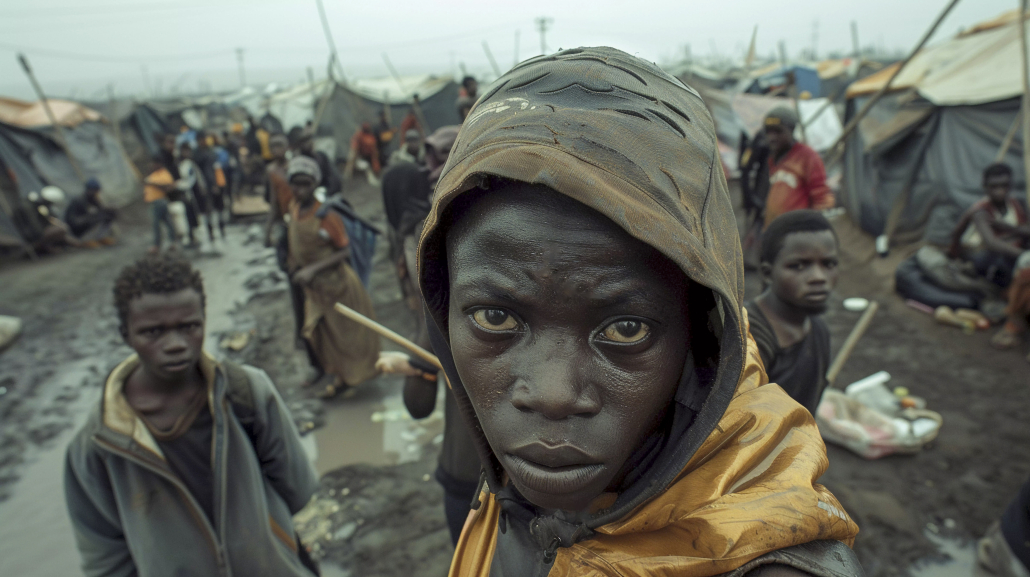
This increase in conflicts has triggered devastating humanitarian crises, particularly in Nigeria, Sudan, and the Democratic Republic of Congo. Millions of people are displaced, and thousands have been killed in brutal conflicts. Refugee camps are overflowing, human rights violations are widespread, and humanitarian aid organizations are overwhelmed by the scale of the needs. Yet, despite this immense human suffering, the crisis barely registers on the radar of Western policymakers.
Millions of people are displaced, and thousands have been killed in brutal conflicts. Refugee camps are overflowing, human rights violations are widespread, and humanitarian aid organizations are overwhelmed by the scale of the needs. Yet, despite this immense human suffering, the crisis barely registers on the radar of Western policymakers.
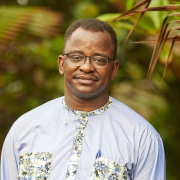
Illia Djadi
The Deep Roots of Instability
At the heart of this instability lie poor governance and fragile states. Across the continent, weak governments are unable to provide basic services or ensure the security of their populations. Corruption, internal political struggles, and the erosion of democratic norms have left citizens vulnerable and disillusioned. This governance vacuum has allowed insurgent groups to take root, exploiting local frustrations to recruit and expand their control.
When Islamist extremism took hold in Syria and Iraq starting in 2013, the West reacted swiftly and decisively. Today, however, as Islamist caliphates establish themselves in Africa, there appears to be little urgency to intervene and prevent them.
And now, an additional concern is emerging. The United States, for example, has indicated it might reduce USAID assistance. This would be catastrophic for millions of vulnerable people. Humanitarian aid not only saves lives but also helps stabilize fragile regions by providing education, healthcare, and food security—essential tools for preventing radicalization. Without this support, the risk of violent extremism will significantly increase.
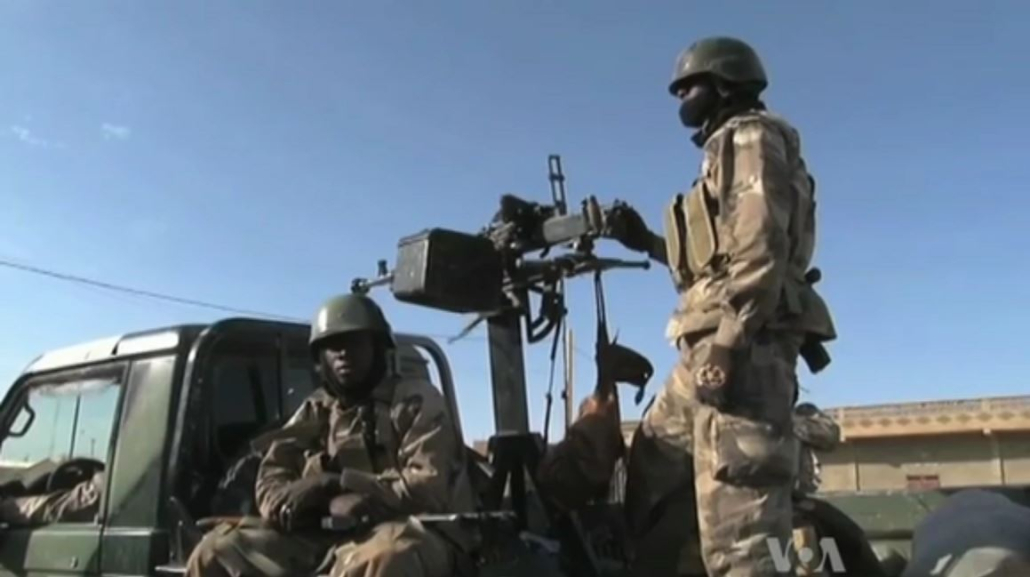
Malian Soldiers in Gao in 2013
The Importance of a Proactive Western Response
The West must recognize that the African crisis is not secondary to others, such as the wars in Ukraine and Gaza—it has direct implications for global security and stability. Instability in Africa fuels human trafficking and drug networks that often lead directly to Europe. Furthermore, as violence forces more people to leave their homes, migratory pressures on Europe will inevitably increase. Ignoring the root causes of these crises will only create a new wave of migration, which Western governments are desperately trying to control.
The West must move beyond rhetoric and engage in long-term partnerships that strengthen African initiatives aimed at addressing challenges in security, governance, and development.
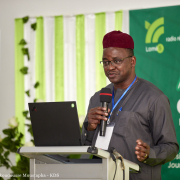
Illia Djadi
There is still an opportunity for meaningful engagement. The African Union summit provides a platform for African leaders to chart a path towards peace and stability, but they cannot succeed without international support. The West must move beyond rhetoric and engage in long-term partnerships that strengthen African initiatives aimed at addressing challenges in security, governance, and development.
Towards a comprehensive and inclusive strategy
A comprehensive strategy is urgently needed, including diplomatic engagement, development aid, and security assistance. The West should invest in strengthening institutions, supporting democratic transitions, and promoting inclusive economic growth. It is equally crucial to commit to addressing the root causes of conflicts, such as poverty, inequality, and climate change.
Ignoring the crisis in Africa is no longer an option. The cost of inaction will be measured not only in human suffering but also in global instability. The West must seize this opportunity to support African solutions to African problems. A stable and prosperous Africa is in everyone's interest.
Looking ahead, it is essential to consider how everyone can contribute. Supporting reliable humanitarian organizations, advocating for sustained international aid, and staying informed about the situation are concrete actions that can lead to positive change. Addressing these challenges is not just about helping Africa; it is about working towards a safer and more equitable world for all.
Text freely adapted from its English original published on February 19, 2025, in "The Tablet" under the title « The forgotten crises in Africa » with thanks.
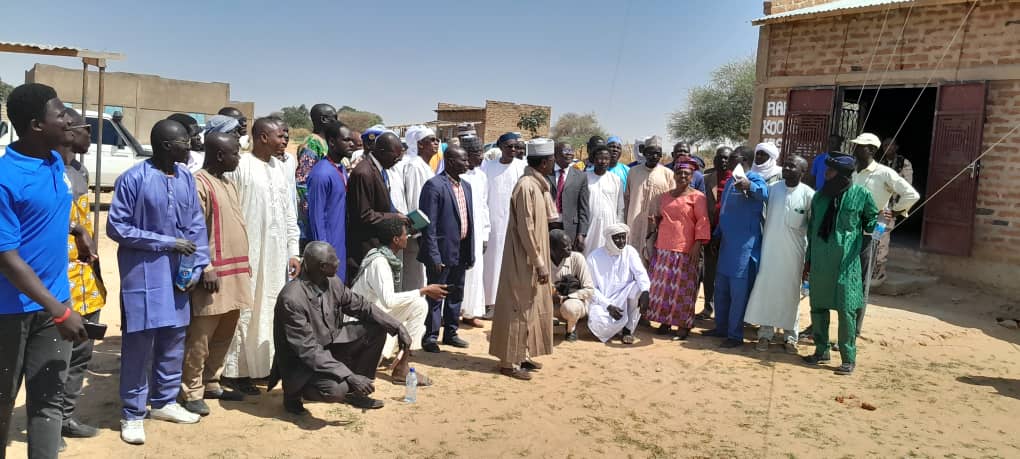
Koode Kisndam Radio in Dourbali, in the Chari Barguimi region, was officially inaugurated on February 13, in celebration of World Radio Day. This unique and unprecedented event marked a milestone in the town’s history, as it welcomed its very first radio station.
Dourbali, February 21, 2025
Administrative officials, including the regional governor, as well as traditional and religious leaders, were present alongside the residents of Dourbali to celebrate this initiative, in which they have placed all their hopes for long-awaited development.
Koode Kisndam Radio, housed in its own facilities built by its founder, Moussa Batchaguine—known locally as “the Bororo pastor”—broadcasts on 99.1 FM using a 1,000-watt transmitter and a 42-meter-tall tower. It will serve a cosmopolitan and predominantly Muslim population that is deeply attached to oral traditions and listening to the radio.
Although it has been inaugurated and is open to the public, Koode Kisndam still faces the challenge of completing its facilities, particularly by installing a lightning rod to protect its equipment from the frequent thunderstorms in the region.
Médias Ebène contributed to this launch by providing comprehensive training to the radio station’s teams, covering topics such as rigorous financial management, fundraising, marketing, the use of artificial intelligence in program creation, and the use of technical equipment. These training sessions were led by our volunteers Christian Gaspoz and Emmanuel Ziehli.
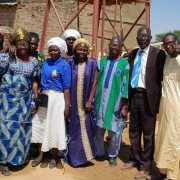
/Administrative officials, including the regional governor, as well as traditional and religious leaders, joined the residents of Dourbali in celebrating the inauguration of this new radio station.
https://mediasebene.org/wp-content/uploads/2025/02/Dedicace_Koode_Kisndam.jpg4591020Emmanuel Ziehlihttps://mediasebene.org/wp-content/uploads/2024/11/logo-medias-ebene-web-202411-300x138.pngEmmanuel ZiehliFebruary 21, 2025, 10:38:32 AMFebruary 22, 2025, 8:55:27 AMMédias Ébène plays an active role in the launch of Radio Koode Kisndam in Chad
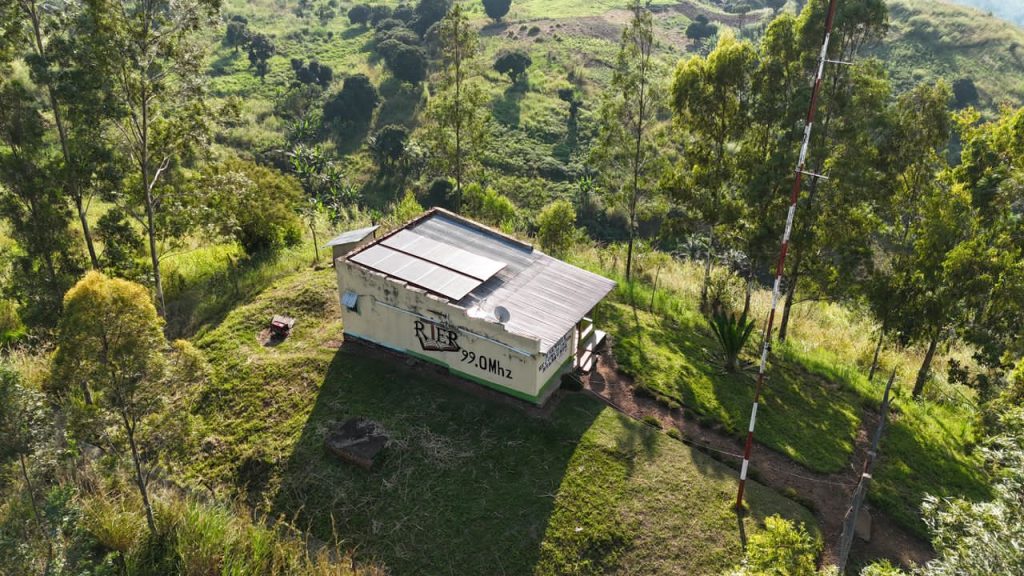
Radio Télé Evangile Réconciliation (RTER) is located in Nyankunde, in Ituri Province, in eastern Congo. In September 2002, the Nyankunde Medical Center was the site of one of the worst massacres of the Ituri conflict. For 10 days, Germain Katanga’s Ngiti fighters—later known as the FRPI—killed at least 12,000 people in and around Nyankunde. The concept of reconciliation, as embodied by the radio station led by Jean Luc Simbilyabo, is not overused. Very recently, he shared with us this masterful example of “integral radio,” which we are pleased to share with you here.
The Quest for Gold and Its Challenges
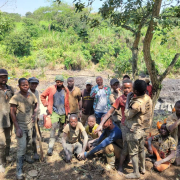
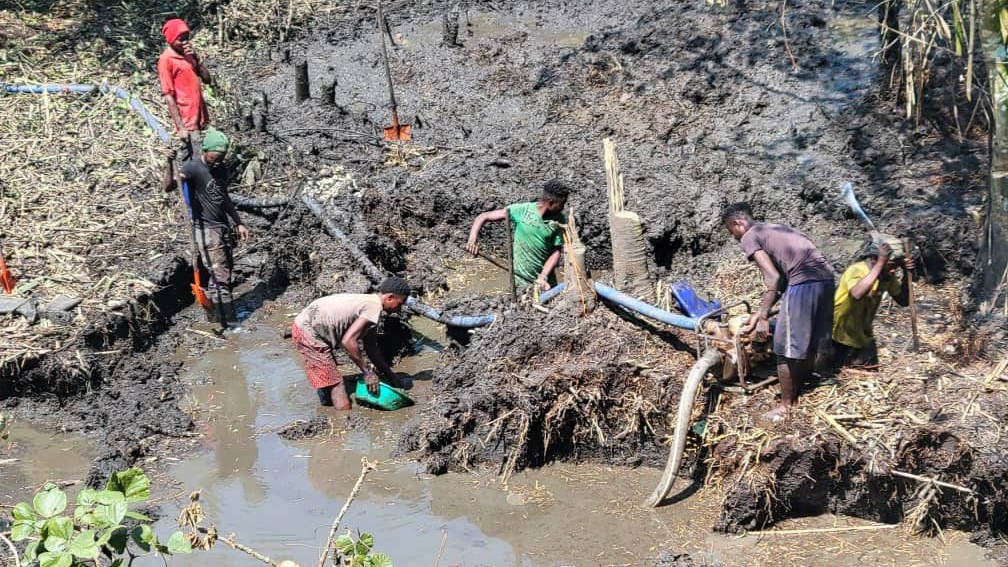
The history of the Radio Télé Evangile Réconciliation (RTER Nyankunde) is closely linked to that of the gold miners. These courageous gold miners, despite difficult conditions, work tirelessly to improve their lives and those of their communities, demonstrating exemplary solidarity and resilience.
Every day, men and women set out in search of gold in remote areas, armed with rudimentary tools and unwavering determination. Without modern equipment, their work is difficult and their productivity is limited. Nevertheless, they persevere—not only to provide for their families, but also to support local projects, including our radio station.
Radio as a pillar of the community
Their story is remarkable, particularly because of their financial support for our station, despite their modest incomes. They recognize the importance of local media in giving the community a voice, informing, educating, and bringing people together. This support allows us to maintain and expand our programming, thereby linking their work to the region’s development.
In return, our radio station offers specialized programs to support small-scale gold miners, educating them on resource management, best practices in health and safety, and their rights. The radio station provides them with a platform for expression and dialogue, strengthening solidarity and fostering collective solutions. The results are clear: small-scale gold miners now view their work as an opportunity for transformation.
A Future Full of Hope
However, gold miners face major challenges, including limited access to medical care and protective equipment. Children suffer from malnutrition, and premature deaths are common. Despite these hardships, they hope for a better future.
Local authorities’ support for small-scale gold mining offers an alternative to young people who are often tempted to join armed groups. In eastern DRC, this activity represents a tangible source of hope for thousands of families.
With better support, gold miners could increase their production and their positive impact on the community, thereby transforming their lives and strengthening local projects like our radio station. Their courage and determination, combined with the right support, pave the way for a future where everyone contributes to collective development, building a better world for future generations.
J
e
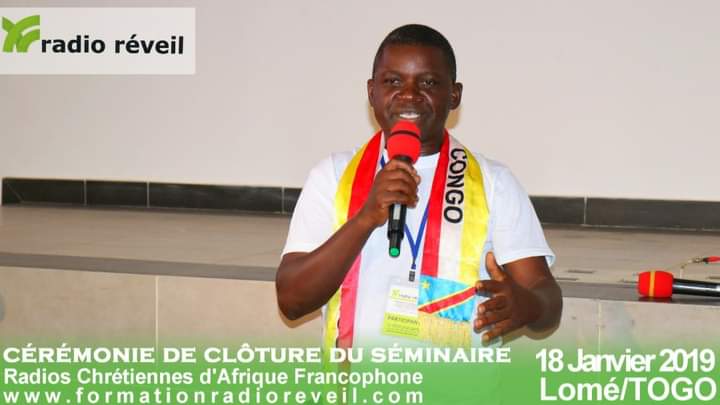
Jean Luc Simbilyabo, director of Radio Télé Évangile et Réconciliation in Nyankunde, at the first training seminar held in Lomé in 2019.
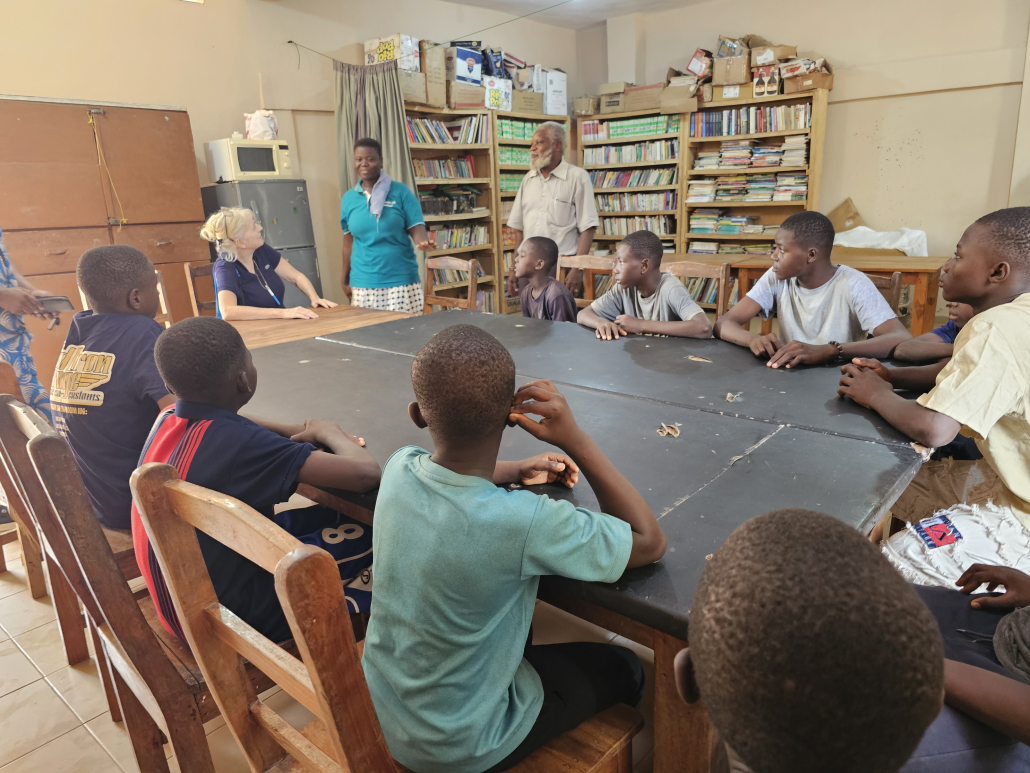
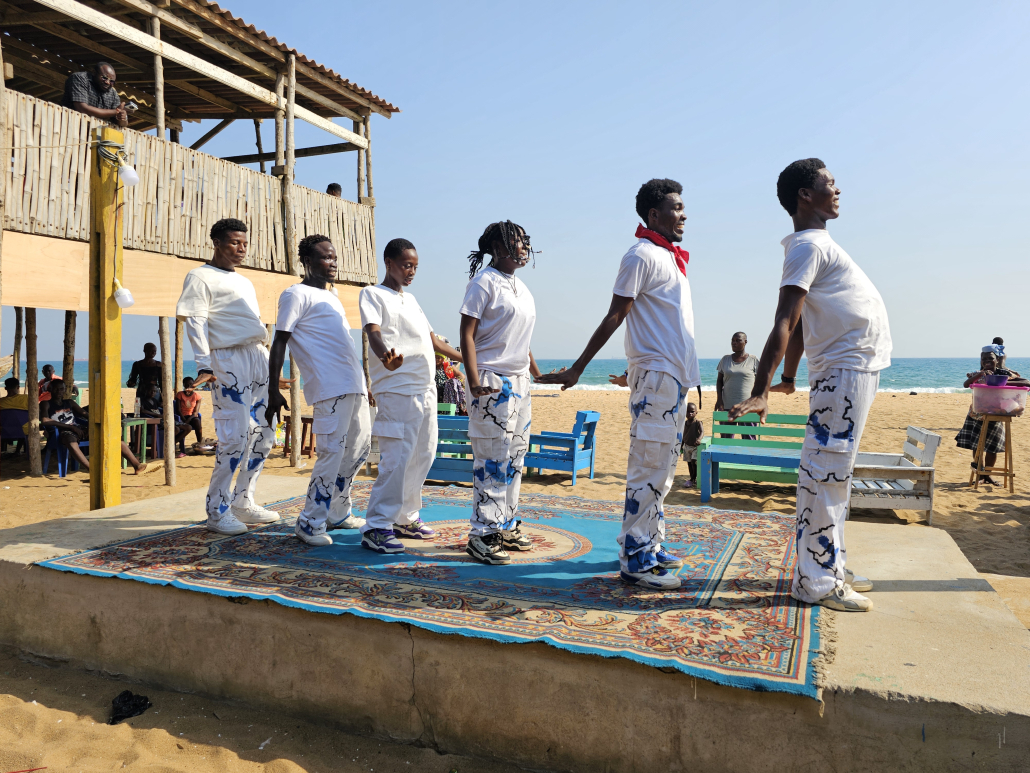
Pontarlier, December 27, 2024. In early December, the associations "Comité de Soutien à l’Enfance de Lomé" (CSEL) and "Médias Ebène" signed an agreement regarding the administrative and financial takeover of the project "Les Enfants de la Plage," initiated by Médias Ebène in 2019 in Lomé. This agreement also includes a new collaboration on the ground, effective from 2025, for the benefit of street children in Lomé. Details.
A project launched in 2019 takes on a new dimension
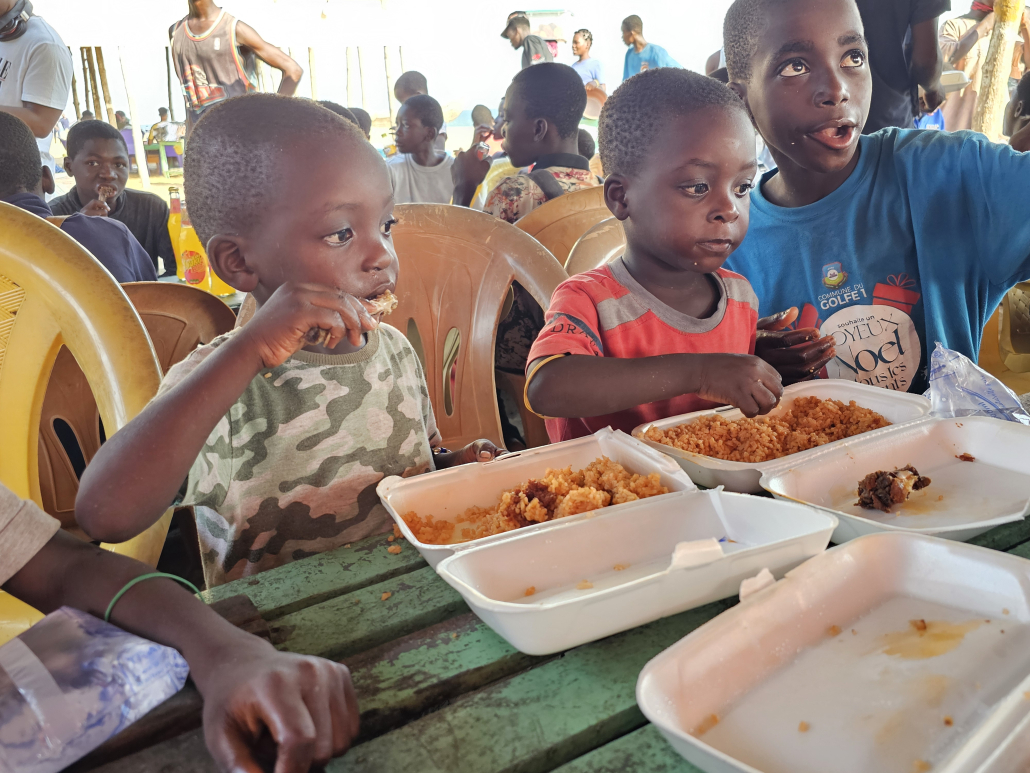
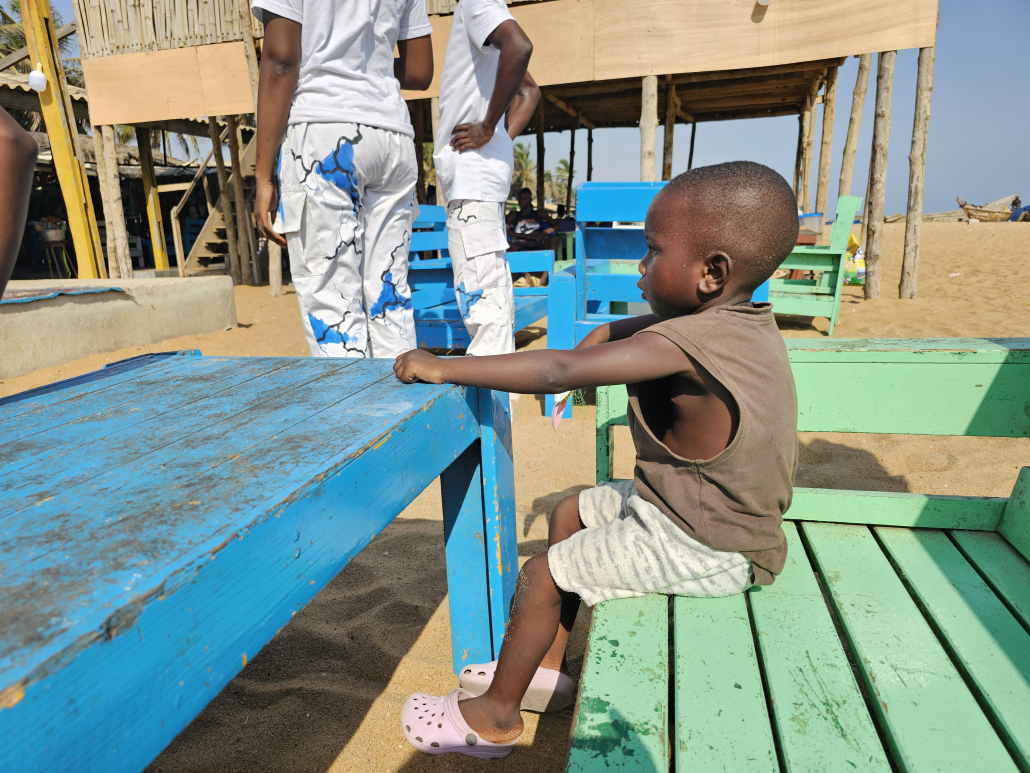
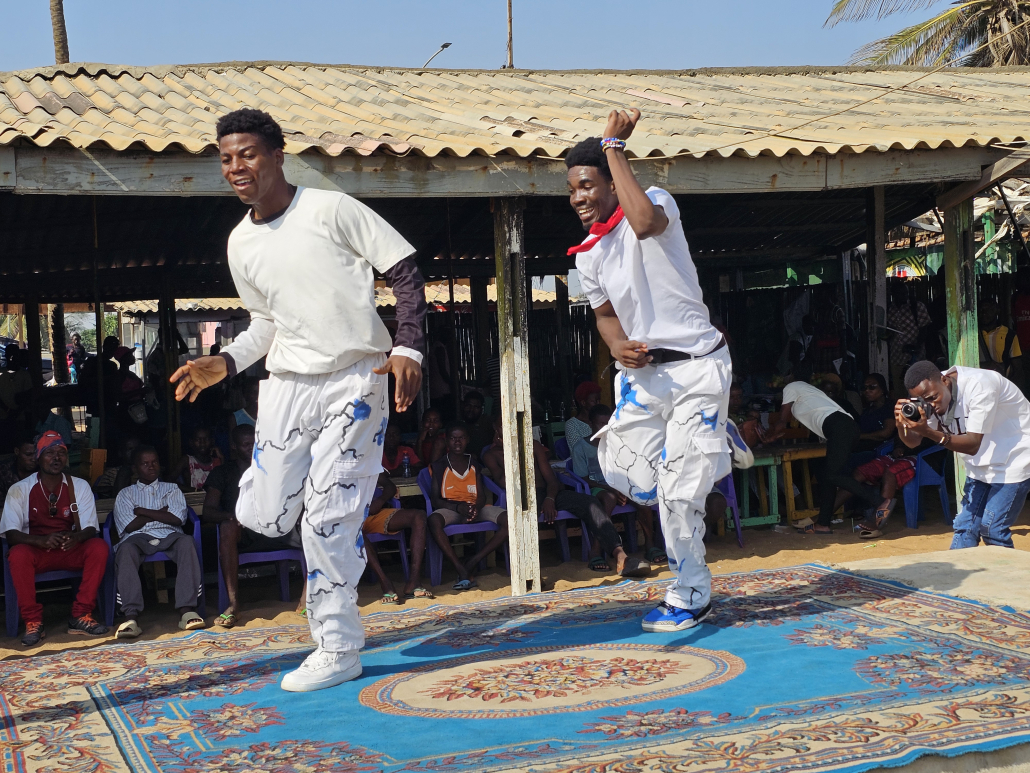
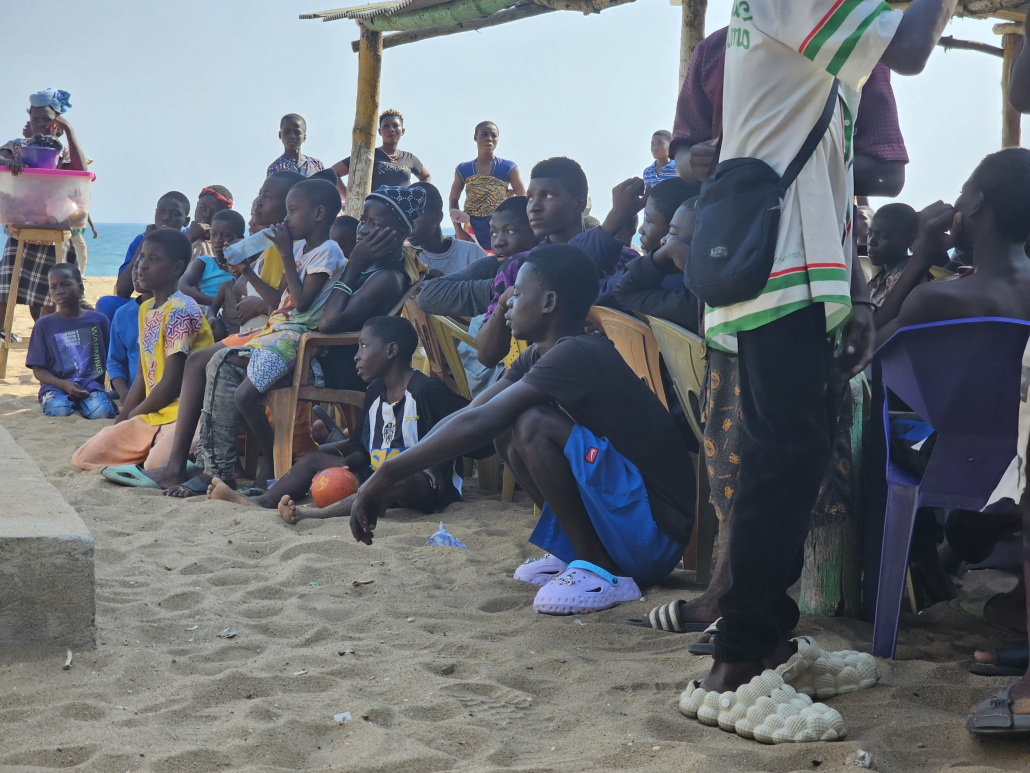
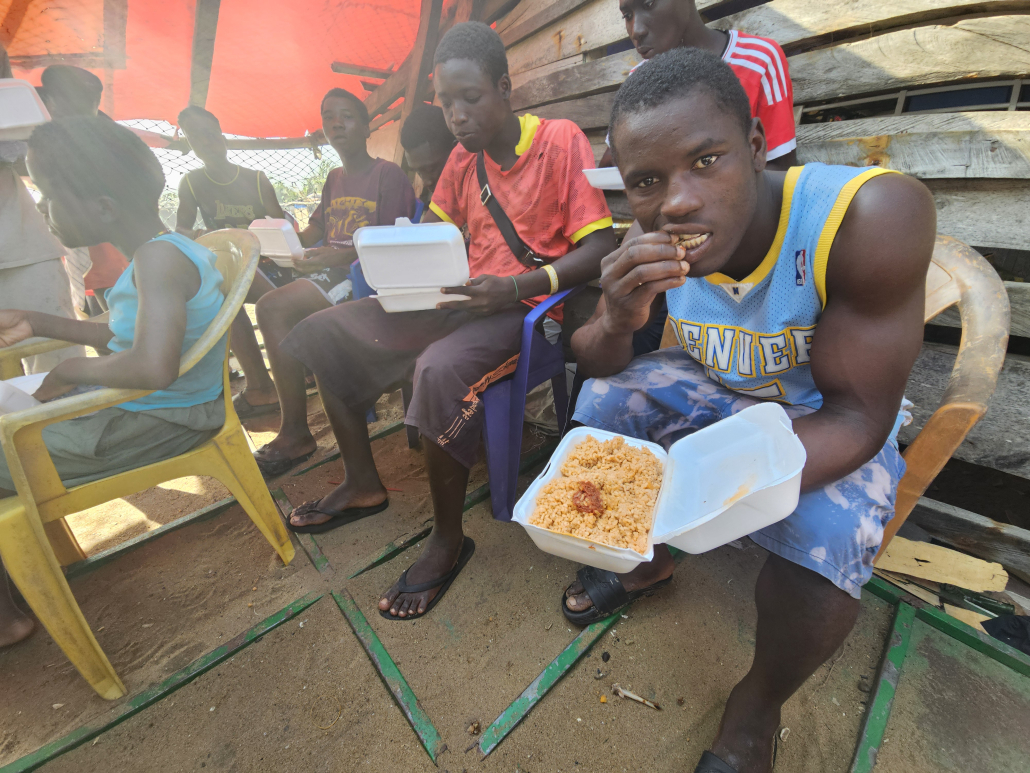
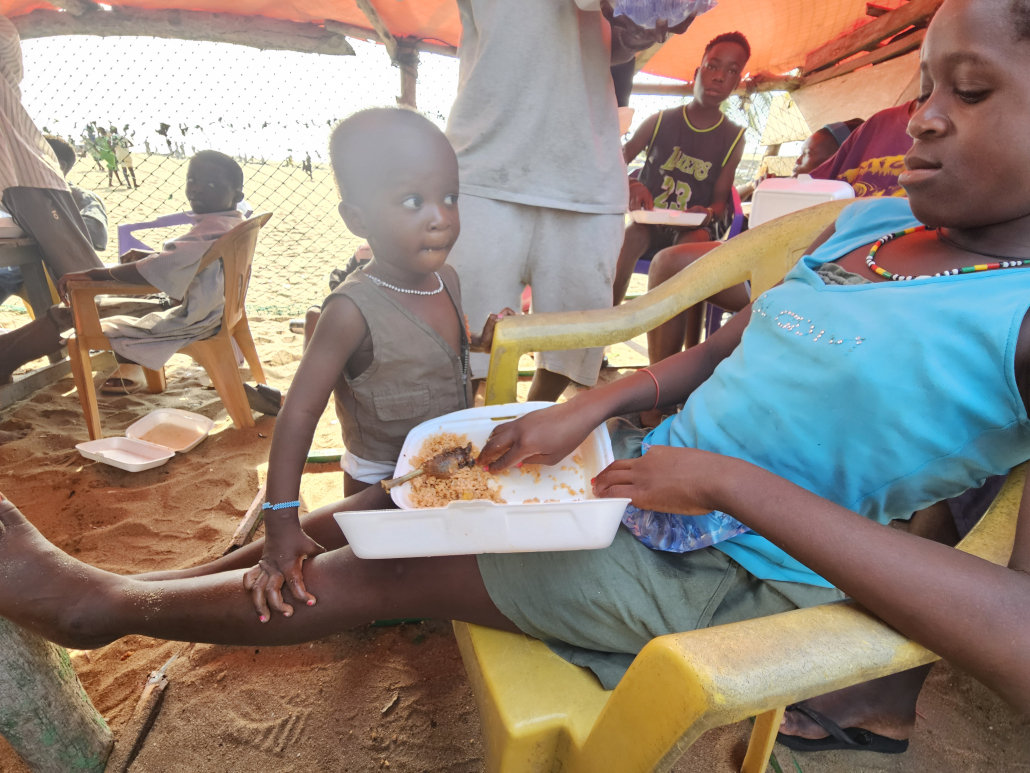
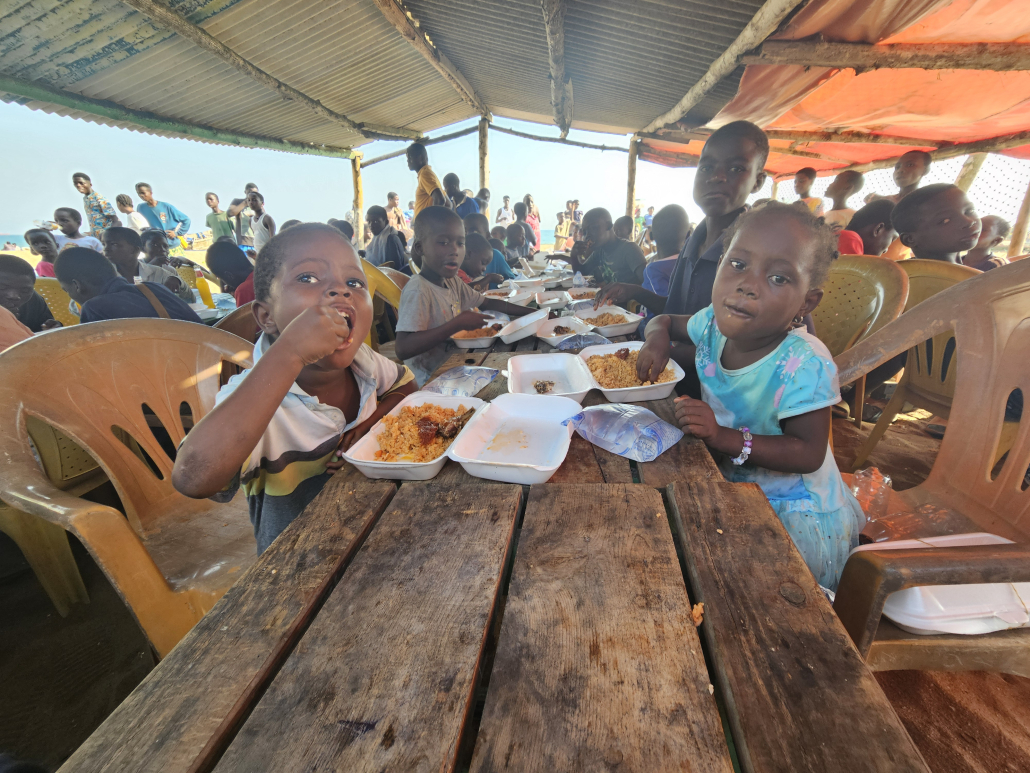
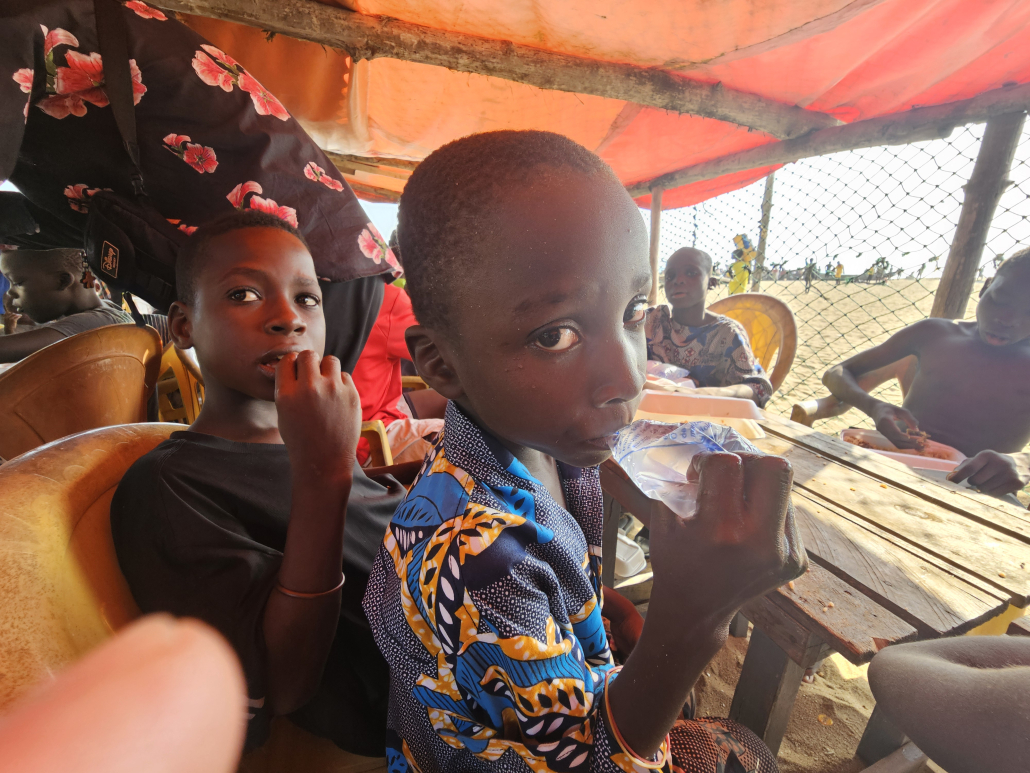
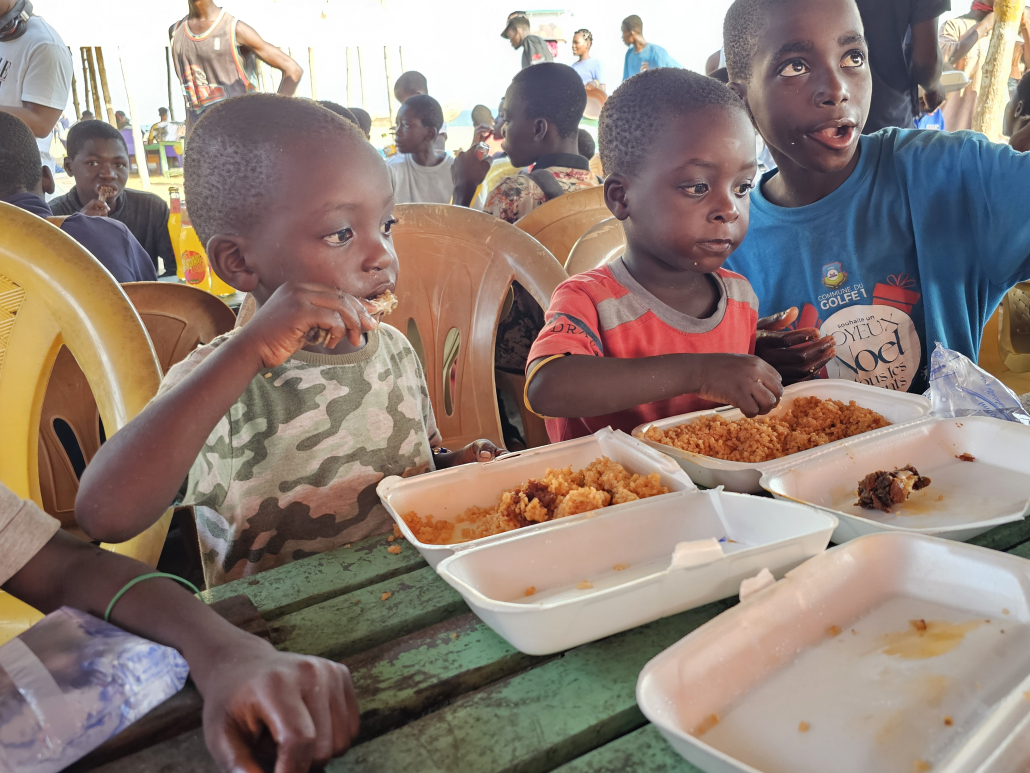
Launched in January 2019 during the first knowledge transfer seminar, named Lomé1, this project initially focused on about ten children living on the beach near the Kodjoviakopé district, just a few dozen meters from the Ghanaian border. Médias Ebène supported the family of Haruna and Essenam Gotoechan, enabling them to free up time for visits and a monthly meal. Last December, 237 meals were distributed, demonstrating the project's growing scope.
R
December 14, 2024, 237 meals were provided at Lomé beach.
A Strategic Collaboration to Maximize Impact
However, since caring for street children does not fall within the objectives of the Médias Ebène association, which specializes in "supporting media development in Francophone Africa," the association applied for authorization to issue tax receipts. In this context, Médias Ebène approached CSEL in Paris in 2024 to inquire if they could receive donations for the children and redirect them to the association managing the fieldwork in Lomé. An agreement was signed on December 1st, facilitating a successful initial exchange of experiences. It is worth noting that CSEL already issues tax receipts for French residents.
Gérard Yovo, CAJED coordinator, and the children from the shelter
Fieldwork Evaluation: Clear Synergy
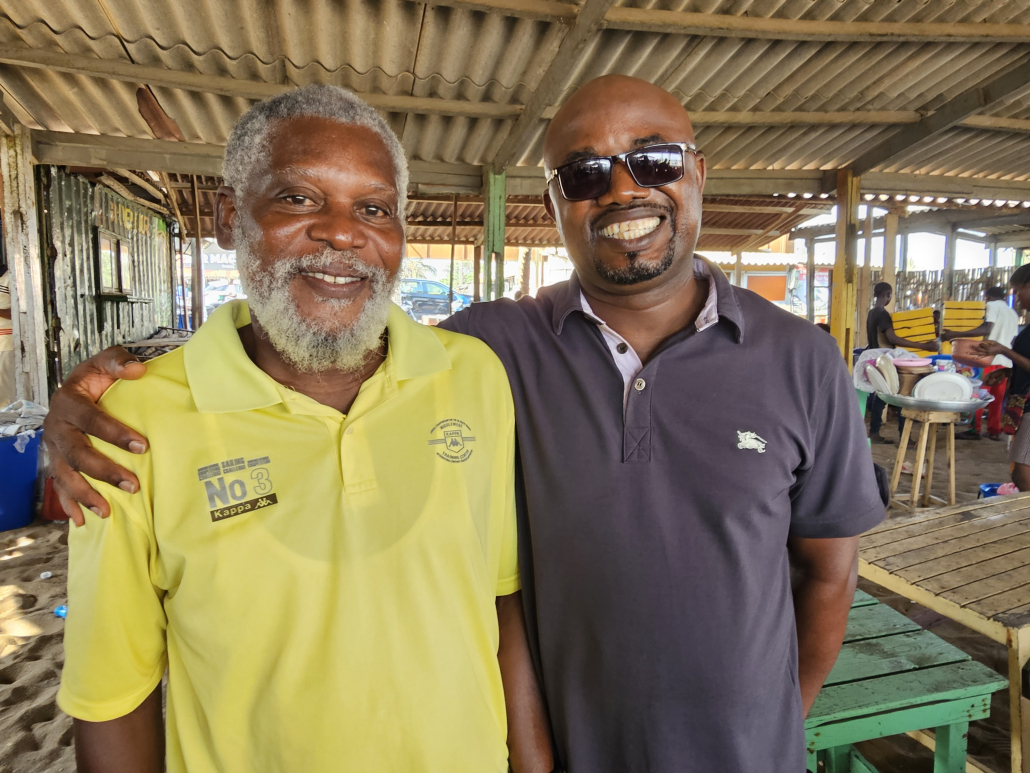
The results on the ground are very positive. CSEL funds the "Committee for Aid to Young People in Difficulty" (CAJED), established in Lomé in 1996, which primarily focuses on street youth. CAJED operates two care centers, including a shelter, and conducts outreach activities along with significant social work, including with the children's families when they exist. During a recent visit, Médias Ebène's representatives were able to assess the quality of the work being done and identify many potential synergies with "The Children of the Beach" project. Mr. Yovo for CAJED and Mr. Gotoechan for "The Children of the Beach" mutually appreciated each other's actions and recognized the shared humanitarian values in their work.
On the left, Gérard Yovo, CAJED coordinator, and Haruna Gotoechan, coordinator of "The Children of the Beach".
New Benefits for Donors
For current Médias Ebène donors specifically supporting "The Children of the Beach," it is necessary to update your bank details (please request them here). Donations will now be directed to CSEL in Paris, which will then transfer them to Lomé. French donors will thus receive a tax receipt for donations made in 2025. Unfortunately, this tax deduction is not possible for Swiss donors. Médias Ebène welcomes this development, especially the significant synergies emerging both in Europe and Togo. As the situation for children in Lomé is deteriorating, this pooling of efforts is entirely to their benefit.
https://mediasebene.org/wp-content/uploads/2024/12/20241214_170203-scaled.jpg19202560Emmanuel Ziehlihttps://mediasebene.org/wp-content/uploads/2024/11/logo-medias-ebene-web-202411-300x138.pngEmmanuel Ziehli2024-12-27 14:36:452024-12-28 09:37:15The Children of the Beach: A Project Strengthened by CSEL's Support
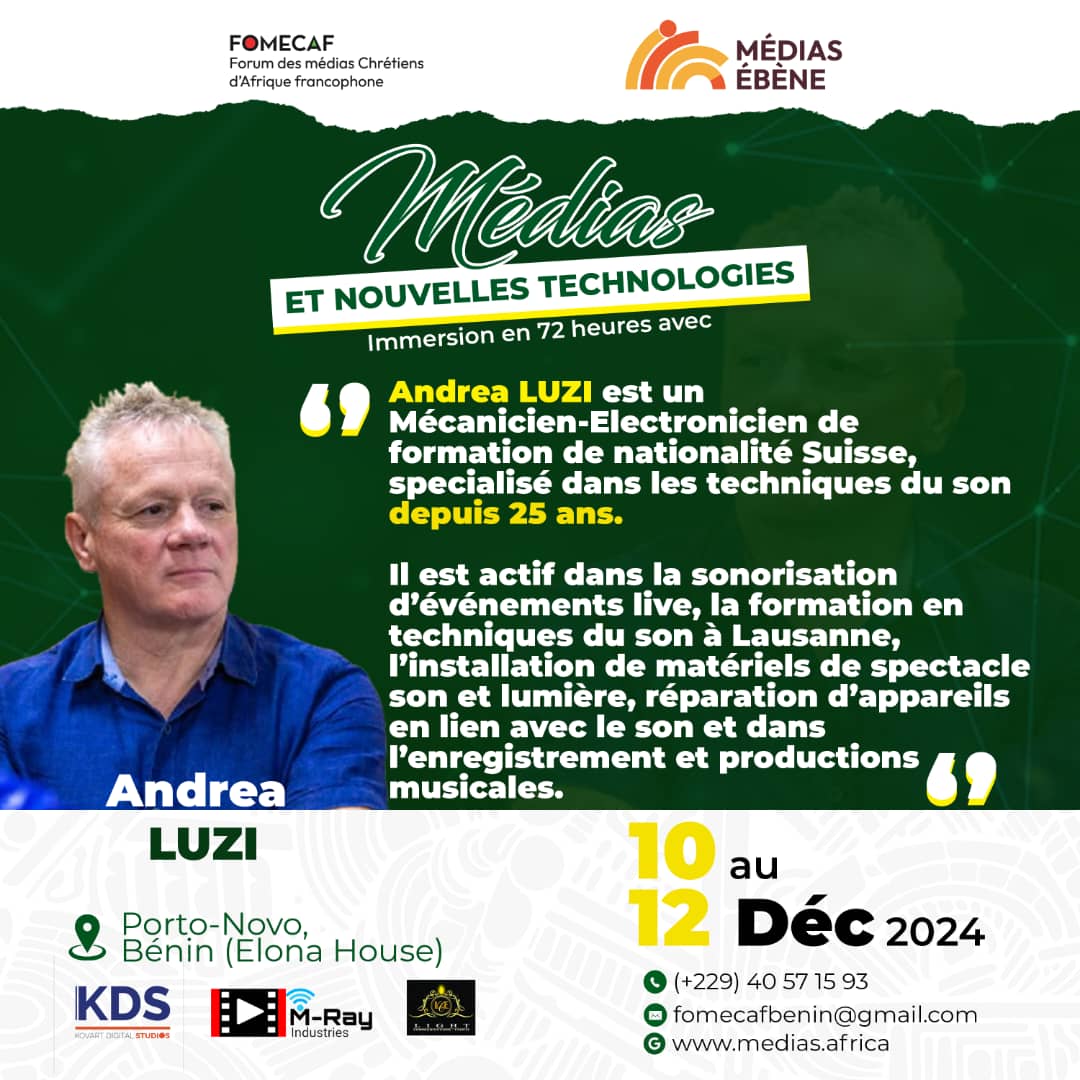
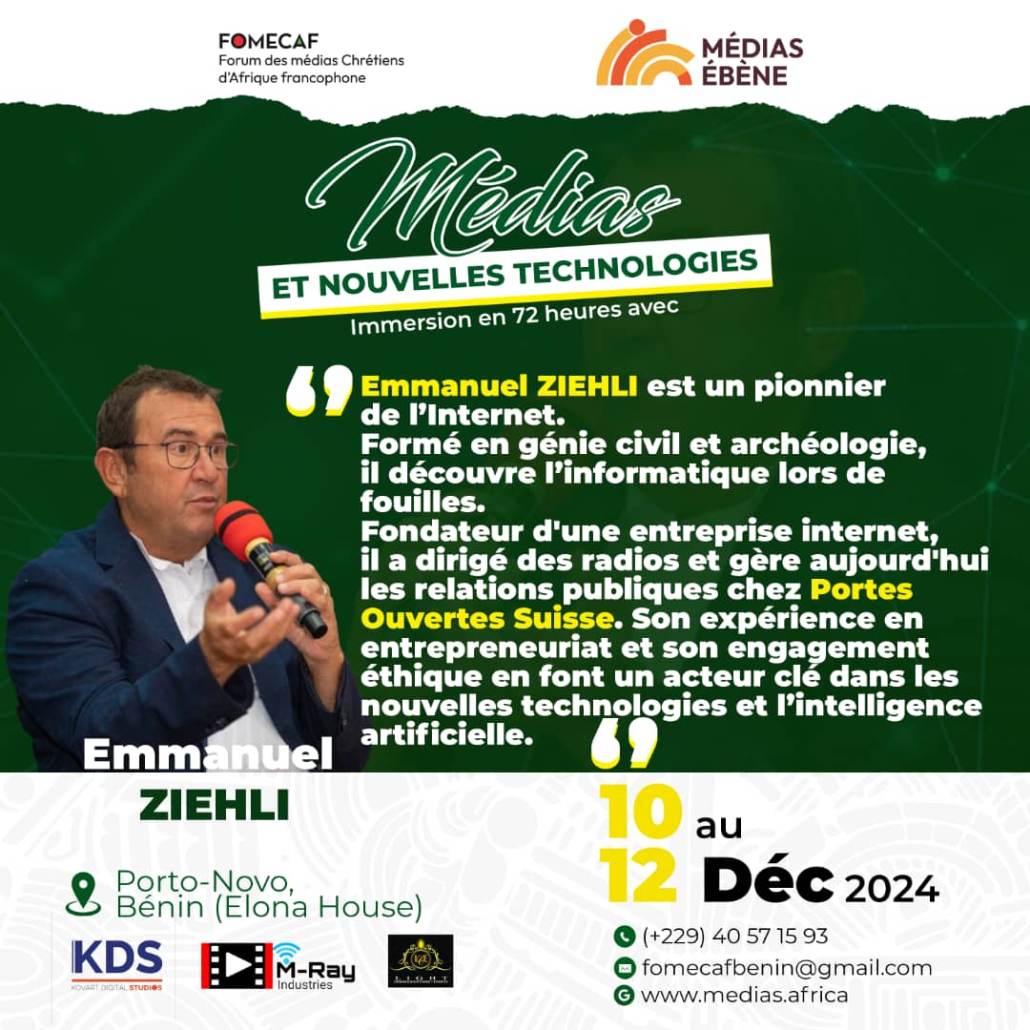
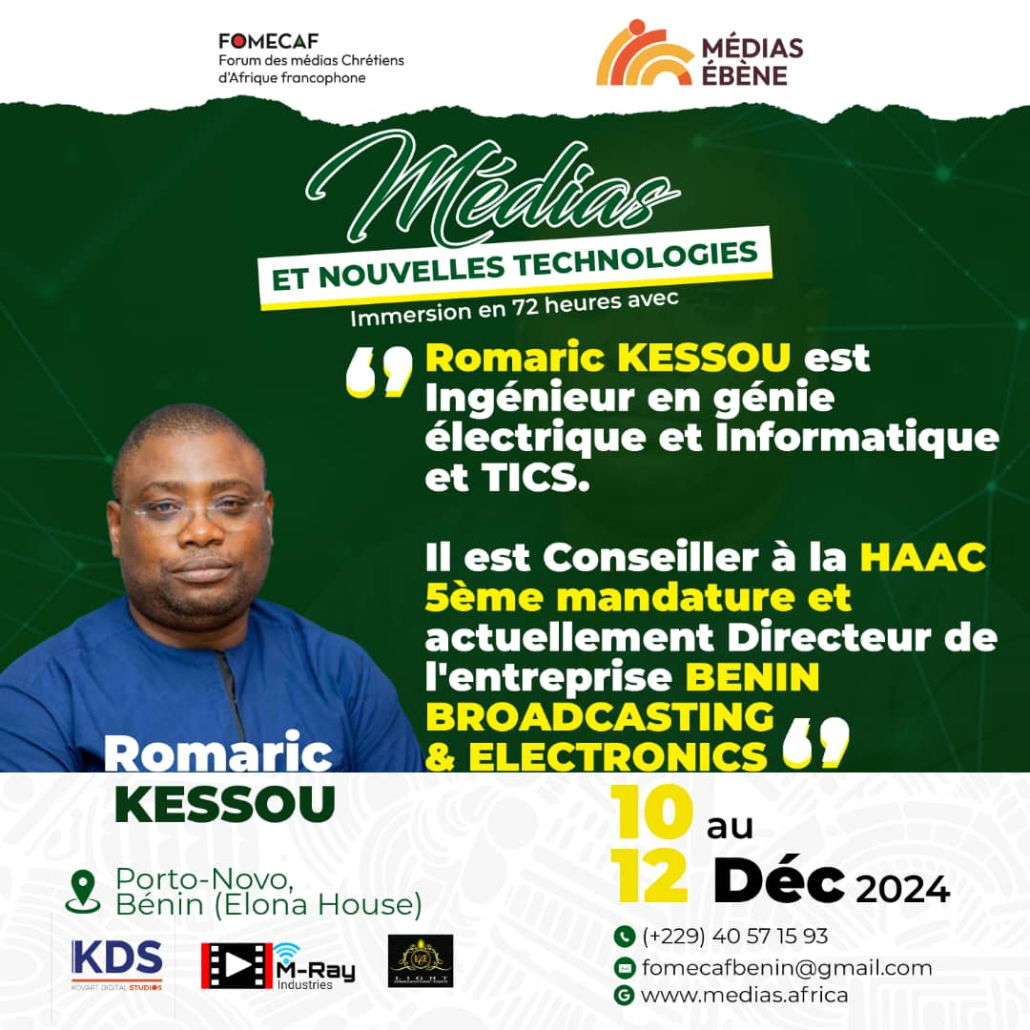
Porto-Novo, the capital of Benin, will host a training program focused on strengthening the capacities of Beninese Christian media in new technologies. As part of its mission to support Christian media in Francophone Africa, the Forum of Christian Media in Francophone Africa (FOMECAF), in partnership with Médias Ébène, is organizing an event titled "Media and New Technologies." This training, aimed at Beninese Christian media professionals, will take place from December 10 to 12, 2024.
A Three-Day Immersion for Media Professionals
During these three days, participants — including press managers, journalists, presenters, audiovisual technicians, and audiovisual students — will have the opportunity to deepen their knowledge and explore the opportunities offered by new technologies in the media field. This initiative aims to equip media professionals with essential technical skills and digital tools to improve the dissemination of their messages and adapt to the demands of the digital age. The new opportunities presented by the rise of artificial intelligence will be a central focus of the discussions.
Information and Registration
Registration is open exclusively to Beninese media professionals. As part of its privileged partnership with FOMECAF, the Médias Ébène association has delegated two speakers on-site: Andrea Luzi, a sound technology specialist, and Emmanuel Ziehli, a digital marketing specialist. This initiative follows a previous one in May, where our experts Christian Gaspoz (FM techniques) and Denis Steffen (radio) trained approximately seventy people in Lomé, the capital of Togo.
https://mediasebene.org/wp-content/uploads/2024/12/Affiche-FOMECAF-Porto-Novo.jpg10091600Emmanuel Ziehlihttps://mediasebene.org/wp-content/uploads/2024/11/logo-medias-ebene-web-202411-300x138.pngEmmanuel Ziehli2024-12-07 09:21:452024-12-09 11:45:17Médias Ebène's New Involvement in Francophone Africa
This essential work was entrusted to the talented Togolese graphic designer Abigaïl Hodor and took two months to complete.
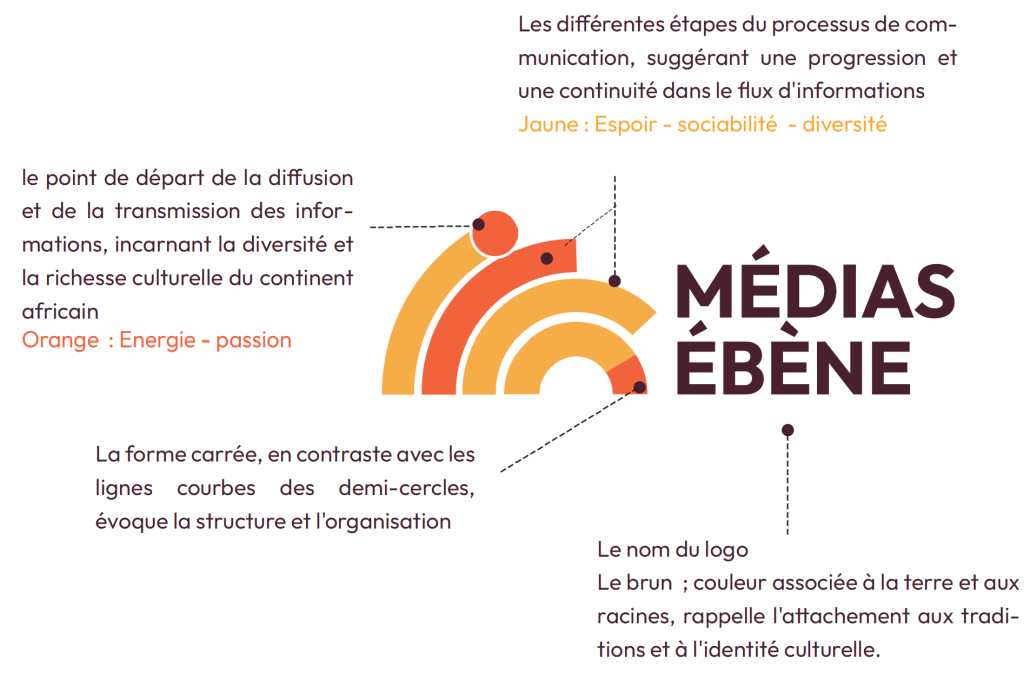
The Médias Ébène logo, designed for African media, is a distinctive visual representation. Composed of four superimposed semi-circles, it forms a rainbow reminiscent of Wi-Fi and Bluetooth connection symbols, illustrating connectivity and data transfer, which are essential in media.
The upper semi-circle, yellow, starts at the base of the arc and ends with a small round orange shape, symbolizing the beginning of broadcasting and information transmission, embodying Africa's cultural diversity and richness. The dynamic yellow and orange colors evoke the energy and vibrancy of African media, which are constantly evolving.
The next two semi-circles, orange and yellow, stop halfway, representing the stages of the communication process and the diversity of voices within African media. Each participant contributes uniquely.
The fourth semi-circle, yellow, ends with a square orange shape, symbolizing the stability and solidity of African media, rooted in their values and traditions while remaining open to innovation. The square shape contrasts with the curves of the semi-circles, evoking structure and organization, which are crucial for media credibility.
Alongside this design, the name 'Médias Ébène' is inscribed in uppercase and brown, adding a touch of sophistication and seriousness. Brown, associated with earth and roots, recalls the attachment to traditions and cultural identity.
This logo embodies Médias Ébène's mission: to connect, inform, and inspire African media. Through its simple yet meaningful appearance, it offers a modern and inclusive representation of communication in Africa, where tradition and innovation converge to create a rich and vibrant media landscape.
In March 2024, 'Radio Réveil France' and 'Radios Ébène Développement' merged to create 'Médias Ébène,' a new entity dedicated to supporting and developing Christian media in Francophone Africa. Based in Pontarlier, it inherits rich, complementary histories and expertise. With about thirty active members, a six-person board of directors, and a three-member executive committee, 'Médias Ébène' continues the mission of its predecessors. Since 2019, the two associations have collaborated closely, notably during the first seminar in Lomé, and contributed to the creation of FOMECAF, which brings together 129 media outlets in 13 countries.
Joyce Meyer Ministries, an international organization dedicated to biblical teaching and personal development, recently formed a strategic partnership with FOMECAF (Forum of Christian Media in Francophone Africa). Thanks to this agreement, inspiring meditations in French will be broadcast on over a hundred radio stations in 13 Francophone African countries.
On August 31, 2024, Joyce Meyer Ministries and FOMECAF (Forum of Christian Media in Francophone Africa) signed an agreement to broadcast meditations in French on over 100 radio stations in 13 Francophone African countries. Joyce Meyer Ministries, an international organization dedicated to biblical teaching and personal development, hopes to expand its influence in Francophone Africa through this initiative. FOMECAF, for its part, is offering an initial set of 365 one-minute meditations, followed by another 365, thereby enriching its broadcast offerings which already include local and international productions.
Michaël Foucault, Francophone Coordinator for Joyce Meyer Ministries, expressed his joy and honor in contributing to the spread of the Gospel in French in Africa, emphasizing the historical importance of radio in Joyce Meyer's ministry. Olivia Beugré, Head of FOMECAF's Executive Office, views this partnership as a significant step towards the unity of the body of Christ and thanked Joyce Meyer Ministries for their trust.
The program, produced by Phare FM in Mulhouse, guarantees exceptional quality. Joyce Meyer hopes this partnership will pave the way for other fruitful collaborations.
FOMECAF, established in 2019, brings together over a hundred Christian media outlets in Francophone Africa and aims to promote holistic Christian content. Joyce Meyer Ministries France, based in Fenton, Missouri, offers various resources to help people grow spiritually, with a significant presence in France and Francophone countries.
https://mediasebene.org/wp-content/uploads/2024/09/Joyce-Meyer-FOMECAF-AFRIQUE.webp7681136Emmanuel Ziehlihttps://mediasebene.org/wp-content/uploads/2024/11/logo-medias-ebene-web-202411-300x138.pngEmmanuel Ziehli2024-09-04 21:35:442024-09-04 21:53:57Joyce Meyer Ministries and FOMECAF sign a broadcast agreement for French meditations aimed at Francophone Africa.
"We expect a great deal from faith-based media in the education of young people," said Franck Missité, Chief of Staff to Togo's Minister of Communication and Media. He was speaking on Monday, November 22, at the inauguration of the fourth edition of the Lomé meetings, organized by FOMECAF (Forum of Francophone African Christian Media).
Faith-based media reaching out more to all citizens
"Faith-based media should reach out more to all citizens with themes that are not 100 percent religious," added the trained journalist. "It's important to vary the content. 75 percent prayer and preaching is enough. 25 percent culture and ethical and moral education would be good!"
This edition of the Lomé meetings will address the theme "Media & Generational Divide," with Abdoulaye Sangho, Director of Transworld Radio West and Central Africa (TWR), as the main speaker. Around fifty representatives from Christian media in Francophone Africa, including Cameroon, Benin, Burkina Faso, Burundi, Côte d'Ivoire, DRC, Rwanda, and others, traveled for the training week. Additionally, about a hundred people are registered to follow it online.
"Media, make room for young people!"
"64 percent of the West African population is under 24 years old," stated Emmanuel Ziehli, president of Radio Réveil France, "and our media do not speak the language of young people. Furthermore, we do not cover topics that interest them. Let's be models of generational transition," he emphasized. Consequently, he asked radio managers to make room for younger people in their programming and among their journalists and presenters.
Emmanuel Ziehli also highlighted the dynamism of CICERI, the International Christian Center for Study, Research, and Information in Lomé, which, thanks to a team of young people aged 18 to 30, transparently organizes the Lomé seminars each year.
In addition to Abdoulaye Sangho, the main speaker, Juliette Kpessou, presenter at Radio Hosanna in Benin; Olivia Adiko, editor-in-chief of Radio La Voix de l'Espérance in Abidjan; Etienne Kiemdé, director of Radio Evangile et Développement in Burkina Faso; Illia Djadi, head of African relations for the NGO Open Doors; and Alphonse Teyabé, a media consultant in Cameroon, will also speak.
Meetings launched by Radio Réveil
The “Lomé” meetings were launched in January 2019. They offer Christian media professionals from French-speaking Africa the opportunity to participate in a week-long training program and to network in order to foster dialogue among professionals from different countries.
In January 2019, the Radio Réveil association in Switzerland, which produces radio programs for all Francophone regions, decided to invite its radio partners in Africa to a training session in Lomé to mark its 70th anniversary. About a hundred people participated in the event and signed the LoméDeclaration. The signatories committed to abandoning competition between evangelical and Protestant radio stations and to pooling resources to improve the quality of their programs. (c)
https://mediasebene.org/wp-content/uploads/2021/11/Lome4_3.jpeg6101080Patriziahttps://mediasebene.org/wp-content/uploads/2024/11/logo-medias-ebene-web-202411-300x138.pngPatrizia2023-06-16 13:54:002024-06-16 14:00:47Togo: 'Faith-based media have an important role to play in youth education,' according to a representative from the Ministry of Communication
The FOMECAF leadership is pleased to inform Christian media professionals in French-speaking Africa of a regional seminar titled “OUAGA 2023,” to be held from October 30 to November 3, 2023, in Ouagadougou, Burkina Faso.
With the aim of increasingly aligning its activities with those of its partner countries and more effectively supporting efforts at the national level, the Forum is organizing a decentralized meeting this year—in collaboration with Radio Réveil—in the capital of Burkina Faso, one of the current hotspots of conflict in the subregion.
Under the theme “Media: Tools for Peace in a World in Conflict – OUAGA 2023,” this seminar stems from FOMECAF’s strong desire to equip and empower Christian media professionals to play a role in preventing and resolving conflicts on the continent through their action plans.
Participants in OUAGA 2023 will come primarily from countries neighboring Burkina Faso, the host country. These include Benin, Côte d’Ivoire, Mali, Niger, and Togo.
The leaders of the Francophone African Christian Media Forum therefore urge media professionals to continue making use of the tools already made available to them and still accessible through the organization’s official channels:
As for participants from Central and East African countries, they are reminded that seminars are being organized and that very soon, they too will have the opportunity to host the Forum’s sessions.
Confident that your interest in the various initiatives led by FOMECAF remains strong and continues to grow, we wish each and every one of you all the best for the future.
See you soon for a reunion that’s as uplifting and inspiring as ever!