Archive d’étiquettes pour : Afrique francophone

Radio personality, pastor, evangelist, film producer, musician, writer…AlainNormandpassed away on June 29, 2021, at the age of 82.

Alainwas born on May 21, 1939, in the French city of Cannes, four years after his brother Guy and four months before the start of World War II. His father was called to arms. After being taken prisoner of war, he returned ill from a German camp and died a few months after the war ended.

Alainregularly accompanied his mother to an evangelical church, and at the age of twelve, he decided to become a follower of Jesus Christ. A year later, he moved to Geneva because his mother had remarried a Swiss man.

In Geneva,Alaindiscovers a new evangelical church. He earns a Federal Certificate of Competence (CFC) in administration, takes up the guitar, and wins a championship with a junior team at Servette Football Club.

In 1958,Alainbegan theological training in England at the International Bible Training Institute. Upon completing his training, he was summoned to the French Consulate in London to begin his military service in the French Army. Because he was a conscientious objector, he was enlisted as an unarmed paratrooper-medic. Trained in parachuting and nursing, he was deployed to war-torn Algeria, where he primarily cared for soldiers. This period gave him the opportunity to experience many human and spiritual adventures. He reflected deeply on this saying of Jesus: “Blessed are the peacemakers, for they will be called children of God” (Matthew 5:9).

After being discharged from the military,Alainleft for Frankfurt. He wanted to learn German there, but also to learn to love the Germans in the name of Christ. There, he worked at an American bank, attended an evangelical church, and continued studying the guitar. Upon his return to Geneva, he decided to commit himself more radically to serving God. A friend from his church told him, “Radio Réveil in Lugano is looking for a staff member. You’re really cut out for this!”

Read his complete biography, written by Claude-Alain Baehler and published on July 4, 2021, on lafree.info

Listen to these four short stories produced by Alain Normand, taken from the Service Cassettes archives.

Lomé, May 21, 2021,

With the aim of strengthening ties among members and continuing the training sessions that began in Lomé, FOMECAF is organizing two online meetings on Tuesday and Wednesday, May 25 and 26, 2021.

What's on the agenda:

Tuesday, May 25, 2:00 p.m. GMT:

The Principles of Effective Communication

Loosely based on Valérie Geller’s bestseller *Puissance radio*. Some of the topics that will be covered:

  • Tell the Truth (Fact-Checking)
  • Give the listener good reasons to listen to you
  • Never be boring
  • Use vivid language so that the listener can visualize what you're describing
  • Start with your best topic
  • Speak as if you were addressing a single listener
  • Create Engaging Transitions
  • Highlight your colleagues' achievements
  • Be yourself on the air
  • Take risks

Speaker: Denis Stephen, Director of Stephanas Conseils in Lyon

Denis entered the world of radio as a co-founder of Radio Certitude in 1982 (now Phare FM Grenoble)—in other words, he’s no spring chicken.

After two years of audiovisual studies at the University of Grenoble, he moved to Paris and was elected secretary and then president of the FRTC (Federation of Christian Radio and Television Stations). He also served on the board of directors of the CNRA (National Confederation of Community Radio Stations). Currently, Denis Stephen advises radio stations on their applications to the CSA (Higher Audiovisual Council), a government regulatory body, and is developing a training course titled “Create and Manage a Christian Radio Station,” the first two lessons of which are available online.

The link to the training session will be shared in the FOMECAF WhatsApp group on Tuesday morning, May 25. If you are not a member of FOMECAF but would still like to participate in this training, please provide your contact information here https://medias.africa/contact/ A valid email address + a phone number = a guaranteed response.


Wednesday, May 26, 2:00 p.m. GMT:

Full Radio Broadcast: It's Your Turn to Speak!

In January 2019, about 100 radio stations and media outlets based in Lomé 1 took concrete steps to fulfill their desire to work together http://bit.ly/lome-1 without competing with one another. On that occasion, they signed the Lomé Declaration  http://bit.ly/DeclarationLome  arguing, in particular, that “The programs of Christian radio stations in French-speaking Africa should focus more on the concrete needs of the people.” The proclamation of the Gospel is carried out in a holistic manner, in the image of Jesus Christ, who touched the lives of his contemporaries by meeting the needs of the body, soul, and spirit.” That same year, these stakeholders came together around the concept of “holistic radio” http://bit.ly/lome-deux . It is now May 2021—so what’s new? During this online seminar, you will have the opportunity to share your experiences and testify to how you have put “integral radio” into practice.

Host: Etienne Kiemdé, CEO of Radio Évangile et Développement in Ouagadougou

Pastor Etienne Kiemdé, CEO of Radio Évangile et Développement—which operates eight stations based in Burkina Faso—was tasked with moderating this debate http://red-burkina.org . He is a driving force behind the Lomé seminars, a member of the FOMECAF working group, and—likely more than 20 years ago—the originator of the concept of development tailored to radio broadcasting. At 58, this family man is also a pastor, having been trained in Denmark, France, and England. Upon his return to the African continent, he embraced radio ministry as a matter of urgency. Before FOMECAF, he spearheaded several efforts to network French-speaking Christian radio stations in Africa.

For more information: https://radio-reveil.org 

The link to the training session will be shared in the FOMECAF WhatsApp group on Tuesday morning, May 25. If you are not a member of FOMECAF but would still like to participate in this training, please provide your contact information here https://medias.africa/contact/ A valid email address + a phone number = a guaranteed response.

The issue of religious extremism is a pressing concern in an Africa heavily threatened by jihadism. This raises questions about the role of Christians in such a context. For Augustin Ahoga, a pastor and teacher in Benin, the rise of religious extremism stems in part from Christians’ abandonment of African cultural values. This has led them to develop a fear that prevents them from viewing jihadists with a different perspective. To reach these people, whose lives are generally stigmatized, Christians need training and must enter into authentic discipleship in the footsteps of Jesus of Nazareth.

Augustin Ahoga was one of the speakers at Lomé 3, a gathering of media professionals from French-speaking Africa organized by FOMECAF and Radio Réveil last November.

Read the rest of the interview on the lafree.info website

On Monday, November 23, 2020, FOMECAF launched the third edition of its training program organized by the Francophone African Christian Media Forum (FOMECAF). In his remarks at the opening ceremony, the Minister of Communication encouraged media professionals from religious radio stations to strive for excellence in communication.

“Information is both a resource and a weapon,” said Akodah Ayewouadan, the Minister of Communication, in his speech at the opening ceremony of Lomé 3. Ayewouadan, who also serves as the government’s spokesperson, said he was “impressed by the theme of media convergence addressed during the training week organized by the Forum of Christian Media in Francophone Africa (FOMECAF), because it helps promote excellence in communication.”

Read the rest of the interview on the lafree.info website

The Christian Council of Togo, in conjunction with the third edition of the training seminar for Christian media professionals in Francophone Africa.

With the third week of training for media professionals from Francophone Africa set to begin in a few days, the President of the Christian Council of Togo, Rev. Djakouti Mitré, received a delegation from the Lomé3 Organizing Committee led by Emmanuel Ziehli, Director of Radio Réveil Suisse. Following the meeting, the clergyman promised to attend the opening ceremony and to offer a prayer of blessing during the event.

Read the rest of the article on the FOMECAF website

"The convergence of media and the versatility of professions" is the theme chosen for the third edition of the "Lomé" seminars. From November 23 to 27, about fifty Christian media professionals from Francophone Africa are expected in the Togolese capital. A new feature, given the health circumstances, is that the event will also be accessible via the web.

Lomé, August 25, 2020. The FOMECAF (Forum of Christian Media in West Africa), along with the associations Radio Réveil and CICERI, will organize the third edition of the 'Lomé' media training sessions in Togo from November 23 to 27. During this training week, the focus will be on media convergence and the essential versatility of professions related to journalism.

In-person and Online
Given the current health conditions, the 'Lomé 3' seminar will only host about fifty in-person participants, who will be accepted based on their applications. All other interested individuals will be able to follow the conference online. The organizers are adapting to the health situation and are committing extensive resources for high-quality web broadcasting.
Workshops will enable participants to develop their skills in image capture, web radio, animation, journalism, and mastering FM techniques.

Two Francophone African Radio Pioneers as Keynote Speakers
Abdoulaye Sangho, Director of Trans World Radio (TWR) Africa, and Illia Djadi, currently Africa Director for the NGO Open Doors and former Francophone correspondent for the BBC in West Africa, will be among the speakers. Businessman Kurt Buehlmann, author of the course '40 Days to Revolutionize Your Finances' and the radio program 'Your Money Matters,' will also lead a workshop dedicated to the economic management of media outlets. This will enable radio promoters and financiers to seek solutions for promoting the self-financing of their media.

The Future: Multimedia
Today, more than ever, media outlets are called upon to converge towards multiple distribution channels. The internet is gradually revolutionizing practices in West Africa, especially among young people, and impacting media. The challenge is no longer the establishment or ownership of a traditional broadcast channel (TV, radio, web, or print media), but the content itself. Anyone well-trained, especially young people, can create texts, sounds, and images from well-chosen topics and professional information processing, which can then be used across any distribution channel.

An Intense Week for FOMECAF
This week will also serve to strengthen ties among the members of FOMECAF, the Forum of Christian Media in West Africa. As a reminder, over 40 media outlets signed the 'Lomé Declaration' in early 2019, a founding charter for a network of West African media that emphasizes collaboration and exchange. Together, they signed a document summarizing this initiative, which now brings together about a hundred media outlets in ten Francophone African countries.

Website of the Forum of Christian Media in West Africa
Pre-registration
The Lomé Declaration
Radio Réveil France
CICERI Togo


Illia Djadi, who works with Open Doors to defend religious freedom in Africa, was in French-speaking Switzerland this week to prepare for the third meeting of journalists and radio hosts, which will be held in Lomé from November 23 to 27 under the patronage of Radio Réveil in Bevaix (CH). This journalist, formerly with the BBC, reveals here some key points of his presentation: the importance of promoting peaceful coexistence between ethnic and religious communities. Interview.

An interview with Serge Carrel, published on FREE's website

Illia Djadi, at Lomé 3, you will advocate for the importance of developing programs in Francophone African evangelical radio stations that address peaceful coexistence. Why?

This is a timely topic that is crucial today, given the situation in all countries of the sub-region. Whether in Niger, Mali, Burkina Faso, or elsewhere, peaceful coexistence is currently under threat. This is particularly due to the emergence of jihadist movements... Yes. Jihadist movements are active throughout this part of the southern Sahara. They threaten the very existence of countries like Mali, Burkina Faso, and Niger. These armed groups attempt to divide communities along ethnic or religious lines. For hundreds of years, these religious communities have learned to live together, despite localized conflicts.

How can churches act to counter this dynamic of Islamization that we are witnessing in Francophone Africa?

In Francophone Africa, churches and their affiliated radio stations are major players in the social landscape. Churches participate in the education of children and young people; they are involved in social development and construction projects, as well as in health centers. Today, we realize that the existence of these churches is threatened because Christians themselves are under threat. Hence, churches have a responsibility to take a stand as social actors to ensure that action is taken.

Specifically, what role can evangelical radio stations play? Given the importance of radio as a medium in Africa, producing programs that raise awareness about peaceful coexistence and social cohesion is fundamental. Do you have examples where radio has played an important role in promoting a culture of tolerance between communities?

In Niger, my home country, following the Charlie Hebdo events in Paris in January 2015, about a hundred churches and buildings belonging to Christians were ransacked and destroyed. Following this event, there was a widespread awakening of consciousness, to the extent that the main leaders of religious communities, including Protestants, Catholics, and Muslims, could be seen together on the same radio or television program. Simply by coming together, they sent a strong symbolic message to the entire population. They were able to say: 'We are united. What happened was an unfortunate and isolated incident. It is not representative of Islam. The majority of Muslims do not identify with these atrocities. With one voice, we reject and condemn what happened!'

Are there other examples where radio helped to de-escalate a situation?

In Burkina Faso, thanks to radio stations that broadcast programs in all local languages, it is possible to send messages to different communities, whether Mossi or Fulani, to draw their attention to the danger threatening this country, known for its culture of tolerance. Practically, a Christian radio station can occasionally invite an imam into its studio. This is already a strong symbol of accepting others and their differences. Theological teaching is also needed so that local Christians understand that persecution is an integral part of Christian life…

But isn't that already a retreat in the face of the emergence of these violent movements?

No, it's primarily about raising awareness to react appropriately in such a context. Persecution can take several forms. Today, we realize that it arises from Islamic fundamentalism and attacks perpetrated by extremist groups. In such a context, an ostrich policy, which involves burying one's head in the sand, is not enough. We must offer a counter-narrative based on the love that Christ calls us to show to our neighbor, including our enemy. Such a counter-narrative can counteract the hate speech used by Islamists, because people are receptive to gestures of love, acts of love, and messages that promote tolerance. Therefore, programs need to be produced that, as highlighted by the Lomé 2 conference in 2019, develop a holistic approach, one that considers and responds to the realities and challenges facing society and churches today.

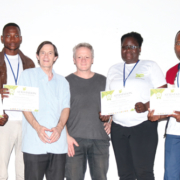
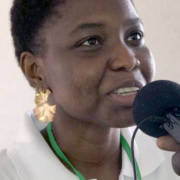
During the Training Seminar for Christian Radio Stations in French-speaking Africa, the organizers decided to award Dodji Juliette Kpessou, a journalist and host at Radio Hosanna in Porto-Novo, the François Sergy Encouragement Award for producing 50 audio segments titled “L’O2Vie, a Drop Every Day.”

“These programs by Dodji Juliette Kpessou exemplify what we hope to promote: the exchange of programs among Christian radio stations in French-speaking Africa,” explained Emmanuel Ziehli, director of Radio Réveil.

The François Sergy Encouragement Award was launched as part of the Lomé Weeks, an initiative aimed at training Christian media professionals in French-speaking Africa. It is designed to recognize initiatives that promote collaboration among radio stations. This encouragement award is named after François Sergy, a journalist with Radio Réveil who passed away in 2018.

Listen to “L’O2Vie, a Drop Every Day” on RADIO R

To formalize their relationships, Christian radio stations in Francophone Africa have formed a network. About forty radio stations are already involved in this project, which aims to encourage collaboration and the sharing of professional resources. This decision was made during Lomé 2, the second training seminar for Christian radio stations in Francophone Africa, which took place from November 25 to 29 in the Togolese capital.

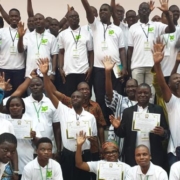
On Friday, November 29, the approximately 170 representatives of faith-based radio stations gathered in Lomé for a second training seminar on journalistic and radio techniques decided to launch a radio network. The objectives include fostering close relationships between radio stations in the same region or city, exchanging programs, providing mutual technical assistance, and developing a news agency capable of relaying news concerning the Christian and evangelical movement in Francophone Africa. All of this is in the spirit of the Lomé Declaration, signed on January 18, 2019.

Read more of the press release