What Role Does Evangelical Journalism Play in the Public Sphere?
A project in Togo to train journalists from evangelical radio stations in French-speaking Africa, combined with the 20th anniversary of the program *Hautes Fréquences* on RTS La Première, provides Serge Carrel with an opportunity to demonstrate that, in both contexts, evangelical journalism requires boldness and professionalism.
Reprint of Serge Carrel's "Opinion" piece published on January 25, 2019, onlafree.info
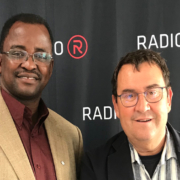
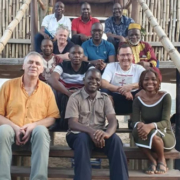
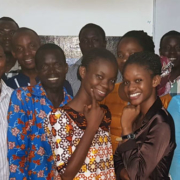
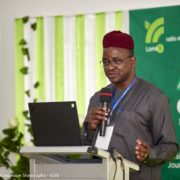
In our daily lives, there are moments when our experiences collide, prompting us to reflect on our work. Last week, I was one of the facilitators at the Training Seminar for Evangelical Radio Stations in French-speaking Africa, held in Lomé, Togo—a gathering of more than a hundred people organized by Radio Réveil in Bevaix (NE). It was an opportunity to meet journalists, hosts, and technicians from the roughly 100 radio stations that identify as evangelical in French-speaking Africa. Last Sunday evening at 7 p.m., RTS Religion marked the 20th anniversary of *Hautes Fréquences*—the flagship program of the public radio station’s religious programming team—on the airwaves of *La Première*.
In French-speaking Africa as well as in Switzerland, what is the level of presence?
In both situations, this provides an opportunity to reflect on the presence of evangelical journalists in the public sphere. In French-speaking Africa, evangelical religious radio stations are on the rise. Their programming places a strong emphasis on preaching the Gospel, reports on churches, and Christian music. They play an important role not only within the church or churches but also in the public sphere, encouraging the emergence of a shared identity and collective reflection on the major issues of the day. In French-speaking Switzerland, due to the ecumenical and interfaith commitment of the religious programming team and the erosion of the Christian voice’s legitimacy within society, RTS Religion’s approach leans more toward the sociology of religion than toward a Christian perspective on society. This is evidenced by the appearance on Sunday evening of a sociologist, Philippe Gonzalez—a specialist in media and religion—rather than a Christian theologian particularly well-versed in how to position the Christian faith within a pluralistic context.
Professionalism and boldness are more important than ever
In this clash of diametrically opposed experiences lies a convergence. On one hand, African evangelical radio stations are seeking to develop a public discourse that allows them to move beyond an “all-church” focus and reach as many listeners as possible—notably by limiting “Jesus” to 30 percent of programming and giving significant space to development issues and a holistic and integral Gospel (see the Lomé Declaration and the interview with Alphonse Teyabe). On the Swiss side, churches promote—since journalists are employed by the churches and production costs are covered by RTS—a discourse that analyzes religious phenomena from Christian perspectives and values, a discourse legitimized by the history of French-speaking Switzerland and by a society that seeks to understand religion without aligning itself with any particular denomination.
In these two very different contexts, evangelical journalism has its place. In French-speaking Africa as well as in Switzerland, it requires professionalism and boldness. It involves stepping outside the well-trodden paths of vague and unarticulated convictions to seek out and express a perspective on the world shaped by the values and hope that Christ brings to life in the heart of our lives. In both cases: a real “challenge,” as we say today!
Serge Carrel
Senior journalist at lafree.info
Former journalist at Radio Réveil and on the RTS Religion program *Hautes Fréquences*